eISSN: 2577-8250


Mini Review Volume 5 Issue 1
Ho Chi Minh City University of Fine Arts, Vietnam
Correspondence: Nguyen Van Minh, Principal- The Ho Chi Minh City University of Fine Arts, Vietnam
Received: January 05, 2023 | Published: February 9, 2023
Citation: Minh NV. Materials and arts of expression in traditional Vietnamese lacquer. Art Human Open Acc J. 2023;5(1):55-57. DOI: 10.15406/ahoaj.2023.05.00186
The material of traditional lacquer is Son Ta (“Ta”: paint lacquer). Son Ta material, with its preeminent features in terms of reason, is also a deep and warm "feeling". The art of expressing the beauty of the material in the work is also a firm and profound grasp of the specific characteristics and techniques of the material, making the material an irreplaceable element of the work.
On the contrary, with the structure of the work through his visual language, the artist must affirm that only that material, only, conveys the voice of the image and techniques expressed in the work.
In other words, the material is the content, and the art of expression is the form of the work. The content determines the form and orientation of the chosen form and conveys the language of expression. And vice versa, the form reflects the content, revealing and clarifying the content in the best and most effective way. This is a dialectical and interactive relationship. It is this relationship that makes up the whole of the work in traditional Vietnamese lacquer.
Keywords: Vietnamese traditional lacquer, materials, art of expression, dialectical, interactive relationship
Since ancient times, when applying paint resin to decorate or make products for life, artisans knew how to mix different types of paint to use separately for each processing stage or for each genre, and product type. For example Sơn Quang Dầu (Quang Dau Paint), by mixing oil into the paint then (black) to cover the surface of the product with black color. Mix truffle oil with cockroach wing paint, then mix it with lipstick or other pigments to cover and apply many coats of coat on the outside of the product (because this paint is not grinding and polishing). Using this paint to cover products decorated with brushstrokes is called a line of strokes... Or paint to paint also mix cockroach wing paint with Trau oil but at a certain dose, it helps the paint to spread evenly, forming a thin sticky crystalline layer, specialized for gilding, silver foil on Quang Dau paint, the purpose is to prevent the edges of litmus leaves, gold, and silver when glued to be flat, shiny like plating, not rough. The painted base is not dry, easy to peel off. Or the type of paint with metallic coatings, which is mixed with Trau oil in appropriate proportions, can add a little water of gardenia seeds or pureed fresh turmeric, squeezed, filtered, and mixed with alcohol with a concentration of 450 – 500, stirred evenly for two to three hours... This type of paint is only used to cover the rows of Quang Dau paint, have been gilded with gold, and silver foil to protect the goods from scratches while increasing durability, and beauty, making the color more transparent, more brilliant gold for the product, etc.
Along with those paints, the artist also has his own techniques, suitable to promote the highest and most effective features of each material. In the process of manipulation, each artist has his own accumulated experience and skills to enrich the art of expression. On the contrary, the richness and diversity in the art are the practical experiences that help artisans to explore and invent paints that meet the technical requirements in each stage of making beautiful products.1
In lacquer painting, this relationship becomes closer and plays an important role. "The material makes up half of the artist, the rest is the work. Each material has its own characteristics. We must understand its own properties to develop. With the artist, the work passes and the energy remains."2
The above conclusion by Nguyen Gia Tri artist shows how important the role of materials and the expression of materials in the art are. Reviving the material or remaining capacity of the artist is the empathic element, the expression of substance through the description, performance, and substance creation. It requires the creator to have solid workmanship, knowledge of the material as well as the expressive ability of the new substance to convey the inner life into the work.3
The substance has brought expressiveness to the work whether painting, application, or other types, it not only brings aesthetic value, and expresses a subtle feeling of the surface but also expresses creativity, and nuances expressing the emotions and thoughts of the artist. Nguyen Sang artist has also said that no matter what material "the speed of emotion" is what concerns him. As for Hoang Tich Chu artist: “...now, people rarely find descriptions of people's souls and things, but tend to describe the flashiness of colors. People enjoy the material more in the art of painting.” People enjoy the material more in the art of painting".4
One thing that needs to be determined is that the substance must be thematic. Observing matter and then describing them, the artist is touched by each object and at the same time has to find the difference between two things. The essence is to transmit to the viewer the most direct emotions before matter, before the life that the artist tries to record into artistic images through a certain material. All searches are only for the fun, strange things such as: finding good "tweets", and find ways to describe them so that they can produce "oil paint", "wooden quality", "silk quality", "lacquer substance"... It is a run of mere form, without deriving from the requirements of the content. "Substance" must serve the theme and the theme itself will decide the appropriate substance.
The art of expression is not only the processing methods or the form of layout, color, style, in the work, but also must have a method of composition, which is the thoughts and feelings of the creator. Behind the art of expression is the rigorous and intense artistic labor process, the creative personality of the artist.
What is it that attracts and makes the works of former great artists eternal? That is because their works are imbued with the truth of life, radiating intense enthusiasm for life, creating belief in beauty, making the human spirit more beautiful; The vitality of the image of the Vietnamese Dragon through the periods of Ly, Tran, and Le dynasties; Statuettes of Ancient Greece; 16th century Italian Renaissance; Paintings by French Impressionists of the mid-nineteenth century… What unites them and without it, human life in all ages would not be full of values?
All true art cultures are inseparable from the times. There is no national art that, apart from its own characteristics, does not have the common features of humanity in its empathy and harmony. Art is an entity that has been molded and distilled through creative labor by talent and personality. Art is always as natural and simple as itself. Art will be non-artistic if the work through the artist is always “stimulating ", or "trying to make art" which is not true to his emotions and perceptions...
Economic integration causes an "explosion" of the creative stage, unfortunately, the creators "forget" or "deliberately" do not think about the public so the situation of "redundancy" of works but very little for the public. ! Currently, there is also an imbalance between the two stages of composing and enjoying art. There is also a great imbalance within the public itself. The standards of the method of expression of the work as well as tastes and preferences are rapidly changing. Therefore, there are many artists (especially young artists) who seek new things in their creations by bringing in what they do not have without realizing that the new is what they discover in life that others have not discovered.
And a common irrationality that no composer cares about properly: It is to build a foundation for the study of materials engineering for the art of the country. Are the creators "teachers" and the creators of the material for the artist "craftsmen"? Is it only the only thing to draw and mold a statue to have works that live forever with time? These are the problems of fine art today that all those who do teaching, composition, and research face a great responsibility to address the interaction between materials and the art of expression.
Each forming material has a characteristic beauty: gentle as silk, strong as wood carving, emotions like oil paint, deep as lacquer ... And, artists of all time are always looking to understand and express these beauties through image and technique.
As well as oil paint, silk, and wood carving ..., the ability to describe today’s lacquer is not as limited as before but depends on the creativity of each artist. However, each material has its own techniques that the artist needs to master to promote its full potential. With oil paint, the artist can draw as he wants and see the effect immediately, while in lacquer the effectiveness of the work depends a lot on the process of grinding the coating and polishing it.
Lacquer material, besides the advantages of being quite durable, is rich in decorative substances due to its technical characteristics, colors and shapes creation which are highly stylized, suitable for the aesthetic habits of Vietnamese people. It also has certain limitation on high cost, quite complex technique, and many handmade properties. The ability to describe reality is not as rich as other materials, especially in mass and substance. Without the mastery of the material, the work will not be clear of the type. These characteristics have greatly decided the plastic language and expression in lacquer paintings, which have characteristics.
First of all, color: The paint is already glossy thanks to smooth grinding to create a deep look of color. The lacquer color is hidden and showed in each layer in the painting, which is highly conventional. The water surface can be black or red, as well as it can be red or brown cockroach wings, leafy plants can be red or yellow, silver in many other paintings.
The space in lacquer paintings has been conventional, the light is more conventional. The scene is often seen in the light spread everywhere. Some artists use masses, light and dark colors to simulate natural light, others depict light with dark and light patches. These features of lacquer material have helped the artist to escape all rules of perspectives and the familiar composition methods. The creation of light in lacquer depends on the art of each artist's expression. This is still a new factor, many young artists continue to explore, expect to explore, and create more.
Next, the image is an important factor in creating the work. All images of nature are recorded by the artists, simply and revived on the basis of memory or imagination through their own writing styles. Artists express their thoughts and feelings through artistic images and through images, and also reveal their perceptions and views about landscapes, nature, people, and society. In classical European oil paint, shapes, and masses often direct a light source at the subject, causing the mass to emerge into patches of shadows and shadows. In lacquer, many methods of depicting shapes and masses are experienced: there are artists who suggest images, and masses by dark, light, and dark patches; some artists use to draw vivid lines, sometimes hidden and shown to create shapes, and masses of characters. But whether it is a line or a dark and light array, the simpler and more refined is, the more refined it is, the more clearly the image will be shown.
In the painting, the "substance" directly causes emotions in the viewer and contributes to the expression of the content and theme. Lacquer does not exclude the possibility of a substance, but it is not like oil paint. Many lacquer’s works only make a fundamental difference between people, backgrounds, and objects such as The mountain exchange team of Hoang Tich Chu artist (Figure 1). The background is a flat color array depicting the water field. On that background, the rice transplanters are attached with patches of bright eggshells. Far away, mountains and trees are expressed very deeply, but still do not fall into natural copying. Similarly, in the painting remember a Northwest Evening by Phan Ke An artist (Figure 2), only with golden patches, the author has successfully shown the condensed afternoon sunlight, contrasting with the strong plasters on the slackened mountain, as the theme of the painting.
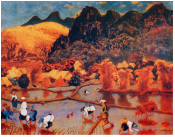
Figure 1Hoang Tich Chu, 1958: the mountain exchange team, lacquer painting, the Vietnam Museum of Fine Arts, Ha Noi, VietNam.
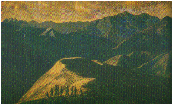
Figure 2Phan Ke An, 1950: Remember a Northwest Evening, lacquer painting, the Vietnam Museum of Fine Arts, Ha Noi, VietNam.
To Ngoc Van artist proposed in a presentation to the National Cultural Conference on July 19th, 1948 on Vietnamese lacquer paintings as follows: "...From the study of the color of lacquer, one can create diverse polyphonies to express anything in a complete harmony of shapes, colors and substances"5
And so, "Vietnamese lacquer painting material, right from the origin of decoration, can be considered as a mixed material. Enjoying Vietnamese lacquer paintings, in addition to the beauty of the material language itself, we can also see or feel, simultaneously or individually, many different types of effects: when oil paintings, when silk paintings, when wooden paintings, hydroelectric, watercolors; powdered colors; or sculpture, mosaic touches; jewelry, even of "collages" or "assemblages" in postmodern art and so on.6
In other words, in the sense of the relationship between the material and the artistic expression, lacquer requires the user to have the patience and virtuosity of an artist and sensitivity, and generosity of an artist. Only the artist can control the "flashy" and magic of this material.
The art of expressing the beauty of the material in the work is also a firm and profound grasp of the specific characteristics and techniques of the material, making the material an irreplaceable element of the work. Each shaping material has its own unique beauty and the artist is always looking for ways to express that characteristic. That rule is clearly reflected in the relationship between the material and the artistic expression of lacquer. Paint is a material, grinding is an art because grinding is a technical process of handling materials, so paint also becomes an art. It is this interaction that makes up the whole of the lacquer painting work.
None.
Author declares that there is no conflict of interest.

©2023 Minh. This is an open access article distributed under the terms of the, which permits unrestricted use, distribution, and build upon your work non-commercially.