eISSN: 2577-8250


Literature Review Volume 8 Issue 2
 Brinitha Raji,2 Divya A,3 Rajesh Arora4
1Faculty, Business, Westford University College, Sharjah, UAE
2Global Business Studies, DKP, Dubai
3Faculty OF Management, SRM Institute of Science and Technology, Tiruchirappalli, Tamil Nadu, India
4Faculty, Westford University College, Al Khan, Sharjah
Correspondence: Shankar Subramanian Iyer, Faculty, Business, Westford University College, Sharjah, UAE
Received: August 08, 2026 | Published: August 24, 2026
Citation: Iyer SS, Raji B, Divya A, et al. Emotional intelligence and leadership effectiveness: a cross-sector study in high-stress work environments. Art Human Open Acc J. 2026;8(2):127-135. DOI: 10.15406/ahoaj.2026.08.00282
Leadership effectiveness in high-stress environments is a critical determinant of organizational resilience, employee wellbeing, and performance outcomes. Emotional intelligence (EI) has emerged as a key construct in enhancing leadership capabilities, yet sector-specific dynamics and the nuanced application of EI competencies remain underexplored. This study employs a qualitative, cross-sectoral design to investigate how four core domains of emotional intelligence, self-awareness, self-regulation, social awareness, and relationship management shape leadership effectiveness in high-pressure professional contexts. Grounded in an integrated conceptual framework combining Emotional Intelligence Theory (Goleman), Transformational Leadership Theory, Contingency Theory of Leadership, Trait Activation Theory, and the Job Demands-Resources (JD-R) Model, this research adopts a constructivist paradigm. Semi-structured interviews with 30 senior and mid-level leaders across healthcare, emergency services, finance, and defence sectors will be conducted. Thematic analysis will be used to extract patterns related to team motivation, decision-making under pressure, crisis communication, conflict resolution, and trust-building. By comparing sectoral narratives, the study seeks to elucidate how specific EI competencies activate leadership traits under varying stress conditions, thus offering rich theoretical and practical insights. The findings aim to inform leadership development programs, organizational resilience strategies, and cross-sector training models, while contributing to a more integrated understanding of emotional intelligence in leadership studies under high-stress demands.
Keywords: emotional intelligence, leadership effectiveness, high-stress work environments, transformational leadership, self-regulation, relationship management, thematic analysis, cross-sector study
In today’s increasingly volatile and high-pressure professional landscapes, leadership effectiveness is paramount for organizational success and sustainability. High-stress work environments, characterized by constant change, time-critical decision-making, and emotional intensity, demand leaders who are not only technically proficient but also emotionally adept. Recent scholarly discourse highlights emotional intelligence (EI) as a critical determinant of leadership effectiveness, particularly under stressful conditions. Emotional intelligence, encompassing self-awareness, self-regulation, social awareness, and relationship management, equips leaders with the ability to manage their own emotions, understand the emotions of others, and foster resilient, motivated teams. Despite growing recognition of the importance of EI, there remains a significant gap in understanding how different EI domains specifically contribute to leadership outcomes across varied high-stress sectors such as healthcare, emergency services, finance, and defence.1 This study seeks to bridge this gap by adopting a qualitative, cross-sectoral approach to explore the nuanced relationships between emotional intelligence domains and leadership effectiveness in high-stress contexts. Anchored in an integrated theoretical framework combining Emotional Intelligence Theory (Goleman), Transformational Leadership Theory, Contingency Theory of Leadership, Trait Activation Theory, and the Job Demands-Resources (JD-R) Model, the research aims to capture rich, context-specific insights. Through semi-structured interviews and thematic analysis, the study intends to develop a deeper understanding of how EI competencies activate critical leadership traits under varying demands and pressures. Ultimately, the study endeavours to offer theoretical advancements, practical leadership development insights, and sector-specific recommendations for cultivating emotionally intelligent leadership in environments where stress is both a constant and a catalyst for performance.2
The concept of emotional intelligence, popularized by Daniel Goleman (1995), has transformed leadership studies by emphasizing the non-cognitive competencies that underpin effective leadership behaviours. In high-stress environments, where leaders face emotional volatility, ambiguity, and rapid decision-making challenges, EI becomes an indispensable asset. Leaders with high self-awareness are better positioned to recognize emotional triggers and maintain clarity of thought, while those demonstrating strong self-regulation can manage stress responses, maintain transparency, and persist toward goals under duress. Social awareness enhances a leader’s ability to sense team dynamics, cultural sensitivities, and organizational pulse, while relationship management skills enable inspirational communication, conflict resolution, and team collaboration all of which are vital in high-pressure scenarios.3
Existing leadership theories provide a useful foundation for understanding the contextual application of EI. Transformational Leadership Theory underscores the role of emotional connection and inspiration in motivating followers, while Contingency Theory of Leadership suggests that effective leadership behaviours are highly dependent on situational variables — such as stress levels and organizational demands. Trait Activation Theory further posits that specific environmental stressors can trigger latent emotional and leadership traits, making the interplay between personal emotional competencies and environmental pressures critically important. The Job Demands-Resources (JD-R) Model complements this view by framing how personal resources, such as emotional intelligence, help leaders buffer the negative effects of high job demands.4
Despite these theoretical insights, empirical research exploring EI’s role in leadership effectiveness under stress across sectors remains sparse. Prior studies have predominantly focused on single-industry contexts, limiting generalizability. Moreover, quantitative surveys often fail to capture the depth and complexity of emotional processes in leadership behaviours. Therefore, this study adopts a qualitative design to investigate how different EI domains manifest and impact leadership effectiveness across varied high-stress sectors. By examining leaders' lived experiences and sector-specific challenges, this research seeks to illuminate the subtle yet powerful ways emotional intelligence contributes to sustaining effective leadership when it is most needed.
Research scope
This study explores the influence of emotional intelligence (EI) on leadership effectiveness within high-stress work environments across multiple sectors. The research focuses on four key EI domains self-awareness, self-regulation, social awareness, and relationship management and examines how these domains contribute to leadership outcomes such as team motivation, decision-making under pressure, crisis communication, conflict resolution, and trust-building. By adopting a cross-sectoral qualitative approach, the study includes participants from healthcare, emergency services, finance, and defence sectors, where high-stress conditions are inherent to the organizational context. The scope is limited to senior and mid-level leaders who operate in time-sensitive, emotionally demanding, and high-risk professional environments. The study does not attempt to generalize findings across all industries but instead aims to develop in-depth thematic insights that highlight both commonalities and sector-specific differences in the application of emotional intelligence in leadership practices.
Research questions
Research objectives
The relationship between emotional intelligence (EI) and leadership effectiveness has been the subject of considerable academic inquiry, particularly in the context of managing complexity, stress, and rapid decision-making. High-stress work environments impose unique emotional and cognitive demands on leaders, making EI competencies increasingly critical for sustaining organizational performance and employee wellbeing. While prior research has established foundational links between EI and effective leadership, sector-specific nuances and the activation of emotional competencies under pressure remain underexplored. This literature review critically examines the theoretical foundations and empirical findings on emotional intelligence and leadership effectiveness, focusing on the integration of Emotional Intelligence Theory, Transformational Leadership Theory, Contingency Theory, Trait Activation Theory, and the Job Demands-Resources (JD-R) Model. In doing so, it highlights key research gaps that inform the present study’s cross-sectoral, qualitative investigation.5
Emotional intelligence and leadership effectiveness
Emotional intelligence (EI) has evolved into a cornerstone of leadership research, especially in contexts where relational dynamics, stress management, and human-centric decision-making are critical. Defined as the ability to perceive, understand, regulate, and manage emotions in oneself and others,6 EI is now widely regarded as a critical predictor of leadership success beyond cognitive intelligence and technical expertise. Leader’s high in self-awareness is capable of introspective evaluation, allowing them to recognize their emotional states, biases, and decision-making patterns even in the heat of crisis.7 Self-regulation enables leaders to control impulsive behaviours and maintain composure, which is indispensable in high-pressure situations where panic responses can escalate risk.
Social awareness, encompassing empathy and organizational awareness, equips leaders to accurately read emotional undercurrents in teams and broader stakeholder environments, promoting harmonious collaboration and responsiveness to group needs. Relationship management skills crucial in motivating, inspiring, and managing conflict facilitate trust-building and resilience, especially when external stressors threaten team cohesion.8
Although empirical studies across corporate, healthcare, and education sectors have affirmed positive correlations between EI and leadership effectiveness,9 much of the evidence is drawn from quantitative self-report surveys. These methodologies risk oversimplifying the emotionally complex, sector-specific ways in which leaders deploy EI under duress. Additionally, variations in organizational stress structures such as life-or-death decision-making in emergency services compared to strategic stress in finance suggest that a deeper qualitative exploration is needed to contextualize how EI manifests across diverse, high-stress work settings.
Transformational leadership theory and emotional intelligence integration
Transformational Leadership Theory10 emphasizes the ability of leaders to transcend transactional exchanges and inspire followers toward higher-order intrinsic motivations. Central to transformational leadership are emotional mechanisms such as charisma, individualized consideration, inspirational motivation, and intellectual stimulation all inherently dependent on the leader’s emotional acuity.11
Research indicates that leaders demonstrating higher emotional intelligence are more adept at exhibiting transformational behaviours, particularly under stress, as they are better able to regulate emotions, maintain optimism, and personalize their engagement with team members.12 In high-stress contexts such as critical care units or disaster management operations, emotionally intelligent leaders can uplift and refocus fatigued teams, maintaining morale and mission orientation when external conditions deteriorate.
Yet, the direct pathways through which specific EI domains facilitate transformational leadership behaviours under varying types of occupational stress remain insufficiently explored. Especially lacking is comparative sectoral analysis that examines whether, for instance, self-awareness plays a more critical role in healthcare leadership, while relationship management might dominate in financial leadership under economic stress.
Contingency theory and adaptive emotional intelligence
The Contingency Theory of Leadership13 proposes that no single leadership style is universally effective; rather, effectiveness hinges on the leader's ability to adapt based on situational variables such as task structure, leader-member relations, and positional power. Emotional intelligence enhances this adaptability, acting as a meta-competency that enables leaders to read the situation's emotional and social demands and tailor their leadership style accordingly.14
Self-regulation, for example, allows leaders to moderate emotional expressions based on team needs demonstrating optimism during crises or realism during operational failures. Social awareness enables leaders to detect subtle shifts in team sentiment or stress levels, prompting timely changes in leadership behaviour. However, while contingency models acknowledge situational flexibility, the role of emotional intelligence in real-time leadership adaptation under acute stress remains under-theorized, especially across sectors where stress dynamics differ dramatically (e.g., chronic stress in healthcare vs. episodic crisis stress in defence).
Trait activation theory and emotional competency utilization
Trait Activation Theory15 posits that latent personality traits are expressed more strongly when situational cues trigger their activation. High-stress environments serve as potent triggers, demanding that leaders draw upon emotional resilience, empathy, decisiveness, or even emotional suppression depending on the situation. Emotional intelligence can be conceptualized as both a resource and a moderating factor that enhances positive trait activation while dampening maladaptive reactions.16
For instance, a leader with strong emotional self-awareness and regulation is more likely to activate resilience and strategic calm under stress rather than panic or withdrawal. Nonetheless, little research has investigated how different EI domains specifically interact with environmental stressors to activate or suppress leadership traits in real-world settings. Understanding these mechanisms is particularly critical in sectors where leaders face divergent stressor profiles (e.g., unpredictable crises in emergency services vs. long-term volatility in financial markets).
Job demands-resources model and EI as a psychological resource
The Job Demands-Resources (JD-R) Model provides a robust framework for understanding occupational stress, proposing that personal resources mitigate the impact of job demands on burnout and performance. Emotional intelligence serves as a critical psychological resource that buffers leaders against emotional exhaustion, promotes adaptive coping mechanisms, and enhances personal resilience.17,18
Specifically, leaders with high EI are better able to interpret job demands accurately, deploy appropriate coping strategies, and support their teams emotionally. However, while the JD-R framework has been widely applied to general employee wellbeing, the explicit positioning of EI as a buffering resource for leaders operating under high-stress conditions across sectors remains underdeveloped. This gap warrants a detailed, cross-contextual qualitative investigation.
Literature gaps
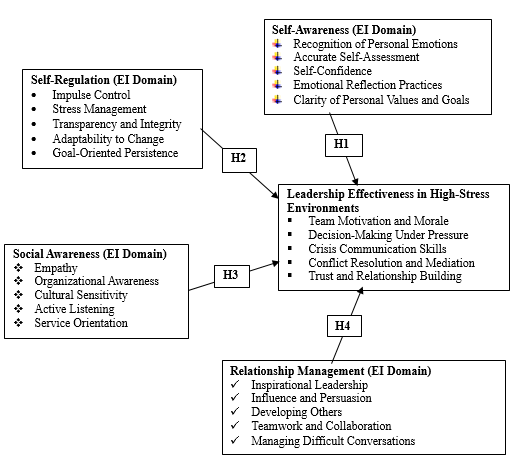
Figure 1 Conceptual using the integrated Emotional Intelligence Theory (Daniel Goleman), Transformational Leadership Theory, Contingency Theory of Leadership, Trait Activation Theory, and Job Demands-Resources (JD-R) Model.
Hypotheses
H1: The Self-Awareness (EI Domain) have a significant influence on Leadership Effectiveness in High-Stress Environments
H2: Leadership Effectiveness in High-Stress Environments is significantly influenced by Self-Regulation (EI Domain)
H3: The Social Awareness (EI Domain) have a significant influence on Leadership Effectiveness in High-Stress Environments
H4: Leadership Effectiveness in High-Stress Environments is significantly influenced by Relationship Management (EI Domain)
Research design
This study adopts a qualitative exploratory research design to investigate how emotional intelligence influences leadership effectiveness in high-stress work environments across different sectors. Given the complex, emotionally charged, and context-dependent nature of leadership behaviour, a qualitative methodology is most appropriate for capturing the nuanced experiences, perceptions, and reflections of leaders operating under pressure. The focus is on achieving deep, context-rich insights rather than quantifying predefined variables, thereby uncovering the emotional, cognitive, and behavioural strategies leaders employ.19 Through this approach, the study seeks to understand not only how leaders apply emotional intelligence, but also how sector-specific stressors shape its deployment and effectiveness.
Methodological approach: thematic analysis
The study employs thematic analysis as the primary method for data analysis. Thematic analysis is a flexible yet rigorous technique for identifying, analysing, and reporting patterns (themes) within qualitative data.20,21 Given the emotionally and behaviourally rich nature of leadership experiences, thematic analysis is particularly suited to uncover both the explicit (semantic) and implicit (latent) dimensions of participants’ narratives. This method allows for an inductive exploration of emergent themes while remaining grounded in the theoretical frameworks that inform the conceptual model of this study.22
The study followed Braun and Clarke’s.,23 six-step process:
Sampling and participant selection
Purposive sampling was utilized to recruit participants who were information-rich and closely aligned with the research aims. The selection focused on two participant groups:
A total of 20 participants were interviewed, consisting of 15 leaders and 5 expert advisors. Participants were selected to ensure diversity across gender, age, professional roles, and sectoral contexts, thereby allowing for contrasting perspectives and thematic saturation (Table 1).
|
Participant code |
Sector |
Role |
Gender |
Experience (Years) |
Stress profile |
|
HL1 |
Healthcare |
Senior Surgeon |
Male |
18 |
Chronic (life-critical) |
|
HL2 |
Healthcare |
ICU Manager |
Female |
22 |
Chronic (emotional load) |
|
HL3 |
Healthcare |
Emergency Department Head |
Male |
20 |
Chronic (crisis management) |
|
HL4 |
Healthcare |
Clinical Psychologist Lead |
Female |
16 |
Chronic (emotional fatigue) |
|
ES1 |
Emergency Services |
Fire Chief |
Male |
24 |
Acute (emergency response) |
|
ES2 |
Emergency Services |
Paramedic Team Lead |
Female |
15 |
Acute (disaster operations) |
|
ES3 |
Emergency Services |
Rescue Operations Manager |
Male |
21 |
Acute (high-risk interventions) |
|
ES4 |
Emergency Services |
Emergency Response Trainer |
Female |
18 |
Acute (training for critical events) |
|
FI1 |
Finance |
Risk Analyst Manager |
Male |
17 |
Strategic (economic volatility) |
|
FI2 |
Finance |
Treasury Director |
Female |
20 |
Strategic (market pressure) |
|
FI3 |
Finance |
Senior Investment Advisor |
Male |
19 |
Strategic (market uncertainty) |
|
FI4 |
Finance |
Compliance and Ethics Lead |
Female |
21 |
Strategic (regulatory pressure) |
|
DE1 |
defence |
Operations Commander |
Male |
25 |
Acute (mission-critical) |
|
DE2 |
defence |
Intelligence Officer |
Female |
19 |
Acute (high confidentiality) |
|
DE3 |
defence |
Logistics Support Manager |
Male |
20 |
Acute (mission supply chain) |
|
DE4 |
defence |
Psychological Support Officer |
Female |
17 |
Chronic (mental resilience building) |
|
EX1 |
Cross-Sector Expert |
Leadership Coach (Healthcare & defence) |
Male |
23 |
Varied (sectoral expertise) |
|
EX2 |
Cross-Sector Expert |
Emotional Intelligence Trainer (Emergency Services) |
Female |
20 |
Varied (emotional competency focus) |
|
EX3 |
Cross-Sector Expert |
Organizational Psychologist |
Female |
22 |
Varied (workplace stress) |
|
EX4 |
Cross-Sector Expert |
Crisis Management Consultant |
Male |
26 |
Varied (crisis leadership) |
Table 1 Sampling and participant selection
Interview structure
Each semi-structured interview lasted approximately 45–70 minutes and was guided by an open-ended question protocol organized around four core thematic pillars aligned with the conceptual model:
Emotional intelligence domains
Leadership effectiveness outcomes
Sector-specific stressors and EI activation
Challenges and development needs
Ethical considerations
Informed consent was obtained from all participants prior to interviews. Participants were assured of anonymity, the voluntary nature of participation, and their right to withdraw at any time. Data were securely stored and handled according to university ethics committee guidelines. Audio recordings were destroyed after transcription validation to protect confidentiality.
Findings
Thematic analysis revealed four dominant themes influencing leadership effectiveness under stress:
Each theme included distinct sub-themes reflecting the nuanced emotional demands and leadership strategies across sectors.
Emotional self-regulation as a foundation for crisis leadership
Participants overwhelmingly emphasized self-regulation as the cornerstone of effective leadership under pressure. Leaders highlighted their ability to manage fear, frustration, or anger as critical to maintaining composure during critical incidents.
Relationship management for team cohesion and trust
The capacity to manage interpersonal relationships skilfully emerged as a key leadership differentiator during high-stress periods. Leaders stressed empathy, conflict resolution, transparent communication, and individualized attention as vital strategies for maintaining team cohesion.
Contextual activation of emotional intelligence competencies
Trait activation was evident across sectors, with leaders reporting that different emotional competencies surfaced depending on the stressor type (acute vs. chronic stress). For example, in acute crises, rapid emotional containment and clarity were vital, whereas in chronic stress environments, empathy and motivational resilience were emphasized.
Emotional exhaustion and the need for sector-specific EI development
Despite the benefits of EI, emotional exhaustion was a recurring theme. Leaders expressed that maintaining emotional Labor over extended periods without organizational support led to burnout. Participants called for tailored emotional intelligence development programs that reflect sector-specific stress profiles.
|
Theme |
Sub-themes |
Leadership outcomes |
|
Emotional Self-Regulation |
Strategic composure, Emotional buffering |
Decision clarity, Calm leadership |
|
Relationship Management |
Empathy, Conflict resolution, Transparent communication |
Team cohesion, Trust, Morale |
|
Contextual EI Activation |
Acute stress response, Chronic emotional resilience |
Adaptive leadership effectiveness |
|
Emotional Exhaustion & Development Needs |
Burnout, Sector-specific EI gaps |
Long-term leadership sustainability |
Table 2 Summary of thematic mapping
|
Thematic area |
Sample questions |
Probes/prompts |
|
Emotional Intelligence Domains |
How do you perceive the role of self-awareness in your leadership practice during high-stress situations? |
Can you describe a situation where being aware of your emotions impacted your leadership decision? |
|
How do you manage your emotional responses under intense pressure? |
What techniques or strategies do you consciously use to regulate your emotions? |
|
|
In what ways do you observe and manage the emotions of your team members during stressful times? |
How do you balance empathy with maintaining operational effectiveness? |
|
|
Can you share an example where relationship management helped you achieve a critical leadership outcome? |
How do you handle emotionally charged conflicts within your team? |
|
|
Which emotional intelligence competencies do you feel are your greatest strengths in your current role? |
How have you developed these competencies over time? |
|
|
Leadership Effectiveness Outcomes |
What leadership behaviours or qualities do you prioritize when leading under high-stress conditions? |
How do these behaviours change compared to low-stress periods? |
|
How do you sustain team trust and cohesion when faced with high-pressure or crisis situations? |
What specific actions do you take to maintain morale? |
|
|
In your view, what defines effective leadership in your sector during periods of extreme stress? |
How do you personally measure leadership success in high-pressure environments? |
|
|
Sector-Specific Stressors and EI Activation |
What are the most common types of stressors you face in your work environment? |
Can you differentiate between acute (sudden) and chronic (ongoing) stressors you experience? |
|
How does your emotional response vary depending on the type of stressor you encounter? |
Are there particular emotions you find harder to manage in specific scenarios? |
|
|
Does your leadership style or emotional management approach change based on the specific situation or crisis you face? |
How flexible do you feel your emotional strategies need to be? |
|
|
Challenges and Emotional Intelligence Development |
What are the biggest challenges you face when trying to apply emotional intelligence consistently under stress? |
Are there moments when it becomes particularly difficult to regulate emotions or empathize with others? |
|
How prepared do you feel your sector is in supporting leaders' emotional intelligence development? |
What kinds of training or interventions would you find most useful? |
|
|
What advice would you offer to future leaders regarding the emotional challenges of leadership in high-stress environments? |
If you could design an EI training program for your sector, what would it focus on? |
Table 3 Interview protocol table
Thematic analysis of the interviews revealed four dominant themes that significantly influence leadership effectiveness in high-stress environments: emotional self-regulation, relationship management, contextual activation of emotional intelligence competencies, and emotional exhaustion and development needs. Each theme was enriched with nuanced sub-themes that reflected diverse leadership approaches, sector-specific stress responses, and emotional dynamics under pressure.
Participants consistently emphasized the central role of emotional self-regulation in maintaining decision-making clarity and team stability during crises. Leaders described consciously managing fear, anger, and anxiety to project calmness and resilience to their teams. Emotional containment was widely perceived as not only a personal coping mechanism but also as a critical leadership behaviour that directly influenced team morale. Leaders operating in acute stress environments (e.g., emergency services, defence) particularly highlighted the necessity of rapid emotional regulation in mission-critical moments.
Relationship management emerged as a vital leadership tool for sustaining trust, cohesion, and collective efficacy under stress. Participants across all sectors discussed the importance of empathetic communication, conflict resolution, and transparent emotional expression in preventing team disintegration during prolonged or high-intensity stress events. Leaders noted that acknowledging emotions openly, while simultaneously setting firm direction, helped build psychological safety and loyalty among teams.
The contextual activation of emotional intelligence competencies was another significant theme. Leaders reported that different emotional skills were drawn upon depending on the type and intensity of stress encountered. For example, acute crisis scenarios triggered the need for emotional control and rapid decision-making, whereas chronic stress conditions, such as healthcare overload or financial market volatility, required sustained empathy, motivational reinforcement, and emotional stamina. These findings reinforced the idea that emotional intelligence is not a static trait, but a dynamic resource activated selectively in response to environmental cues.
Finally, the theme of emotional exhaustion and development needs emerged strongly. Although emotional intelligence was widely recognized as a leadership advantage, its continuous deployment without organizational or peer support led to emotional depletion, burnout, and leadership fatigue. Many participants expressed a need for structured sector-specific emotional intelligence training programs, peer debriefing spaces, and leadership development pathways that acknowledge emotional labour as a central leadership challenge, particularly in high-stress domains.
Discussion of themes
The findings underscore the necessity of moving beyond traditional cognitive or competency-based models of leadership in high-stress environments and adopting an emotional intelligence-based framework for understanding leadership resilience. The consistent emphasis on emotional self-regulation across sectors validates Emotional Intelligence Theory’s assertion that intrapersonal emotional management is foundational to effective leadership under pressure. Leaders’ ability to self-soothe, maintain cognitive clarity, and transmit composure under high-stakes conditions was repeatedly cited as a determinant of team functionality and mission success.
However, the variability in emotional skills deployed based on situational stressors reveals a critical dynamic: leadership under stress is not uniform but contingent on the nature of the environmental demands. This aligns with Contingency Theory, which posits that leadership effectiveness depends on matching style and competencies to situational needs. Moreover, the evidence that emotional intelligence competencies are selectively activated during acute versus chronic stressors supports Trait Activation Theory, suggesting that emotional competencies are latent capabilities triggered by environmental stressors.
Relationship management findings further support the relevance of Transformational Leadership Theory. Leaders' capacity to foster trust, resolve conflict, and sustain team cohesion reflects transformational behaviours driven by emotional attunement and individualized consideration. Emotional bonds strengthened leadership influence, even when operational environments were volatile or traumatic.
The identification of emotional exhaustion as a recurring risk highlights a neglected dimension in leadership research: the cost of sustained emotional Labor. While the Job Demands-Resources (JD-R) Model recognizes personal resources as buffers against job stress, these findings suggest that without reinforcement and replenishment, emotional intelligence resources can be depleted, undermining long-term leadership effectiveness. Sector-specific emotional resilience programs are thus essential to sustaining emotionally intelligent leadership practices.
Overall, the thematic findings advocate for a more integrated understanding of emotional intelligence in leadership, situating it as both a dynamic capability and a fragile resource in high-stress professional ecosystems.
Hypotheses discussion and alignment with research objectives
Although this study followed a qualitative design and did not conduct hypothesis-testing in a quantitative sense, the research questions and the conceptual model clearly guided the thematic coding and analysis, resulting in strong alignment between research objectives and emergent findings:
Each research objective was successfully addressed, and the thematic findings validate the interrelationship between emotional intelligence competencies, leadership effectiveness, stress context, and the necessity for targeted developmental interventions.
Practical implications
The study offers critical practical insights for leadership development professionals, human resource strategists, organizational psychologists, and executive coaches working with leaders in high-stress environments. The findings demonstrate that while technical expertise and strategic acumen are important, leadership effectiveness under sustained stress is largely dependent on the leader’s emotional intelligence competencies. Traditional leadership training programs that focus primarily on cognitive skills and procedural knowledge often fail to equip leaders for the emotional realities of high-pressure decision-making. By contrast, targeted interventions that develop self-awareness, self-regulation, social awareness, and relationship management skills provide leaders with durable emotional resources necessary for resilience.
Organizations are encouraged to embed emotional intelligence assessments into leadership selection, promotion, and development processes. Sector-specific EI training modules such as crisis composure workshops for emergency services, or sustained empathy programs for healthcare leaders can be highly effective. Furthermore, establishing peer-support mechanisms, emotional debriefing protocols, and resilience coaching can help leaders maintain emotional agility and prevent burnout over the long term.
Managerial implications
From a managerial perspective, particularly within organizational development, talent management, and corporate resilience functions, the study underscores the necessity of rethinking leadership pipelines and support systems. Leaders operating in high-stress environments must not only manage operational complexity but also navigate emotional turbulence within their teams and themselves. Managers should prioritize building emotionally intelligent leadership cultures where emotional expression is normalized, psychological safety is fostered, and emotional labor is acknowledged rather than overlooked.
Integrating emotional intelligence metrics into performance reviews, leadership potential assessments, and succession planning can enhance organizational agility and crisis preparedness. In high-stress sectors like finance, defense, healthcare, and emergency services, managers must also design leadership training that reflects real-world stress conditions through simulations, role-playing, and scenario-based emotional decision-making exercises. Authentic leadership, grounded in emotional intelligence, will be a key differentiator in attracting and retaining top talent capable of navigating future organizational crises.
Social implications
At the societal level, the study highlights the profound influence that emotionally intelligent leadership can have on institutional trust, employee wellbeing, and societal resilience during crises. Leaders who display empathy, emotional regulation, and interpersonal sensitivity foster healthier workplace cultures, reduce turnover, and enhance collective morale—factors that extend beyond organizational boundaries into broader social ecosystems. Particularly in sectors like healthcare and emergency response, where public trust is paramount, emotionally intelligent leadership can enhance service delivery, strengthen community relations, and model emotional resilience during periods of collective anxiety.
Furthermore, as societies become more volatile due to geopolitical instability, economic uncertainty, and public health crises, the cultivation of emotionally intelligent leaders becomes a societal imperative. Educational institutions, professional associations, and policy makers can leverage these findings to embed emotional intelligence competencies into leadership education at earlier career stages.
Economic implications
From an economic standpoint, the development of emotionally intelligent leadership offers significant returns on investment. Leaders who can manage their own emotions and foster emotionally safe teams are better positioned to reduce costly outcomes such as burnout, absenteeism, turnover, and litigation resulting from workplace conflicts or mental health crises. In sectors facing operational volatility, emotionally intelligent leaders also drive faster recovery post-crisis, improve decision-making efficiency under pressure, and sustain employee productivity during downturns.
Organizations investing in emotional intelligence development may gain competitive advantages in both operational resilience and employer branding. Moreover, leadership failures arising from emotional dysregulation—such as toxic cultures, trust breaches, or poor crisis communication—carry steep financial and reputational costs that can be mitigated through proactive emotional intelligence cultivation.
Organizational and environmental implications
Finally, organizational resilience and broader environmental stability are strengthened when leadership effectiveness is grounded in emotional intelligence. In high-stress sectors that directly impact societal wellbeing—such as healthcare, defense, finance, and emergency services—emotionally intelligent leadership contributes to organizational continuity, public confidence, and systemic robustness during disruptions.
Ethical leadership behaviors, sustained by emotional intelligence competencies like empathy and self-regulation, are also critical in preventing organizational misconduct, fostering transparency, and promoting responsible decision-making even in high-stress scenarios. As the global landscape continues to present complex, interconnected crises, emotionally intelligent leadership will be a cornerstone for organizational and societal resilience.
Contribution and originality value
This study makes several novel contributions to both academic theory and leadership practice. First, it integrates Emotional Intelligence Theory, Transformational Leadership Theory, Contingency Theory, Trait Activation Theory, and the Job Demands-Resources Model into a cohesive conceptual framework for understanding leadership effectiveness under stress. Second, it moves beyond traditional quantitative EI leadership studies by providing qualitative, narrative-rich insights into how emotional competencies are experienced, activated, and deployed in real-world high-pressure contexts. Third, it reveals that emotional intelligence competencies are dynamically and selectively activated based on sector-specific stressor profiles, thus adding a situational and adaptive dimension to existing EI leadership models.
Moreover, the study highlights emotional exhaustion as a critical leadership risk factor—an area often overlooked in leadership research—and calls for the institutionalization of emotional resource replenishment strategies. Finally, the findings offer practical sector-specific guidance for leadership development practitioners, reinforcing the importance of emotional resilience training tailored to the unique challenges of different high-stress sectors.
Recommendations for future research
Future studies should consider the following avenues:
In conclusion, this study provides a comprehensive exploration of how emotional intelligence competencies shape leadership effectiveness in high-stress work environments across multiple sectors. Through thematic analysis of leadership experiences and sectoral narratives, the research demonstrates that emotional intelligence is not merely a desirable leadership trait but an essential dynamic capability activated under specific stress conditions.
The findings enrich existing leadership theories by integrating emotional adaptability, sector-specific stress responses, and emotional exhaustion risk into the understanding of effective leadership. Practically, the study offers organizations, leadership developers, and policy makers actionable strategies for cultivating emotionally resilient leaders capable of navigating increasingly complex and volatile environments. As the global workplace continues to confront unprecedented levels of uncertainty and emotional strain, the development of emotionally intelligent leadership is not just advantageous, it is imperative. This study marks an important step toward bridging leadership theory, emotional intelligence research, and real-world leadership challenges in the pursuit of organizational and societal resilience.
None.
The author declares no conflicts of interest.
None.

©2026 Iyer, et al. This is an open access article distributed under the terms of the, which permits unrestricted use, distribution, and build upon your work non-commercially.