eISSN: 2577-8285


Review Article Volume 4 Issue 1
Professor of clinical Neuropsychology, University of Salamanca, Spain
Correspondence: Eva M Arroyo Anllo, Professor of clinical Neuropsychology, Neuroscience Institute of Castilla-Leon, University of Salamanca, Spain, Tel 34629460944
Received: February 09, 2020 | Published: February 28, 2020
Citation: Eva MAA. Evolution of neuropsychology: towards a humanist neuropsychology.Sleep Med Dis Int J. 2020;4(1):26-30. DOI: 10.15406/smdij.2020.04.00068
This paper presents a review of the evolution of Neuropsychology, a conceptual paradigm shift. From the traditional neuropsychology focused on superior mental functions and brain structures, putting more emphasis on brain functioning and location of the lesion, going through the associations, cognitivist or integral neuropsychology and at the moment, shifting to a new paradigm of the neuropsychology, called Humanistic Neuropsychology. Humanistic Neuropsychology is more centered on the human behavior, on the man from a more socio-global and personalized point of view for the benefit of his general well-being.
Keywords: humanism, neuropsychology, psychiatry, history, neuroscience, psychology
TIC, technologies of information and communication; GDO, global dementia; WHO, World health organization
Classical neuropsychology
During the 20th century, we witnessed the most revolutionary period in the growth and settlement of Neuroscience, particularly of Neuropsychology, as a discipline, both in research and in the clinic. Such was the protagonist of this discipline, that the past decade of the 90 was defined as "The decade of the brain". As a corollary, Kolb et al.,1 makes a reflection that subscribes to this idea: "The twentieth century belongs to Neuroscience". But this amazing evolution has not been limited to the twentieth century, it has not been a passing fad, but it is being considered as the great revolution in human knowledge, a new way of conceiving and understanding the human being, which we hope will not surpass our capacity for humanity, if not the opposite that elevates it to the first rank of our curiosity and scientific restlessness. At present, Neuropsychology begins to be part of the study of any disorder that affects the mind and, evidently, this is due to a conceptual paradigm shift. In the beginning, “classical or traditional” neuropsychology deals with this classic brain-mind Cartesian dichotomy, whose fundamental objective is to study the relationships between behavior or in the most restricted sense, superior mental functions and brain structures, putting more emphasis on brain functioning and location of the lesion.2 The first systematic attempt to relate the cerebral topography with the mental functions corresponds to F.J. Gall (1758-1828), founder of Phrenology, who attributed specific mental characteristics to different regions of the brain, up to 27 different according to Gall. Although part of the investigations have been carried out through experimentation with groups of normal subjects, most of the research has focused mainly on the clinical symptoms of patients with brain lesions, such as the great contributions of classical clinical cases such as Brocas3 or Wernicke's (1848-1904), among others. Actually, we could say that neuropsychology was born with the description Brocas3 made in 1861 of the brain of his patient Leborgne, who died at the Bicêtre hospital in Paris, 20 years after having had a right hemiplegia and a language disorder. The lesion was in the third frontal gyrus, causing an alteration of the linguistic function.4 Thirteen years later, Wernicke described another type of aphasia, sensory aphasia, caused by injury to the first left temporal gyrus. Thus, the idea defended almost 30 years before Broca and Wernicke, by B. Bouillaud (1796-1881) on the existence of a cerebral center responsible for the movements of the speech organs was confirmed in an anatomo-clinical manner. Through them, the aim was to identify patterns of symptoms (syndromes) that tend to be associated with the presence of certain lesions in certain brain regions.
This discovery seemed to be a confirmation of the localizationist intuition of phrenology, but the anatomical-clinical procedure was to sign its decline. However, it is striking to note that, whatever may be the currents that have followed Neuropsychology; the classification of aphasia cannot depart from this initial opposition between reduced-language aphasia and fluid aphasia. In addition, from the localizationist theories, the theory of the centers of images or the associationism, represented by Wernicke to JM.Charcot (1825-1893) began to develop in parallel. Thus, in aphasia there could be an alteration of the center of verbal motor images (pure motor aphasia), or of the center of auditory images (verbal deafness) or center of visual images (verbal blindness). Pierre Marie (1853-1940) went against this conception, denying the existence of these centers of images and defending a single variety of aphasia, Wernicke's aphasia, although Castaigne and his team in 19805 were able to demonstrate with Leborgne's brain tomodensitometry exam, that Wernicke's area was intact and, therefore, the existence of different aphasia fixes could be considered. But not all were placed in localizationist models, some authors began to emerge under the holistic and dynamic influence of P. Fluorens (1794-1867) defending the thesis of the brain functions as a whole and intervenes in each of the activities which come out, such as JH. Jackson (1835-1911), KS. Lashley (1890-1958), among others.
Neuropsychology in the 20th century
The change to the 20th century led to the emergence of neuroanatomical and neurophysiological studies that were shaping the emergence of Neuroscience, in the 70s, as a synthesis discipline,6 with great contributions such as those of Ramón y Cajal (1852-1934) or Brodmann (1868-1918), among others. In this sense, Neuroscience offered the possibility of building bridges between different levels of analysis and placed itself in an optimal position to unite brain tissue with mental processes. And in particular, Neuropsychology proposed a model and a level of analysis that allowed it to be placed between the most mentalist and the most neurobiological models with what unites mind and brain. However, it must be recognized that the associationist trend has shown the importance of the relationships between different cerebral areas intra-hemispheric and inter-hemispheric. In this way, came the connectionist theory represented among others, by Jules Déjerine (1849-1917) or Geschwind (1923-1984). Connectionism considers the brain as a network between centers necessary for the treatment of information and the ways that connect them. It creates a great interest in the clinical analysis of the disorders related to a deficit of inter-hemispheric transfer of information7 and therefore, in the functional specialization of the cerebral hemispheres. Subsequently, the associationist current gave rise to the cognitivist. In the second half of the twentieth century, research on normal processes in psychology caused behavioral models, sometimes known as "black box" models, to give way to models focused on "information processing".
In them the information is processed in a way analogous to what happens in a computer. There are inputs (inputs) that are analyzed by the sensory receptors, some products or outputs (outputs) and some intermediate processes between them and others that are executed by a set of specialized systems. The boom experienced in Psychology by the "information processing" approach, on one hand, and the internal crisis generated within classical neuropsychology by certain issues of both conceptual and methodological nature, on the other hand, made In the 80s and 90s, Neuroscience was progressively relating to Cognitive Psychology,8 creating Cognitive Neuroscience9 at the end of the 1980s (1988-89). Thus, at that time, cognitive psychologists were beginning to direct their eyes towards neuroscience, and neuroscience was becoming increasingly interested in the type of problems that cognitive psychology posed. The need for a new way of understanding the relationship between the brain and the mind was palpable, to the point that some authors began to be called "cognitive neuropsychologists", placing more emphasis on cognitive processes than on the nervous system. The powerful modern neuroimaging techniques had not yet been developed,10,11 but cerebral evoked potentials were already used in cognitive paradigms.12 And thus, the development of positron emission tomography13 and ten years later, that of the functional magnetic resonance,14 would make possible to study these brain-mind interactions in the human brain of active subjects. Cognitive neuropsychology has made great progress in different cognitive processes, developing numerous cognitive models such as those related to the calculation system, the treatment of sensory information, the recognition of faces, working memory models, long-term memory, among others. However, many investigations have induced the development of a highly phrenological conceptual state regarding the cerebral representation of cognitive functions, provoking a paradigmatic crisis of cognitive neuroscience,15 leading us more towards neural network models of neurocognition. For example, the concept of double dissociation has led several researchers to propose an independent organization of the different cognitive functions, creating specific cognitive "maps" for language, memory. Thus, we have arrived at a situation of experts in a specific cognitive process and even in our universities, and the accumulated knowledge of each process is dissociated in technically independent subjects. We have models of the organization of language, memory or attention, but integrative models that try to explain the cognition as a whole and the existing relations between the different cognitive processes are much less frequent. Luria16 conceived what has been called an "integral dynamic neuropsychology", combining classical and cognitive neuropsychology. He addressed the way in which all the functions of language, memory, thoughts, and actions were orchestrated in a coherent way. Thus, numerous works devoted to the frontal lobes and associated with the concept of executive functions that regroup the capabilities of programming, anticipation, mental flexibility, resistance to interference. He defended the thesis on the organization of higher functions in "complex functional systems", where each function would be the result of the coordinated work of wide networks (constellations) of neurons that obviously cannot be limited exclusively to a certain area. In the same sense, but with a more current language, they are pronounced Mesulam17 or Damasio18 which defend that complex functions cannot be located in a specific region but depend on neural networks or neural maps and their relationships with our mental experiences that are distributed and localized at the same time. This complex network of connections is not limited to a purely local aspect in which there is an intense interconnection between neighboring cells, but intense cortico-cortical and subcortico-cortical long-distance interconnections are developed. The brain is a highly complex system, where its connections are not random, are built and depend on our mental experiences.
Until the end of the twentieth century, the mechanisms of motivation and decision-making had not been almost addressed by neuropsychology. Thus, it was necessary to admit the entanglement of cognitive processes and emotional processes. Etymologically, emotion is a movement that extracts the individual from his previous state with a positive affective valence (happiness) or negative (fear). The "emotional" part of the brain began to have considerable weight to understand brain functioning and human behavior. Thus, neuropsychology stopped focusing only on cognitive functions to move to the study of emotions in relation to reason, where emotion plays a major role in the management of our reason and human behavior.19–21 It is Damasio19 merit to have shown the structuring importance of emotions in decision-making, which until then had been considered purely rational acts. Thanks to the observation and clinical reflection of the patient of Damasio20 EVR (which after being operated from a frontal meningioma, he began to make catastrophic decisions both professionally and personally), Damasio21 led the emotion to be considered as the rudder that directs the reason. In this way, it puts emotion and reason at the same level, considering that all reasoning can be sterile if it is not based on emotion and that it is emotion, which allows reason to be put into action. This understanding between reason and emotion allows the human being to regulate their behavior in their socio-family context. In this way, neuropsychology became interested in behavioral disorders caused by brain damage such as disinhibition, apathy, dependence on context, disinhibition, and aggression. Thus, the classic paradigm of Neuropsychology was a neuropsychological paradigm of the "cold" type, where reason predominated in the already classic "reason-emotion" dichotomy. Classically, the brain can be said to have one rational part and another emotional part. That rational part, considers the brain as a computational organ, a computer, a robot and in this they focused at the time of the development of computer science and in particular, of "Artificial Intelligence" at the end of the 20th century.22,23 Artificial intelligences are trying to combine that emotion with their capacity for reasoning, trying to achieve the interpretation of emotions in humans in the first place. Nowadays, it is already possible to save a large part of our life history of a person in a program ("social android", a reproduction of the bust of a person -Bina48-), in such a way that others can interact with said program that offers answers to dilemmas that are posed, making predictions-probabilities with that person's database (LifeNaut Project, www.LifeNaut.com, artificial intelligence project and cyber-consciousness). In addition, all this has been propitiated because Neuropsychology participates in the knowledge and advances of other sciences, which have inherited initially the tradition of location in the study between brain and mind. Among them, neuromolecular advances, which propelled the study of the genes responsible for different behaviors, initially also in a "cold way", i.e., forgetting the essence of gene-environment-experiences interactions, which bi-directionally modulate their expressions24 or the study of behavioral syndromes associated with alterations in protein metabolism, such as beta amyloid or tau protein. But we must not forget also the development of techniques of study of the Nervous System such as functional magnetic resonance or positron emission tomography or cortical stimulation in the restoration of functions, through induced plasticity or advances in the technologies of information and communication -TICs.
Towards a humanist neuropsychologyAt the beginning of the 21st century, neuropsychology took an essential step to understand the brain as the key biological organ of humanity, taking into account the incessant interactions between the human being and its social environment to the study of behavior alterations. Furthermore, we can also add to these neuroscientific dichotomies, what we could call the "Me-us" within the "Social Neuropsychology".25 In this neuroscientific revolution, we have gone from being interested in the brain and its mental experiences of "individual form" to being interested in the "interaction of a brain with other brains", our "minds with other minds" that make us significantly human, where we observe how people are unique and unrepeatable, being able to simulate the mind of our fellow human being, projecting ourselves into the future, attributing "subjective experiences" to other living beings. 26,27 In that interaction of the "Me-others", the study is located in the last decade of the self-consciousness and that of the Others, where the regulation of life is also outside the pure and direct biological control, it is in the relationship "You and Me", in us, in the community, that is to say, a regulation from the socio-cultural point of view, based on human/ moral values. The human being and his way of acting both normal and pathological will be understood when the previously mentioned dichotomies die in the strict sense. Thus, we can presume to be the species chosen for its rationality, but what makes us wonderful is the integration of complex cognitive processes with a wide range of basic and social emotions that make us unique and cooperative beings.
A possible meeting place between these different perspectives that we have just pointed out, is the Neuropsychology that has survived with relatively good health to our days, the Clinical Neuropsychology that is serving as a hinge between many of the Neurosciences.28 Its main task is the study of the nervous system from a transdisciplinary perspective to unravel how the brain and mind intertwine their threads in a single reality as is the development of the human being. Thus, new lines of translational and interdisciplinary research emerge between different fields of Neuroscience, which often point to Clinical Neuropsychology as the discipline capable of linking the basic findings with their clinical implications and thus give them meaning for the phenomenological experience. Although current neuropsychology is a good paradigm to approach the knowledge of the complexity of the brain-behavior relationship, in our opinion there are still "meeting points" between the biological and the biographical. A fruitful encounter could be Neuro-ethics,29,30 that studies the ethical-legal and social issues that arise when scientific discoveries about the brain are taken to clinical practice, to legal interpretations, to the socio-health policy, and showing a concern for the privacy of thought, the "Self", the brain and the content of consciousness, among others. From our more restricted field, we could call it Neuropsychico-ethics that tries to understand the way of being of the person inserted in the history of his own life, studying "the human being in action", in relation to others. Within this Neuro-ethical framework, neuropsychology studies are not only concerned with analyzing cognitive processes such as memory, language or knowing the type of aphasia of a patient for example, but it is concerned with studying how man uses language with a mental ailment, of memory, what it is that makes that man express himself in that way, that he likes that kind of data, why he wants to use them in that way and not, of another shed more light on the processes that make us more human, considering ethical perspectives, integrating human values as is the case of the study of the nature of "Consciousness of the Self and of others",31–35 which will be key to foresee the strategic lines and priorities that Neuroscience will have in the near future.
This evolution, which implies a neuroscientific revolution, is leading us, in our view, to a paradigm shift within current Neuropsychology, towards a Humanistic Neuropsychology, centered on the person in relation to others (Figure 1). In this evolution, the neuropsychologist will be required to have a high competence in the biological, the humanistic and the psycho-sociological. The great part of the neuroscientific advances have been applied essentially or try to apply to the treatment, to the denominated "cure" versus "care", that is to say to cure as opposed to "to take care" (or to heal, considering the interaction of both) of the person with a medical condition, in this case a mental illness. Thus, many of the neuroscientific efforts have been translated into neuropathological treatments, for example advances in electrical brain stimulation or neurosurgery with the patient conscious for the recovery of mental function or the development of pharmacological active ingredients and even non-pharmacological therapies that try to cure or treat neuropathologies from a motor-cognitive point of view, although sometimes without great success as in the case of Alzheimer's disease, among others. The paradigm of Humanistic Neuropsychology emphasizes the study of the person as a whole and focuses on the person, looking at human behavior not from the eyes of the observer, but through the eyes of the person who behaves in a concrete way. The fathers of Humanistic Psychology, A. Maslow and C. Rogers argued that man was biologically directed to the self-actualization of the self in relation to others,36 that is, the humanistic model is based on the concept of oneself.37 In the field of current neuropsychology, we could consider Oliver Sacks as one of the pioneers of the current evolution of the neuropsychological paradigm, where it is not intended to reduce the study of the human mind to an organic mental pathology, but to study it with a humanist and existential without forgetting at the same time the criterion of rigor and, therefore, the use of the scientific method. The root causes of a neuropathology are complex and do not reflect only a neurological dysfunction, but are located at the intersection of those dichotomies to which we referred earlier, which could reduce them to the intersection of the biological and biographical of the person. From there, we understand that genes and the organization of the brain influence behavior, in the same way that the personal history of the subject with others calibrate, modify and carve the brain interconnections. That is exactly what is exciting in our science, that prevents the reductionism in the understanding of the mental functioning of the person.
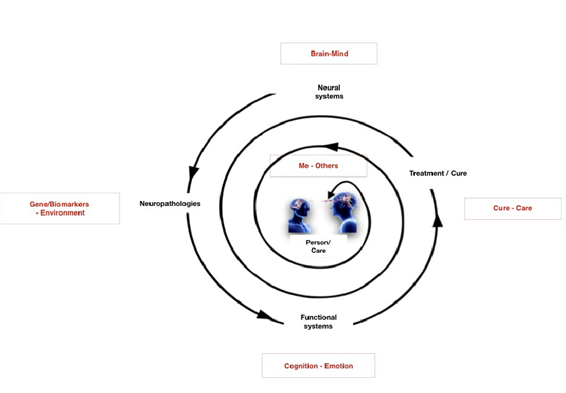
Figure 1 Representation of evolution of dichotomies in neuropsychology until arriving at a humanistic conception, centered on the person in relation to other-s.
From this perspective, it reveals the extreme sophistication of the human being and his extraordinary ability to adapt when it comes to reducing a mental deficit by a mechanism of brain-behavioral compensation. We find in the clinical reality that each pathology that creates a deficiency allows at the same time to create mechanisms of compensation, adaptation or homeostasis, we could even say of "overcoming". Thus, in one of the most devastating neuropathologies for the essence of the person, Alzheimer's disease, the ailment prevents remembering recent events and the understanding of words and thus, despite not understanding a speech, they are extremely sensitive to the past and to the paraverbal expressions (intonation, volume of the voice, gestures..), to emotion.38,39 There is no well-adapted system if you do not know how to integrate emotion and cognition acting in the great stage of life. This paradigm shift in Neuropsychology, in the art of observation, description and relationship with the patient with brain damage, makes us resist treating patients as vulgar biological or bio-technological packages. We should humanize the technology, before she dehumanizes us; the technological tools cannot reach the clinical "altar" and become "diagnostic and treatment machines" without a reflection on the suffering person. For example, psychopathology is currently engaged in the search for the biological marker that causes mental illness, which ends up almost always leading to a single result: the non-specificity of biological markers, as well as in the study of the genes of a disease, since the human being responds to the multi-causality; Genes are nothing without the environment and the environment becomes subjective experiences that modulate gene expression. Therefore, we must go beyond the neuropathlogical treatment, the cure itself, offering care, cognitive-emotional enhancers that promote well-being, a new way of understanding the human being and his illness. Care also heals and there lies the art of our relationship with patients in the field of Neuropsychology, where a space is created for human encounter to collaborate in overcoming suffering, using the best resources of science and art. There is a lesson to be learned at the same time ethical and clinical in dementia and other neuropathologies that cause human disintegration, since we have the restoration of such personal integrity even if it is temporary, through art, music, taste..., through emotion. An existential approach is essential in addition to a more biological approach, allowing a memory to emerge even if it is fleeting through an odour / flavor, allowing the Parkinson akinetic to move through family music. At that same moment, the Self carries and reigns over the disease, provoking, even temporarily, "being himself", in preserving his identity that belongs to him, that constitutes him as an unrepeatable person and that has been chiseling in the brain and experiences, biology and biography interactions.
This change of paradigm or return to the humanistic roots that we have described, is also taking place in the Health Sciences, in general. In this way, it was reflected last October at the World Conference on Non-communicable Diseases, organized by the World Health Organization. The governments approved the Montevideo Roadmap40 (2018-2030) on the fight against these diseases, giving priority to "promoting mental well-being, reducing suffering. They committed themselves to actively undertake new actions focused on people to promote health and well-being mental, prioritizing more cost-effective, affordable, equitable, evidence-based and inclusive interventions". In addition, the World Action Plan for Dementia Response (2017-2025) has as its main objective "to improve the lives of people with dementia, their families and those of the people who care for them, as well as to reduce the impact of dementia in the world "In addition, WHO has created the first World Observatory of Dementia, a platform that aims to analyze the state of dementia in the world and promote measures for the prevention and care of people with dementia and their families. Finally, we must never forget that neuropsychology has as its subject the study and rehabilitation of disorders caused by the suffering of the brain, that is, the only organ that is a visible witness of humanity, that is, the foundation of the dignity of the person of each person one of them. In general, one could say that after having long been interested in "diseases" from different types of approaches (structural, molecular, cognitive...), neuropsychology centers more and more on the "patients who suffer". Its humanist dimension is that it is now aimed at the person (with his reason and his emotions) and his interactions with the socio-cultural world (through social cognition), as it is true that the human being is always a "to be in the world".41
None.
All authors declared that there are no conflicts of interest.
None.

©2020 Eva. This is an open access article distributed under the terms of the, which permits unrestricted use, distribution, and build upon your work non-commercially.