Open Access Journal of
eISSN: 2575-9086


Research Article Volume 8 Issue 1
 Alexandre Azenha Alves de Rezende
Institute of Exact and Natural Sciences of Pontal, Federal University of Uberlândia – UFU, Brazil
Correspondence: Alexandre Azenha Alves de Rezende, Institute of Exact and Natural Sciences of Pontal, Federal University of Uberlândia – UFU, Brazil
Received: November 15, 2025 | Published: November 28, 2025
Citation: Tozi N, Alves AA. Generalized anxiety disorder: genetic and biochemical aspects of the serotonin transporter protein. Open Access J Sci. 2025;8(1):272-277. DOI: 10.15406/oajs.2025.08.00272
Introduction: Anxiety is a brain response to danger. However, when it becomes frequent, persistent, and prevents the individual from carrying out their activities, it is considered pathological. Generalized anxiety disorder (GAD) is considered one of the oldest psychiatric disorders, presenting various symptoms, such as excessive anxiety and apprehension, and difficulty controlling worry.
Objective: To analyze, using computational biology tools, the genetic characteristics of the SLC6A4 gene (encoding the serotonin transporter protein – SERT) and the biochemical characteristics of SERT, revealing its features in Homo sapiens, since serotonin plays a crucial role in mood regulation.
Methodology: Exploratory and descriptive study using bibliographic review, consultation of databases, platforms, and open-access computational biology tools.
Results: SLC6A4 is responsible for SERT synthesis. This gene is found in the 17q11.2 region and has 15 exons. According to the results obtained, alterations were found in the promoter region, as well as SNPs in coding regions and post-translational alterations in the protein. The prediction of alterations in SERT demonstrated severe instability. The alterations described in the present work suggest that individuals with GAD may be tolerant to medications used in the treatment of anxiety, especially those that are physicians' first choice.
Conclusion: GAD management is usually pharmacological, and understanding the genetic and biochemical alterations of genes and proteins that play a fundamental role in pathway signaling can suggest biomarkers for accurate diagnosis, improving treatment effectiveness and quality of life.
Keywords: selective serotonin reuptake inhibitors, 5-hydroxytryptamine, central nervous system
Anxiety is a response of the brain to danger, but when it becomes frequent and persistent, preventing the individual from carrying out their activities, it is considered pathological. Generalized Anxiety Disorder (GAD) is considered one of the oldest psychiatric disorders and was introduced in the third edition of the Diagnostic and Statistical Manual of Mental Disorders starting in 1980. According to the fifth edition of this manual, GAD presents several symptoms, such as excessive anxiety and apprehension, and difficulty controlling worry. Furthermore, it must include three or more physical or cognitive symptoms, such as restlessness, tension, difficulty concentrating, irritability, sleep disturbances, and muscle tension.1
Individuals with GAD exhibit an excessive pattern of worry and intolerance of the unknown and require treatment, usually long-term.2 Furthermore, the predisposition to developing GAD is strongly linked to childhood, as brain development occurs during this phase.3
According to the Global Burden of Disease, in 2020 GAD diagnoses increased by 25.6% due to the COVID-19 Pandemic, and women and young people (20 to 24 years old) were the most affected.4
The pharmacological treatment recommended for anxiety consists of using first-line medications, such as Selective Serotonin Reuptake Inhibitors (SSRIs), Serotonin and Norepinephrine Reuptake Inhibitors (SNRIs), and Pregabalin, in addition to second-line medications, the benzodiazepines.5
Resistance to treatment is associated with various factors, including the intrinsic characteristics of the disease, such as the severity and frequency of symptoms, drug use and abuse, family and childhood history. Furthermore, social parameters, such as low income, along with biological factors, such as sex and genetic factors, influence treatment efficacy.2
The serotonin transporter protein (SERT) is part of the sodium symporter neurotransmitter family.6 SERT is located in the pre-synaptic neuron, being responsible for transporting serotonin (5-HT) to the synaptic cleft, in addition to performing the reuptake of this neurotransmitter.7 This process regulates the levels of serotonin available in the synapse and, consequently, affects serotonergic signaling.
5-HT is a neurotransmitter synthesized from the amino acid tryptophan and acts in the central (CNS) and peripheral nervous systems, regulating mood, perception, appetite, aggression, cognition, memory, learning, attention, circadian rhythm, in addition to synapse formation. Alterations in 5-HT synthesis and reception can have negative effects on the CNS, such as the onset of GAD.8
Genome-wide association studies identified allelic variants of the SLC6A4 gene (solute carrier family 6 member 4), which encodes the SERT protein, associated with predisposition to anxiety disorders. Thus, identifying these variants is essential to understanding the nature of these disorders. To date, most identified variants are located in non-coding regions, affecting gene and protein expression.9
Knowing the genetic and biochemical aspects of the genes and proteins involved in 5-HT signaling and mechanism of action can contribute to the creation of more effective therapeutic strategies for the treatment of GAD. Considering the importance of the mechanism of action that controls 5-HT levels in the CNS and its relationship with anxiety, this study aimed to analyze, using computational biology tools, the genetic characteristics of SLC6A4 and the biochemical characteristics of SERT in Homo sapiens.
This study was conducted based on a literature review and the use of computational biology tools to obtain genetic and biochemical data about the SLC6A4 gene and the SERT protein. For this purpose, the literature review was performed using the databases Google Scholar, SciELO, PubMed, and CAPES Journals. The descriptors used for searching the platforms were: “serotonin”, “anxiety”, “polymorphism”, and “serotonin transporter”. The criteria for inclusion of articles in the present review were: the article provided information about alterations in the SLC6A4 gene and the development of GAD; signaling and physiological role of 5-HT in the CNS and information about failures in GAD treatment due to genetic background. The articles that did not meet these criteria were excluded.
The chromosomal location of H. sapiens SLC6A4, as well as the nucleotide sequence in FASTA format, were obtained from the National Center of Biotechnology Information (NCBI - https://www.ncbi.nlm.nih.gov/) database. The amino acid residue sequence in FASTA format for the SERT protein was also obtained via NCBI and confirmed through the UniProt Knowledgebase (UniProtKB - https://www.uniprot.org/). The Human Protein Atlas database (https://www.proteinatlas.org/) was used to obtain the expression levels of SLC6A4 mRNA and the SERT protein in different regions of the CNS.
The amino acid frequency of SERT was obtained using ProtParam (https://www.web.expasy.org/protparam/). The tertiary structure was predicted using SwissModel (https://swissmodel.expasy.org/). Transmembrane regions, cytoplasmic and non-cytoplasmic domains, in addition to the prediction of N-glycosylation sites, were obtained using Protter (https://wlab.ethz.ch/protter/). Phosphorylation and glycosylation sites were initially surveyed in ScanProsite (https://prosite.expasy.org/scanprosite) and validated in NetPhos 3.1 (https://services.healthtech.dtu.dk/services/NetPhos-3.1/) and NetNGLyc (https://services.healthtech.dtu.dk/service.php?NetNGlyc-1.0), respectively.
The Kyoto Encyclopedia of Genes and Genomes (KEGG - https://www.genome.jp/kegg/) database was used to illustrate the participation of SERT in the serotonergic synapse.
The SLC6A4 gene is located on chromosome 17q11.2 (Figure 1), has 15 exons, and its NCBI entry code is 6532.

Figure 1 Chromosomal location of the SLC6A4 gene (highlighted by the red bar) in H. sapiens.
Source: Adapted from NCBI10 (2023).
The CNS regions that show the highest expression of SLC6A4 gene mRNA are the mesencephalon, pons, and medulla oblongata (Figure 2).
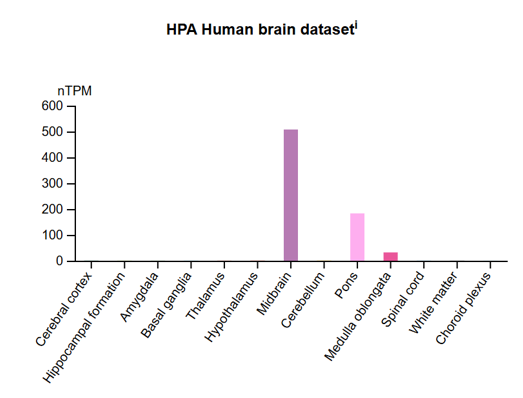
Figure 2 mRNA expression in CNS regions.
Source: Adapted from The Human Human Protein Atlas11(2025).
The protein encoded by the SLC6A4 gene is SERT (Sodium-dependent serotonin transporter), with a primary sequence of 630 amino acid residues (Table 1).
|
Access codes |
Amino acid sequence |
|
NCBI: NP_ 001036.1 |
>NP_001036.1 sodium-dependent serotonin transporter [Homo sapiens] |
|
Uniprot: P31645 |
METTPLNSQKQLSACEDGEDCQENGVLQKVVPTPGDKVESGQISNG YSAVPSPGAGDDTRHSIPATTTTLVAELHQGERETWGKKVDFLLSVIGY AVDLGNVWRFPYICYQNGGGAFLLPYTIMAIFGGIPLFYMELALGQYHR NGCISIWRKICPIFKGIGYAICIIAFYIASYYNTIMAWALYYLISSFTDQLP WTSCKNSWNTGNCTNYFSEDNITWTLHSTSPAEEFYTRHVLQIHRSKGL QDLGGISWQLALCIMLIFTVIYFSIWKGVKTSGKVVWVTATFPYIILSVLL VRGATLPGAWRGVLFYLKPNWQKLLETGVWIDAAAQIFFSLGPGFGVLL AFASYNKFNNNCYQDALVTSVVNCMTSFVSGFVIFTVLGYMAEMRNEDV SEVAKDAGPSLLFITYAEAIANMPASTFFAIIFFLMLITLGLDSTFAGLEGVIT AVLDEFPHVWAKRRERFVLAVVITCFFGSLVTLTFGGAYVVKLLEEYATGP AVLTVALIEAVAVSWFYGITQFCRDVKEMLGFSPGWFWRICWVAISPLFLL FIICSFLMSPPQLRLFQYNYPYWSIILGYCIGTSSFICIPTYIAYRLIITPGTFKERIIK SITPETPTEIPCGDIRLNAV |
Table 1 Access codes and amino acid sequence of H. sapiens SERT in FASTA format
Source: NCBI10 e UNIPROT12 (2023).
In its composition, it is possible to observe that leucine is the major amino acid, while histidine is the least frequent (Figure 3).
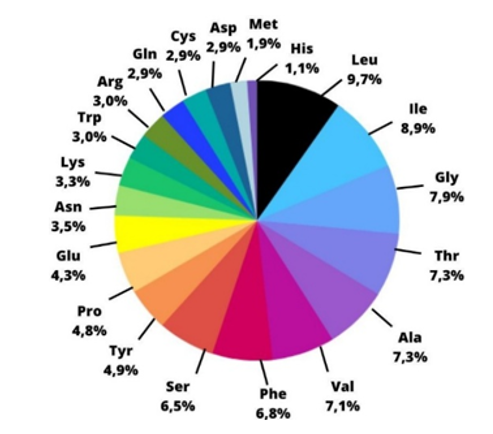
Figure 3 Frequency of the amino acids of SERT in H. sapiens.
Source: Adapted from ProtParam13 (2023).
In its composition, it is possible to observe that leucine is the major amino acid, while histidine is the least frequent (Figure 4).
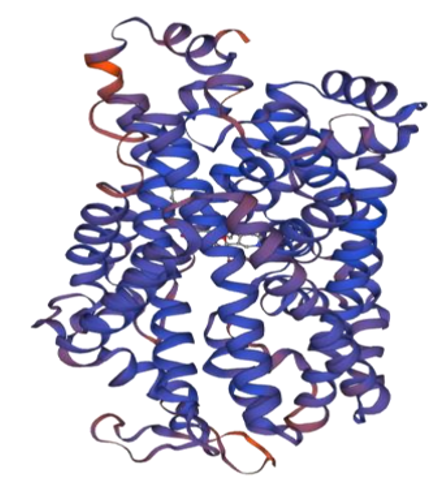
Figure 4 Tertiary structure of H. sapiens SERT.
Source: SwissModel14 (2023).
At the subcellular level, SERT is predominantly expressed in the plasma membrane.15 The localization was validated using Protter based on the amino acid residue sequence in FASTA format. In Figure 5, it is possible to visualize the presence of glycosylation sites at SERT residues Asn208 and Asn217, which were validated (Table 2).
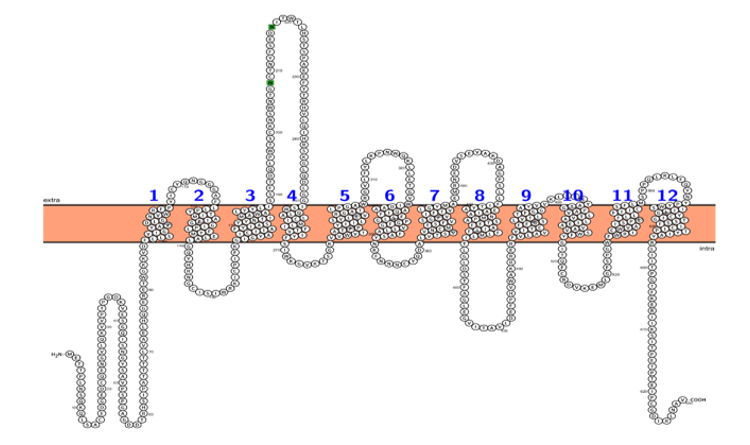
Figure 5 Prediction of the location of the transmembrane, cytoplasmic and non-cytoplasmic domains of H. sapiens SERT, highlighting (in green) the N-glycosylation sites.
Source: Protter16 (2023).
|
Sites |
ScanProsite |
Netphos |
NetNGlyc |
|
Phosphorylation |
Ser8 |
PKC (score 0.535) |
|
|
Protein kinase C (PKC) |
Ser199 |
- |
|
|
Ser277 |
PKC (score 0.794) PKC (score 0.857) |
||
|
Thr603 |
|||
|
Phosphorylation |
Ser13 |
CK2 (score 0.565) |
|
|
Casein kinase II (CK2) |
Thr33 |
- |
|
|
Ser190 |
Unsp (score 0.866) |
||
|
Ser226 |
CK2 (escore 0.618) |
||
|
Thr409 |
CK2 (escore 0.526) |
||
|
Thr603 |
PKC (escore 0.857) |
||
|
Thr616 |
- |
||
|
N-glycosylation |
Asn208 |
Asn208 (escore 0.641) |
|
|
Asn217 |
Asn217 (escore 0.730) |
||
Table 2 Glycosylation sites present in the SERT protein of H. sapiens
Source: Own authorship. Data extracted from the ScanProsite, Netphos, and NetNGlyc platforms.
According to The Human Protein Atlas, SERT has higher expression in the midbrain and cerebral cortex. During the serotonergic synapse (Figure 6), SERT participates not only in the transport of 5-HT from the presynaptic neuron to the synaptic cleft, but also acts as a receptor for this neurotransmitter.
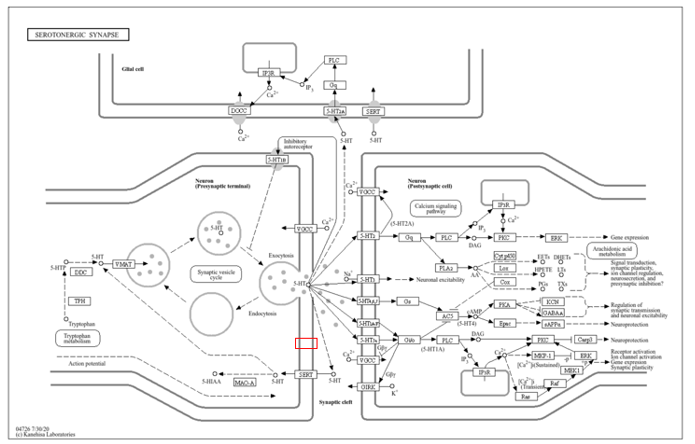
Figure 6 Serotoninergic synapse.
Source: Kegg17 (2025).
Phosphorylation sites by protein kinase C (PKC) and casein kinase II (CK2) were revealed and validated in the primary sequence of SERT, as well as other sites phosphorylated by other kinases (Table 2).
The SLC6A4 gene is located on chromosome 17q11.2 and has 15 exons, while the SERT protein is composed of 630 amino acid residues. Analyzing the biochemical composition of SERT, the prevalence of leucine and isoleucine is identified, 9.7% and 8.9%, respectively. Leucine favors the appearance of alpha-helix type arrangements,18 as evidenced in the three-dimensional structure. SERT is a symporter protein anchored in the plasma membrane, and the alpha-helix arrangements found in its structure ensure adhesion and stability for the execution of its function.19
The SERT protein belongs to the family of sodium-dependent neurotransmitter symporters, which are secondary active transporters that utilize the pre-existing sodium gradient to translocate neurotransmitters from the synaptic cleft to the presynaptic neuron subsequent to postsynaptic receptor activation.20 This family has 12 predicted transmembrane domains,21 and this information was validated by Protter, making it possible to visualize the cytoplasmic and non-cytoplasmic transmembrane domains.
Besides SERT, other clinically relevant symporters are those for dopamine, noradrenaline, γ-aminobutyric acid, and glycine, and they are also targets for a wide range of psychotropic compounds, including antidepressants.6,22 These high-affinity transporter proteins are found in the plasma membrane and are responsible for removing neurotransmitters from the extracellular space, thereby terminating their actions.23
SSRIs belong to a class of antidepressants widely prescribed for the treatment of psychiatric disorders. Their mechanism of action involves increasing 5-HT levels in the synaptic cleft by blocking SERT.24 Examples of SSRIs include fluoxetine, citalopram, and paroxetine, as well as synthetic drugs like cocaine.25 Changes in the gene and protein cause tolerance to SSRIs, and one way to mitigate this problem is the use of medications that act on different transporters, such as SNRIs (venlafaxine).7
In the serotonergic synapse, SERT is responsible for controlling the duration of 5-HT in the synaptic cleft through negative feedback, as well as recycling this neurotransmitter via its reuptake.26
Post-translational modifications can alter the function and expression of SERT. According to the results obtained, several phosphorylation sites were predicted, and one of the related enzymes is PKC, with SERT's transport functions and surface membrane expression being reduced when phosphorylated by PKC.27 Other phosphorylation sites are indicated by NetPhos, targeted by other protein kinases, and with scores above those indicated for PKC and CKII. However, these sites were not described here because NetPhos was used in this work solely as a validation tool for the targets already identified by ScanProsite. Regarding glycosylation sites, although NetNGlyc indicates the existence of two other possible N-glycosylation target amino acids with high scores, only Asn208 and Asn217 are located in a favorable sequence position with Asn-XAA-Ser/Thr.
N-glycosylation and O-glycosylation is another type of possible post-translational modification identified at two sites in the primary sequence of SERT. The two main types of glycosylation play important roles in maintaining protein conformation and activity28 and in many important biological processes, such as cell adhesion, cell-cell and cell-matrix interactions, molecular trafficking, receptor activation, protein solubility effects, protein folding and signal transduction, protein degradation, and intracellular protein trafficking and secretion.29,30 Furthermore, defects in this process have a significant effect on the development of various diseases.30
Genetic alterations are also related to SERT expression and functionality. The 5-HTTLPR polymorphism is associated with the promoter region of the SLC6A4 gene, involves a 44 bp insertion/deletion, and influences SERT expression, increasing the amygdala's response to emotional stimuli, predisposing individuals to the development of anxiety and mood disorders. This polymorphism has been the target of genetic studies because it is strongly associated with psychiatric disorders,31 such as schizophrenia, anxiety, autism, depression, suicide, and obsessive-compulsive disorder.32
This polymorphism results in the production of two alleles: the long allele (L), associated with high transcriptional and translational levels of SERT, in addition to an increased rate of 5-HT reuptake; and the short allele (S), related to low transcriptional levels, associated with a poor response to SSRI class antidepressants.33
In addition to changes in the promoter region, resulting in the L and S alleles, the existence of single nucleotide polymorphisms (SNPs) has already been reported. The rs25531 (A>G) associated with the L allele gives rise to the La and Lg alleles. The former (La), when compared to Lg and also to S, is related to higher SERT expressions (both in mRNA and protein). Studies on polymorphisms and the use of SSRIs are still unclear due to the disorders studied, ethnicity, inclusion and exclusion criteria, among other variants.34 The rs25532 (C>T) is also associated with a decrease in SERT expression.32 This polymorphism has been described as a gene expression modulator and acts in conjunction with 5-HTTLPR and rs25531, but there are still no studies showing tolerability to SSRIs.34 Changes in SERT functionality can cause harm to the individual. 5-HT is present in the CNS and controls physiological processes such as appetite, thermoregulation, sexual behavior, intestinal motility, sleep/wakefulness, memory, learning, mood, in addition to acting in the control of the sympathetic and parasympathetic nervous system. Serotonergic neurons are present in the dorsal raphe nucleus, spinal cord, hippocampus, and cortex.35
The serotonin transporter (SLC6A4) and the serotonin autoreceptor (HTR1A) are two of the most extensively studied genes in the field of psychiatry, and their variants have been implicated in antidepressant response, specifically with selective serotonin reuptake inhibitors (SSRIs) which are widely regarded as the first-line medications for depression and anxiety. Variants of SLC6A4 and HTR1A have also been studied as risk factors for depression.
Statistically significant differences in the expression of these two genes together in increasing the likelihood of drug failure, specifically the presence of one or more G alleles at HTR1A rs6295 in combination with the SLC6A4 SS variant. Patients suffering from depression and anxiety that have failed to achieve adequate symptom remission on previous SSRI trials is HTR1A rs6295 GG-SLC6A4 SS.36
Although globus pharyngeus is not rare in clinical practice, little is known about its associated gene polymorphism. The association between the SLC6A4 polymorphism and globus pharyngeus and its response to treatment with antidepressants was evaluated and A significant association was observed between the S/S genotype of the SLC6A4 polymorphism and globus pharyngeus, suggesting that SLC6A4 is a potential candidate gene involved in the pathogenesis of globus pharyngeus.37
The structure and function of proteins are intimately related to the amino acid composition and their structural form. Thus, possible modifications (whether mutations or originating from allelic variants) can alter their structure and consequently their function36. Given this perspective and using SIFT (Sorting Intolerant From Tolerant), possible amino acid changes in SERT composition were evaluated. Substitutions with a score from 0 to 0.05 are considered deleterious, and those above 0.05 up to 1 are considered tolerant. Based on the primary sequence, all possibilities for substituting the 630 amino acids at each position were analyzed, and it was possible to observe that most changes are deleterious (Annex 1).
SERT is a protein expressed by the SLC6A4 gene, essential for 5-HT to perform its physiological role in the CNS. Alterations in the promoter region (5-HTTLPR), in addition to SNPs (rs25531 and rs25532) in coding regions and post-translational alterations, such as phosphorylation and glycosylation, can alter SERT functionality. There are several antidepressants that can be used in the treatment of GAD, but alterations in SERT may contribute to the individual not showing an adequate response to medication. Deeply studying this possible biomarker can help in the precision of the diagnosis and the effectiveness of GAD treatment, in addition to other psychiatric disorders. Genotyping anti-depressant drug targets may play an important role in optimizing anti-depressant drug response and research developments for future therapies.
None.
The author declares there is no conflict of interest.

©2025 Tozi, et al. This is an open access article distributed under the terms of the, which permits unrestricted use, distribution, and build upon your work non-commercially.