Open Access Journal of
eISSN: 2641-9335

The objective of this research work is to improve the performance of the Reactive Routing Protocols in Mobile Ad hoc Network (MANET). Ad hoc On- demand Distance Vector (AODV) Routing protocol is selected for implementation and analysis in this research. Four investigations are selected for analysis and for applying possible performance improvement strategies. These performance improvement strategies can be applied based on the requirement and the scenario in which MANET is being used. Using these strategies the performance of MANET can be further improved. The continuous improvement in MANET due to the various research findings can make it a suitable alternative for fixed infrastructure based networks in the near future.
Keywords: MANETs, BMS, FMS, QRP and DRP
AODV, Ad hoc on- demand distance vector; BSs, base stations; WMN, Wireless Mobile Ad Hoc Network; FMS, fading management system
Traditional wireless networks are high-speed backbones that send signals from differential base stations (BSs) and help all mobile devices in a particular area receive the signals (Pahlavan, K. and Levesque, AH,). 2005). It is given below in the Figure 1. Each cell has a BS. Communicate directly with your mobile phone. Therefore, this network is single-hop communication (Lou W, Fang Y.2004). Wireless Mobile Ad Hoc Network (WMN) is within restricted range and it’s not the backbone of multi- hop communication. Each device has different features. Therefore, ad hoc networks are heterogeneous (Ruay Shiung Chang et.al., 2003). Groups of MANET nodes dynamically form a network called MANET networking.
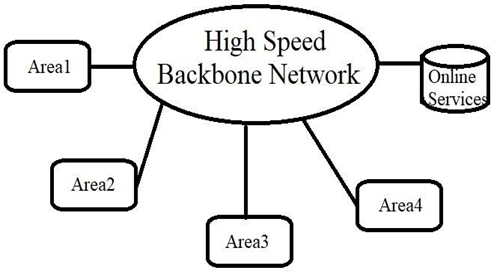
Figure 1 Traditional Networks.
Wireless Mobile Ad hoc network is classified into two types.
The objective of this research work is to improve the performance of the Reactive Routing Protocols in Mobile Ad hoc Network (MANET). Ad hoc On- demand Distance Vector (AODV) Routing protocol is selected for implementation and analysis in this research. Four investigations are selected for analysis and for applying possible performance improvement strategies. The first investigation selects as unstable nodes. To find the all the nearest neighbor is calculated the dynamic Threshold value than suitable neighbor nodes assign the Delegation process on the prior path failure recovery in the presence of unstable nodes. This avoids repeated route discovery mechanism, thereby increasing throughput and decreasing transmission time as well as routing overhead.
The second investigation is the QoS parameter based on Reliable path selection (QRP). Best path selection is done based on minimum transmission time and reliable delivery. A minimum transmission time and reliable delivery are done by route discovery and forwarding data packets. Minimum transmission time is achieved by estimating and reducing the queuing delay. Reliable delivery is achieved without any packet loss. It increases the throughput. Even though there is no centralized control in MANET, the resources such as energy level, bandwidth availability, load sharing is not effectively utilized and it reduces the network performance. Third parameter is the Battery Power of Nodes. Simulation of a network where few nodes are placed at strategically vital locations was done using Qualnet. The results show uneven battery power utilization of the nodes in MANET, which is mainly due to the location. Therefore a battery power level based priority routing is introduced based on the AODV protocol. This Battery Management System (BMS) enables even utilization of the battery power in MANET nodes; thereby node’s lifetime gets increased. Thus BMS helps in overall improvement of the network lifetime. The fourth parameter selected is fading of signals in MANET. Fading causes fluctuations in the signal strength resulting in packet loss and link breakdown. Three different types of fading are analyzed and compared through Qualnet. An alternate path approach is proposed to handle the ill effects caused due to fading. This Fading Management System (FMS) is found to be reducing the Packet Loss even up to fifty percent. These performance improvement strategies can be applied based on the requirement and the scenario in which MANET is being used. Using these strategies the performance of MANET can be further improved. The continuous improvement in MANET due to the various research findings can make it a suitable alternative for fixed infrastructure based networks in the near future.
MANET routing protocols
Routing is determination of routes between of source and destination node (Trilok et.al. 2019). Routing is the basic functionality of any communication network. MANET is infrastructure less network and it is a decentralized network that required a strong dynamic routing protocol (Trilok et.al. 2019). In terms of transmission mechanism, routing protocol in MANET is divided into Unicasts Routing Protocol and Multicast Routing Protocol (Trilok et.al. 2019). The classification of Routing Protocol is given in the Figure 1.6. Different types of protocols like as periodic or proactive, adhoc or reactive and hybrid or combination of proactive and reactive is utilized to initiate a path from S to D (Meshram et.al.2010, Lalar et.al.2018) is used by both unicasts and multicast routing protocol.
Classification of routing protocol (both unicasts and multicast)
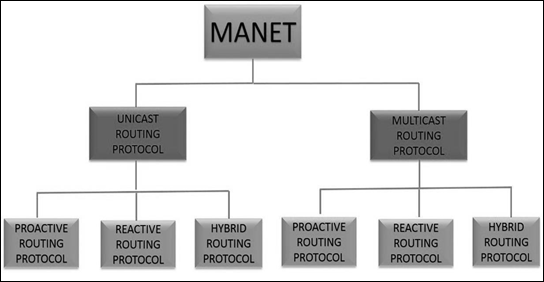
Figure 2 Classification of Routing Protocol.
Unicast routing protocol
Unicast is the least intrusive technique of transmitting informative data packets from S to D. To forward informative data packet, the RT (Routing Table) should maintain (DA) Destination Address (Lalar et.al. 2018). Data packet sends to the respective hops, if the DA is discovered in RT. Due to this, each and every node should maintain RT in the network structure (Lalar et.al. 2018). Most application in communication network depends on Unicasts Routing Protocol since, it can efficiently provide content and data oriented services such as, grids or cloud computing, Internet TV and online movie streaming (Goścień et.al. 2016). Unicasts Routing Protocol can be broadly categorized into table driven or Proactive Routing Protocol, adhoc or Re-active Protocol and Hybrid Routing Protocol or combination of both proactive and reactive (Chirag et.al., 2014).
Proactive protocol
Main goal of proactive protocol is to find the quickest path. All nodes in the network, maintain a structure to retain it nearby nodes information. It helps to transmitting routing information about every other node on a regular basis (Kant et.al., 2010). Example for unicast table driven routing protocol (Kant et.al., 2010), FSR (Fisheye State routing Protocol) (Chirag et.al.2014, Kant et.al.2010), DSDV routing protocol (Destination Sequence Distance Vector), TBRPF (Topology Broadcast Based on Reverse Path Forwarding), and OLSR routing (Optimized Link State Routing) protocol, are some familiar proactive routing unicast protocols.
FSR
One of famous proactive unicasts routing protocols can be used for large network is Fisheye State Protocol (FSR). Each node in FSR has a capacity to see nearby node accurately rather than far away nodes. Because of this topology, information of nearby nodes is more accurate than distanced placed nodes. The information of distance nodes is not within the range, then the data will be sent to router and collects more information, which is closer to destination packets (Meghanathan et.al., 2009). FSR can be applicable to large network as it reduces overhead.
DSDV
One of efficient unicast proactive protocol is Destination Sequence Vector Routing (DSDV). In advance, the destination has complete information about the nodes in the network routes, so it is a proactive.1 All the nearby destination node D information is maintained in routing table. Routine table holds destination address, latest sequence number from the destination,1 when a fresh node is added. RT updates its information frequently impairing with existing sequence number.
OLSR
The OLSR protocol is a variation of the Link State protocols. OLSR use MPRs (multipoint relays) method to decrease the total number of broadcasting communication packet. Routing packet forwarding and the size of link state update packets, resulting in efficient flood of control packets in a MANET. The pure Intermediate Nodes protocol is optimised in two ways by OLSR. First, it reduces control traffic flooding by employing multipoint relays, i.e., using only nominated nodes to disseminate routing data packet. Second, by just announcing a subset of a links to its neighbours, it minimises the size of a control messages. As a result, OLSR significantly minimises network routing overhead and is especially well-suited to dense networks. However, the selection of MPR nodes results in an increased cost.
Reactive routing protocol
This protocol is designed to maintain routing information only when mobile station sends information data packet to the target node D (Patil et.al., 2010). In this technique, routing information is maintained only when required. Examples routing protocols fall in this category: AODV Routing Protocol (Ad-hoc On-demand Distance Vector protocol) (Chirag et.al., 2014), DSR (Dynamic Source Routing protocol), and TORA Routing (Temporally Ordered Routing Algorithm) Protocol, etc.
AODV
This protocol is very familiar reactive routing protocol in the MANETs (Moudni et.al., 2016). It was designed to maintain two major aspects like discovery of route and maintenance of route in the network structure. During route detection mode, source node publishes RREQ (Route REQuest) communication packet to its entire neighbour node (Patil et.al. 2010). If neighbour mobile station has usable path to its D, then the communication Route REPly packet (RREP) is sent as acceptance message and source node begins sending packets (Moudni et.al. 2016). The route maintenance node, in case of failure sends RERR (Route ERRor) packet to S and also S again restart the new route detection process (Moudni et.al. 2016). In brief we have discussed in the end of the chapter.
DSR
It is used to find a paths of source node S and destination nodes D.1 It consists of two activities such as new route discovery process and old route maintenance process, it gives request to nodes for interaction with each other (Fouzan et.al. 2010). DSR enables multiple paths to any destination, so that load balancing can be achieved. In DSR, every node maintains routing information from S to D.1 When data’s are sent to D node, path is identified by route discovery process. The intermediate node list is maintained in packet header.
Hybrid unicast routing protocol
The mixed grouping of proactive and reactive routing protocol is defined as Hybrid unicast routing protocol.1 Hybrid Routing Protocol uses proactive routing for broadcasting to nearby neighbour node and uses reactive techniques for sending data packets on the network to far away nodes (Wu et.al. 2018). The hybrid protocol examples are ZRP, ZHLS and CGSR (Cluster Switch Gateway) routing protocol (Hamela et.al., 2016) etc.
ZRP
It is combination of proactive routing and reactive routing protocols are designed by Zone Routing Protocol (Hamela et.al., 2016). The nodes which is placed outside the range of radio frequency works with reactive protocol. Proactive unicast routing protocol is used to identify route nearby neighbouring nodes. The routine is performed by two protocols namely IERP and IARP (Patil et.al. 2010). IERP means Inter Zone and IARP means Intra Zone. Data packets are directly moved from S to D within internal zone range. If D is outside the prescribed zone, then RREQ is sent to bordering nodes. If D destination is found in the bordering node then it replies through RREP message (Hamela et.al., 2016).
ZHLS
Zone based Hierarchical Link State its shortest form is ZHLS Protocol. The node identity (NID) and zone identity (ZID) serve as the foundation for ZHLS. With the help of node identity, NID and zone identity, ZID, each and every node identifies only the network connectivity within it’s the prescribed zones. The two-link state protocols preserved by each node are data and communicate State and Zones Link State protocols (Moudni et.al.2016). The main benefit of this strategy is that zone overlap may be avoided
Multicast routing protocol
Within a single transmission, same copy of message can be broadcasted to group members using Multicast Routing Protocol (Pavithra et.al., 2014). It is classified into proactive, reactive and hybrid multicast routing.
Proactive multicast protocol
Multicast proactive protocol was maintaining the nodes of routing information of every node and updates the routing information continuously (Chirag et.al., 2014). It can be divided as Ad-hoc Multicasting Routing Protocol (AMRoute) and Multicast Open Shortest Path First (MOSPF) (Garnepudi et.al., 2013).
MOSPF
OSPF (Open Shortest Path First) is used as base of the Multicast Open Shortest Path First (Kaur et.al., 2013). To establish node information, it uses link state routing. Minimum Spanning techniques are used to calculate shortest path between sender and receiver node. Link State advertisement (LSA’s) packets are used to maintain group membership table information between the nodes (Kaur et.al., 2013).
ADHOC multicast routing (AMRoute) protocol
One of the tree based proactive multicast protocol is AMRoute was proposed by Hamela et.al. 2015. It was established two-way directional path using shared tree mechanism. MZRP is used to create a tree. MZRP (Multicast Zone Routing Protocol), the first step is to look for nodes within the zone, and S sends a CREATE data packet to nodes inside its first round zone R1 complete unicast technique. The receiver node accepting the request sends ACK JOIN_REQUEST packets and by this method it can recognize all its neighbour nodes. Any member who wants to leave this group sends JOIN_REJECT packets to its neighbours. After sending JOIN_REJECT packets, it stops forwarding packets to its neighbours [Hamela et.al, 2015]. If routes are available between group members, a tree can be formed and maintained.
Reactive multicast routing protocol
When requirement occur to send the packet to destination address, the reactive routing protocol selects its route. Thus, on-demand routing takes place in reactive multicast protocol. Reactive multicast protocol can be classified into MAODV and ODMRP acronym On-Demand Multicast (Garnepudi et.al., 2013) routing protocol.
ODMRP
For each multicast group, it is utilised to create a mesh of nodes. A given the task and simulations protocol is used to add nodes to the mesh. In order to maintain gathering involvement, ODMRP uses a delicate state method. As a result, leaving the gathering with a bogus control message is not recommended. It is applicable. On- demand controls a process to avoid channel overhead. The ODMRP steering structure consists of two stages: solicitation and response. It uses two types of control bundles to structure a transmitting network for multicast gathering: J-Query and J-Reply. In an network any node wants to send message or data, initially it sends a J-Query message propagate throughout the network (Azad et.al., 2009). A J-Reply is created when a J- Query packet reaches the multicast receiver. It checks if the next node address (Vigneshwaran et.al., 2015) of the accesses matches its own address (Azad et.al., 2009).
MAODV
It is very similar to AODV mechanism, only change is it support for Multicast Operation, MAODV operation is designed to provide minimal network utilisation, low processing and storage overhead, and quick response to dynamic connection circumstances (Hamela et.al., 2015). To find a route through which packets can be routed to all group nodes, MAODV uses a tree-based discovery mechanism.
Hybrid multicast protocol (HMP)
The advantage of tree and mesh based technique are interfered in the Hybrid Multicast Routing Protocol (HMP) is proposed in the paper Hamela et.al., 2015. The HMP has a protocol of type OPHMR (Optimized Polymorphic Hybrid Multicast Routing Protocol ) (Afsane et.al., 2017).
OPHMR
The reactive routing and the proactive protocol technique are used as basis of this model. It is the efficient model used in term of vicinity density level, mobility level, and power remainder (Afsane et.al., 2017). It adopts the technique of ODMRP when it acts as reactive protocol. In a similar way, in case of proactive, it adopts Multicast Zone Routing (MZR) protocol(Kuang et.al., 2017). For obtaining optimize solution for efficient performance, it uses OLSR.
Objective and contributions
The major goal of this research is to enhance Unicast Routing Protocols in MANETs. A four-part approach is used to achieve the performance gains goal. The initial section of the inquiry focuses on the unstable Nodes. A Delegation Reliable Path (DRP) is based on the identification and deletion of unstable nodes from the MANET in order to increase characteristics such as Packet Delivery Ratio and Data Overhead in section 3.2. The second exploration is QRP - QoS based on Reliable Path given in section 3.3. Finest route selection is done based on smallest transmission time and reliable delivery. A minimum transmission time and reliable delivery are done by route discovery and forwarding data packets. The third part is to manage the battery power of the individual nodes participating in the MANET. Proper power management strategies will lead to effective and even utilization of the individual node’s battery power. The success of the proposed strategies will lead to improved period of individual nodes and eventually overall lifespan of the MANETs gets improved. This improved lifetime will indirectly prove to be a real performance booster for MANET. The fourth part is analyzing and handling of the phenomenon called Fading. This Fading which causes sudden rapid variations in the signal strength will cause packet loss. Therefore the effects of Fading are analyzed and efforts are taken to contain the same.
Delegation process for finding out reliable path (DRP)
The first investigation is about the unstable Nodes. In the case of instability nodes, a Delegation Reliable Path (DRP) is built on past path failed restoration. Route discovery and forwarding the data packets a comparative evaluation factor is I-AODV, LSP, RESA as compared to the DRP Routing Protocol.

QoS parameter based on reliable path (QRP)
The second study is QRP. To find good path selection is done based on least transmission time and reliable delivery. A minimum transmission time and reliable delivery are done by route discovery and forwarding data packets. For route finding and d a t a p a c k e t forwarding the comparative evaluation factor is NCTCAD, EDAODV, LBT and DRP as compared to the QRP Routing Protocol. Without any packet loss, a trustworthy delivery is obtained. Despite the lack of centralized control in MANET, it improves throughput. Resources such as energy consumption, bandwidth availability, and load - balancing are underutilized, resulting in poor network performance.

Battery management system (BMS)
As MANET nodes are working in energy constrained environment, the need to handle the battery power sources of all the nodes in a balanced manner is a vital part of all the protocols. New features are added to existing AODV protocol which helps to improve the lifetime of the network by power balancing. A detailed analysis is done and the results and conclusions are given.
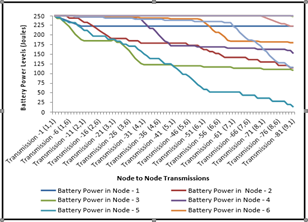
Figure 5 Battery Power of nodes before BP-AODV routing

Figure 6 Battery Power of nodes after BP-AODV Routing
Fading management system (FMS)
Mobile ad hoc networks used in urban environment undergoes signal strength degradation phenomena called fading. This fading will result in packet loss, delay and frequent route searches. The frequent route searches will increase the network overhead and again increase the delay. This fading is analyzed through the Qualnet simulation tool and the comparison is done for three different types of fading.

An alternate path approach is suggested that will help in maintaining or saving the packet delivery ratio from going low. During the fluctuations caused due to fading, the data traffic needs to be rerouted through an alternate path. Then after some time the fading intensity tends to come down and the original route can be used again. Thereby the MANET would not miss the benefits of the best route selected. Thus the fading effects are tackled to maintain the packet delivery ratio.
Finally the conclusion is written with a brief account of the key benefits that can be achieved using the four performance improvement approaches. The exact performance improvement in the parameters selected is explained in detail. Future scope and possible strategies for further improvement are given. These suggestions can be taken up as further research to continue the performance improvement goals in MANET.
Performance evaluations
Qualnet Simulator used to simulate the QoS factor based on reliable route collection mechanism using AODV mechanism. In this model 500 nodes are traditional nodes are placed in the area size 1200 X 1000. In this model a wireless channel with IEEE 802.11 has been used by the MAC layer protocol. The parameter is used to create this scenario in Table 1 as follows.
|
Parameters |
Metrics |
|
Execution Time |
900 S |
|
Total number of nodes |
500 nos |
|
Area Size |
1200 X 1000 |
|
Layer 2 protocol |
802.11 |
|
Signal strength |
250 m |
|
Traffic |
CBR |
|
Load |
512 bytes |
|
Deployment |
Random |
|
Mobility Model |
RWP |
|
Velocity |
2 m/s |
|
Flows |
20 |
Table 1 Simulation parameters
Performance metrics
The four evaluation metrics utilized in the research work are as follows
PDR: It’s characterized as proportion between effectively received packets and generated packets to those by CBR traffic source as seen in Equation (1).
Packet Delivery Ratio=PDN/PSN (1)
Here PDN is the profitably received data’s from destination and PSN generates data’s by source.
Average Delay: it is the time taken by information packet to reach target.
Average Jitter: it’s characterized as variety in the delay of received packets. The latency is increased due to network congestion, incorrect queuing, or setup issues. The latency in between transmission in this steady flow of messages can change rather than remaining constant.
Routing Overhead- A number of times Route Discovery (RD) happens again and again due to the node failure to Deliver Packets.2–60
This experimental study work is done focusing on finding ways to improve the performance of on demand routing protocols in MANETs. Wireless MANETs are an upcoming technological expanse in the field of communication. MANET may become an alternative to infrastructure based communication. Due to the unique nature of MANET with respect to being infrastructure less, mobile with random movement it has various areas of improvement. Four areas are selected in this research and efforts are made to improve the MANET reactive routing protocols performance in those areas. The reactive routing protocol selected in this research is Ad hoc On-Demand Distance Vector (AODV) Routing. The proposed concepts of DRP, QRP, BMS and FMS applying the various factors are analyzed for the representation by effect of varying nodes in the fixed network area, effect of variation in Number of links with fixed nodes and effect of variation in unreliable node % with fixed area and mobile nodes in which the different parameters like routing overhead, packet delivery ratio, delay, and average jitter are analyzed and produce outcomes. The packet delivery ratio increases the node stability and link stability, which is considered as a reliable path. It reduces the routing overhead. If the number of reliable nodes is increased then the data delivery also increases.
The four parameters selected for performance improvement can be further analyzed and improved. In future various routing protocols will be applied to a combination of ant as well as bee’s algorithm using Clustering in MANETs. It provides improved performance in the overall network. Additional feasible ideas are provided in the future scope. A genuine application of these concepts will be implemented and kept on improving the performance in MANET. Attempts can be made to further minimizing miss detection probability and reduce innocent node booking. Though public key encryption and decryption algorithms have not been incorporated here, it can be added as an additional layer of security. In addition, cross layer design could be exploited to improve the performance in all metrics.
None.
The author declares there is no conflict of interest in this job.

© . This is an open access article distributed under the terms of the, which permits unrestricted use, distribution, and build upon your work non-commercially.