MOJ
eISSN: 2374-6939


Short Communication Volume 17 Issue 2

Regret for the inconvenience: we are taking measures to prevent fraudulent form submissions by extractors and page crawlers. Please type the correct Captcha word to see email ID.
1Prof. Ph.D, Chief Consultant, Bari-Ilizarov Orthopaedic Centre, Bangladesh; Visiting and Honored Prof., Russian Ilizarov Scientific Centre, Russia
2Medical officer, Bari-Ilizarov Orthopaedic Centre, Bangladesh; PhD resident in Tashkent scientific research institute of orthopaedics and traumatology, Uzbekistan
3MD; FCPS, Prof., Bari-Ilizarov Orthopaedic Centre, Bangladesh
4Associate Prof., Anesthesiologist, Bangladesh Institute of Health Science (BIHS), Bangladesh
5Medical officer, Bangladesh Institute of Health Science (BIHS), Bangladesh
Correspondence: Dr. Md. Mofakhkharul Bari, Bari-Ilizarov Orthopaedic Centre, 1/1, Suvastu Shirazi Square, Lalmatia Block E, Dhaka-1207, Bangladesh, Tel +8801819211595
Received: May 01, 2025 | Published: May 15, 2025
Citation: Bari MM, Bari AMSR, Shahidul I, et al DL. Management of infected gap non-union of the femur using the Ilizarov technique: a clinical review. MOJ Orthop Rheumatol. 2025;17(2):38-44. DOI: 10.15406/mojor.2025.17.00697
Introduction: Infected gap non-union of the femur is a challenging condition, often requiring advanced treatment methods. The Ilizarov technique, using distraction osteogenesis, is an effective solution, promoting bone healing, deformity correction, and limb length restoration without bone grafting.
Materials and methods: Between 1990 and 2023, 145 patients with infected femoral non-unions were treated with the Ilizarov technique. Bone transport was used for defects ranging from 2.5 to 27 cm, with no bone grafts. Treat ment outcomes were evaluated based on healing, infection control, and functional recovery.
Results: All patients achieved union, with 5 requiring reapplication of the Ilizarov fixator. The average treatment time was 8.5 months, with patients able to bear weight during recovery.
Discussion: The Ilizarov technique proved highly effective in managing infected femoral non-unions, offering superior outcomes over traditional methods and enabling functional recovery with minimal complications.
Conclusion: The Ilizarov technique is a safe, effective treatment for infected femoral non-unions, achieving successful healing and functional restoration without bone grafting.1,2
Keywords: infected gap non-union, femur, ilizarov technique, distraction osteogenesis, bone transport, infection control, bone healing, limb length restoration, external fixation, non-union treatment
Infected gap non-union of the femur presents a significant challenge in orthopaedic surgery, as it involves both infection and a non-healing bone defect. This condition complicates fracture healing, especially when infection impairs the bone’s ability to regenerate. Traditional treatment options often fall short, particularly in cases with severe bone loss or deformities.
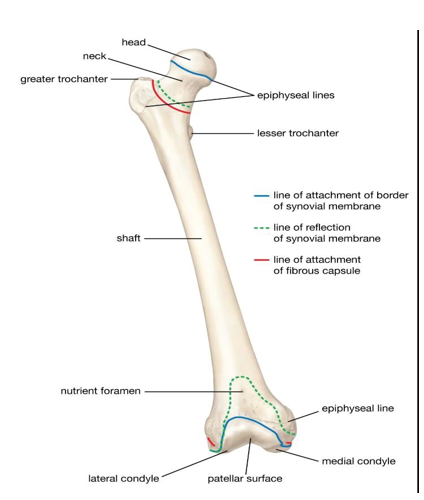
Figure 1 Anterior view of the right femur (thighbone).
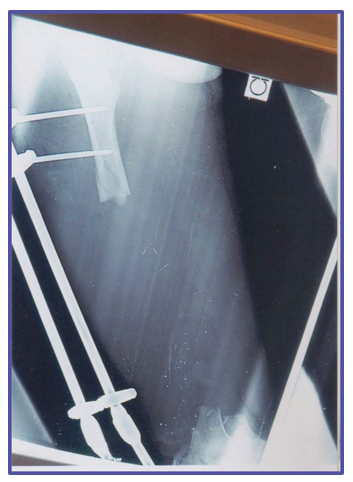
Figure 2 Infected big Gap Non-Union of the Femur.
The Ilizarov technique, a form of external fixation developed by Gavriil Ilizarov, has proven to be highly effective in managing such complex cases. By utilizing distraction osteogenesis, the Ilizarov method promotes bone regeneration, corrects deformities, and restores limb length without the need for bone grafting. Additionally, the external fixator allows for early weight-bearing, enhancing rehabilitation outcomes.
This article explores the management of infected gap non-union of the femur using the Ilizarov technique, focusing on the processes of debridement, bone transport, and infection control. The Ilizarov technique offers a comprehensive solution for achieving bone healing and functional restoration in even the most challenging cases.3
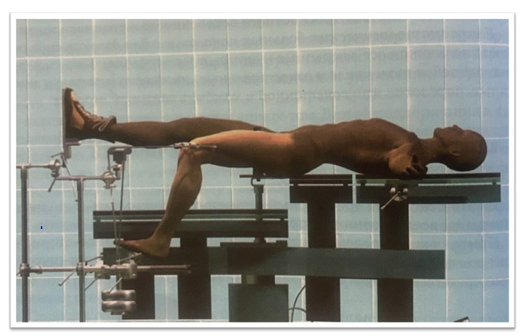
Figure 3 Position of the patient in operation table.
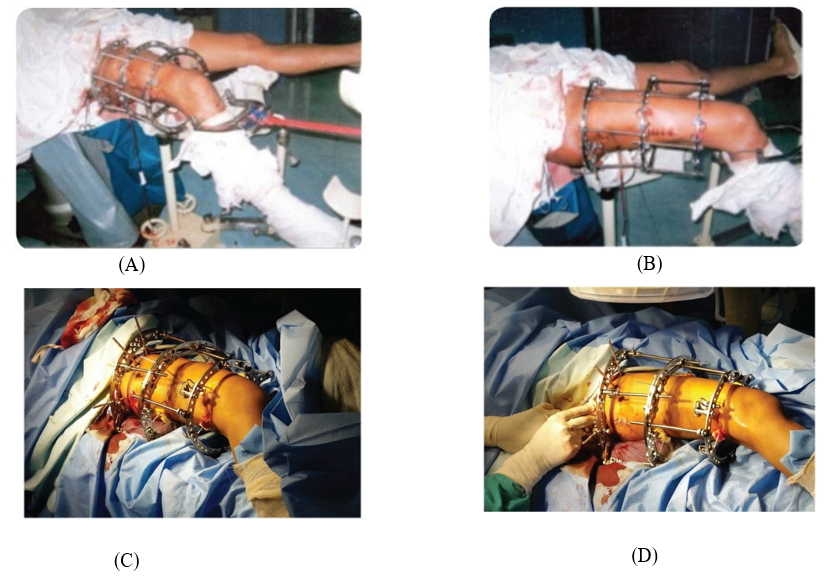
Figure 4 Position of the thigh during application of Ilizarov apparatus in the femur.
Gap size and severity
The size and complexity of the bone gap are key factors in treatment decisions. Larger gaps often require more advanced procedures like bone transport to bridge the defect and ensure proper healing.
Soft tissue coverage
Good soft tissue coverage is essential for effective wound healing and to maintain stability at the fracture site throughout the treatment.
Patient factors
A patient’s overall health, age, and activity level can all affect the choice of treatment and the potential for successful recovery. These personal factors need to be taken into account when planning the treatment strategy.
Between 1990 and 2023, 145 patients with infected big gap non-unions of the femur were treated using the Ilizarov technique. Of these, 15 patients had no active infection and were treated with an Ilizarov ring fixator alone. In 55 cases, patients presented with draining infections and underwent debridement followed by bone transport using the Ilizarov fixator. Another 55 patients required bone transport to fill defects ranging from 2.5 to 27 cm, with 20 of these cases also involving bifocal bone transport for larger gaps. No bone grafting was needed to achieve union. Antibiotic treatment was based on culture and sensitivity results, and patients were encouraged to bear weight during the treatment. The outcomes were evaluated based on radiographic healing, infection control, and overall functional recovery.
Long-term management
Follow-up
Regular follow-up appointments are essential to detect any signs of infection recurrence and to evaluate the progress of bone healing.
Physical therapy
Post-operative physical therapy plays a key role in restoring range of motion and functional ability.
All 145 patients treated with the Ilizarov technique achieved union, with the application of the Ilizarov fixator being successful in promoting bone healing in every case. However, 5 patients required reapplication of the Ilizarov fixator to achieve complete union. The reapplications were necessary due to complications in the initial fixation, such as insufficient bone transport or inadequate stability, but these patients eventually achieved full bone healing. No bone grafting was required in any of the cases, and infection was successfully managed through debridement and careful monitoring. The mean duration of treatment was 8.5 months (range 6-16 months). The overall outcomes were positive, with radiographic evidence of union, resolution of infection, and satisfactory functional recovery in all patients. Additionally, patients were able to bear weight during the treatment process, which contributed to their rehabilitation.4,5
Infected gap non-unions of the femur present significant challenges in orthopedic surgery due to the complex combination of bone defects, shortening, and deformities. These issues often complicate the healing process, making traditional treatments like internal fixation or bone grafting insufficient, especially in cases with severe bone loss or persistent infection. The Ilizarov technique, which uses tension-stress and distraction osteogenesis, has proven to be an effective solution for such complex cases. This method not only stimulates bone regeneration but also corrects deformities and restores limb length without the need for bone grafting.1,2
In our study, all 145 patients achieved union with the Ilizarov technique, highlighting its success in treating infected femoral non-unions. Bone transport was used for defects ranging from 2.5 to 27 cm, with bifocal transport employed in larger gaps. Although compression distraction is simpler, bone transport was crucial for bridging large defects and ensuring proper bone healing. While the mean treatment duration was 8.5 months, a significant period, the ability to bear weight during the treatment process greatly contributed to rehabilitation and overall functional recovery.
One of the key advantages of the Ilizarov technique is that it eliminates the need for autogenous bone grafting, which is commonly used in traditional methods. In this study, no bone grafts were necessary, as the distraction process itself stimulated bone growth and healing. Additionally, the corticotomy procedure increased vascularization in the infected bone, enhancing healing and contributing to infection control. This biological stimulation reduced the risks associated with grafting and promoted a more efficient recovery process.
The success of the Ilizarov technique is also due to careful monitoring and wound care. Infection control is a critical component, and in this cohort, infection was successfully managed, leading to complete bone union in all patients. Physiotherapy played a vital role in functional recovery by promoting load-bearing and motion, which are essential elements of the Ilizarov method. This approach helped minimize complications such as knee stiffness and ensured that patients regained function after the treatment.3,5
Despite the potential challenges, such as prolonged treatment time and complications like pain during distraction or wire site infections, the overall outcomes were positive. The mean follow-up period of 18.5 months confirmed the durability of the results, with no significant recurrence of infection or refracture of the regenerated bone. These outcomes underscore the effectiveness and safety of the Ilizarov technique, even in challenging cases of infected femoral non-unions.
The Ilizarov technique proves to be a highly effective and reliable method for managing infected gap non-unions of the femur. Its ability to achieve bone healing, correct deformities, and restore limb length, all without the need for bone grafting, makes it a superior choice in these complex cases. While it requires careful monitoring and extended treatment periods, the positive results in terms of bone healing, infection control, and functional recovery validate its role as a cornerstone treatment for femoral non-unions.
The Ilizarov technique is a safe and effective method for managing infected gap non-unions of the femur, promoting bone healing, correcting deformities, and restoring limb length without the need for bone grafting. Distraction osteogenesis in the femur using the Ilizarov fixator is particularly valuable in challenging cases where conventional treatments fall short. A well-planned approach can achieve excellent results, as demonstrated in this study, where all 145 patients achieved union, with no grafts required and infection controlled. Despite a mean treatment duration of 8.5 months, patients were able to bear weight, aiding rehabilitation.
Overall, the Ilizarov technique provides superior outcomes in complex femoral non-unions, offering reliable results when other options fail.4,5

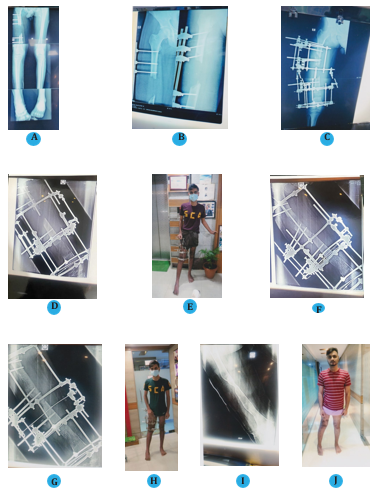
G & H) Radiographic result, full union achieved after 11 months follow-up.
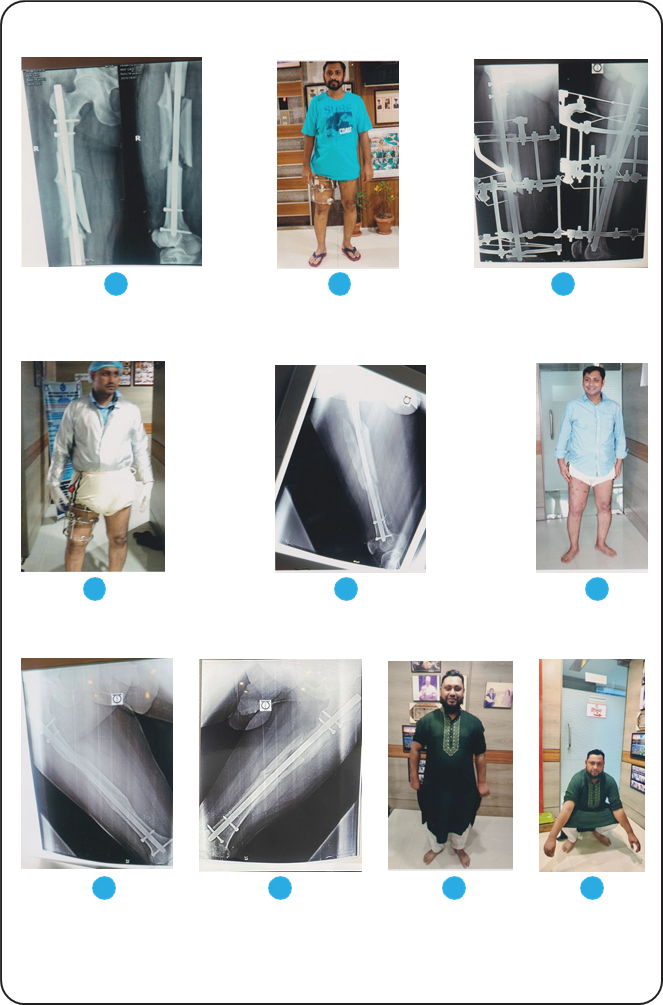
G,H). Radiographic view at 11-months follow-up post-treatment.
I & J). Clinical appearance of patient after 11 months.
None.
The authors declare that there are no conflicts of interest.

©2025 Bari, et al. This is an open access article distributed under the terms of the, which permits unrestricted use, distribution, and build upon your work non-commercially.
