Journal of
eISSN: 2574-8114


Research Article Volume 11 Issue 4

Regret for the inconvenience: we are taking measures to prevent fraudulent form submissions by extractors and page crawlers. Please type the correct Captcha word to see email ID.
Carlo Franzato
Arts and Design Department, Pontifical Catholic University of Rio de Janeiro (PUC-Rio), Brazil
Correspondence: Márcia Bergmann, Pontifical Catholic University of Rio de Janeiro, Rio de Janeiro, RJ, Brazil, Tel 552135271595
Received: August 17, 2025 | Published: September 4, 2025
Citation: Bergmann M, Magalhães C, Franzato C. Circularity, t-shirts and vegetable textile fibers: analysis on selecting raw materials based on the three- dimensional strategic design matrix. J Textile Eng Fashion Technol. 2025;11(4):202-209. DOI: 10.15406/jteft.2025.11.00423
This study maps the cultural, market, and technological changes that influence the selection of raw materials for textile and apparel design projects over time. It uses a Strategic Design approach with an emphasis on environmental sustainability. The research combines a bibliographic review and a case study focused on the Brazilian textile and apparel industry from a Circular Economy perspective, using cotton and hemp fibers for manufacturing t-shirts. To that end, the analytical phase of the Three-Dimensional Strategic Design Matrix (TSDM) applies. Applying the matrix in a more restricted scope has allowed us to: (a) suggest actions related to project activities that bring together design and other stakeholders to determine the choice of environmentally sustainable raw materials; (b) extrapolate timely technical solutions and adopt a critical perspective when reflecting about dominant and emerging fibers in the fashion cycle; (c) speculate about the environmental performance of cotton and hemp fibers, based on design strategies for sustainability and the 2030 Agenda’s Sustainable Development Goals. From a wider perspective, the matrix model has served as a navigation instrument to deal with the complexity and dynamics of a mature industry by identifying, organizing and integrating a wide range of fragmented information, focusing on aspects coherent with a desirable future and aligned with 21st century values.
Keywords: strategic design, circular economy, mature industry, textile and apparel industry, fashion, sustainable development goals, environmental sustainability
The choice of fabric has an impact on aesthetic, technical and symbolic aspects, as well as on the environmental performance of the piece of clothing over its life cycle. Most of these impacts are determined during the conception stage. In this context, the selection of raw materials, which is intrinsic to design, becomes relevant due to demands of environmental responsibility in fashion.1 Industry professionals need to combine knowledge about textiles and sustainable development principles, getting a more in-depth understanding of raw materials, developing critical thinking about the use of dominant fibers and considering emerging alternatives. To do that, design must go beyond timely technical solutions, adopting a strategic approach that includes textile fibers in the industry’s systemic transformations.
Thus, this study aims at mapping social, cultural, market and technological changes that influence the selection of raw materials for textile and apparel design projects based on a Strategic Design approach with an expanded focus on environmental sustainability.
This mini study is a qualitative research with descriptive and explanatory character. Regarding procedures, it combines bibliographic review and case study focused on the Brazilian industry and on Circular Economy with cotton and hemp fibers applied to t-shirt manufacturing. This choice is justified by the environmental and economic potential of circular processes, by the environmental benefits intrinsic to natural materials, and by the fact that it is a very popular and informal piece of clothing in a robust, expanding global market.
That said, it’s important to highlight three concepts from the very beginning: Strategic Design, mature industry and environmental sustainability, describing how they are defined within the scope of the present study.
Strategic Design with an aim to the future and to knowledge-building seeks to understand the complexity of dynamic environments before the start of a design project, prioritizing a contextualized analysis of the competitive, technological, social and cultural scenarios, as well as conceiving, conserving or questioning strategies and leading innovation processes with global impact and local actions.2–5
The industry’s life cycle model and its introduction, growth, maturity and decline stages guide strategic diagnoses. At the maturity stage, the purpose is to delay obsolescence and reach new growth levels.6 The same occurs in the textile and apparel industry. There is a tendency towards stabilization, a phenomenon related to economic uncertainty, to changes in consumption and to the reorganization of global trade.7
Meanwhile, sustainability is understood as a change process, which encompasses thoughts and actions aimed at human development, guaranteeing the survival of current and future generations, supported by three interdependent dimensions: social, economic and environmental.8 However, the present study focuses exclusively on the environmental dimension.
The bibliographic review was based on a narrative approach, organized in three iterative cycles:
As part of the methodology roadmap, the Three-Dimensional Strategic Design Matrix (TSDM) is used to support the exploration, creation and dissemination of knowledge based on the concepts of endogenous innovation, creative accumulation and rejuvenation of mature industries. It is a strategic analysis and creation tool used in phases that precede the design project conception stage.9 Structured in lines, columns and intersections, TSDM combines three project dimensions: technologies (raw materials and processes), cultural principles (ideas that guide social action, including consumption practices) and market-oriented factors (functions and attributes of consumer goods). The analysis of these dimensions considers four timeframes: past, which redeems and reinterprets previous references; present, which considers the mature industry’s current situation; emerging, focused on trends and innovations outside the industry; and future, which contemplates a remote vision with subtler signs of change.
The deployment of TSDM takes place in two phases: analytical, which simultaneously identifies and analyzes project dimensions in the past, present and emerging contexts; and creative, which develops alternatives and conceptual projects for future scenarios. This study focuses on the analytical phase only, aimed at mapping changes. Figure 1 illustrates the relationship between the Three-Dimensional Strategic Design Matrix and the present study’s focus on the analytical phase.
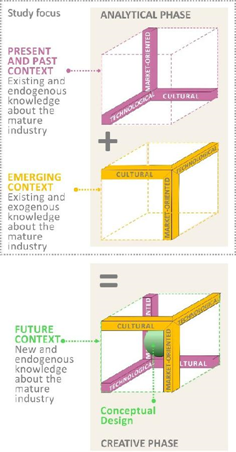
Figure 1 Three-Dimensional Strategic Design Matrix and the present study’s focus on the analytical phase.
The Brazilian textile and apparel industry, with its long-lived tradition among the world’s main cotton and knit fabric manufacturers, is acknowledged as the completest production chain of the Western World, which ranges from fiber production to the manufacturing of clothing.10,11 Due to its nearly two-century-old tradition, it accumulates resources and experience that must not be underestimated as knowledge sources in innovation processes. It has, however, been facing growing challenges, especially regarding environmental sustainability demands, a factor that has been increasingly decisive when it comes to global competitiveness. Brazil’s performance in this area is considered faulty and falls short of intergovernmental recommendations.12
In this scenario, the domestic textile and apparel industry must strategically redefine its ability to adapt, critically interpret new realities, and come up with visions for the future to remain relevant. One of the main obstacles is evaluating the dynamic complexity of the context in which it operates, and it’s in this environment of uncertainty that design plays a strategic role in the selection of raw materials.
The application of the TSDM analytical phase in the Brazilian textile industry has analyzed three project dimensions: circularity (cultural), t-shirts (market-oriented), and vegetable fibers (technological). The technological dimension has observed the original structure, approaching the past and present status of cotton, presenting hemp as an emerging alternative. However, considering that timeframes may be flexible, permeable layers, the cultural and market-oriented dimensions have been adapted, leading to an analysis from the perspective of a single continuous element permeating the three contexts of the analytical phase, since environmental sustainability and t-shirts are a constant factor appearing in the past, present and emerging contexts, constantly re-signified over the time continuum.
Figure 2 shows the connection between project dimensions applied to the textile and apparel industry in the analytical phase. Each of these project dimensions are described below.
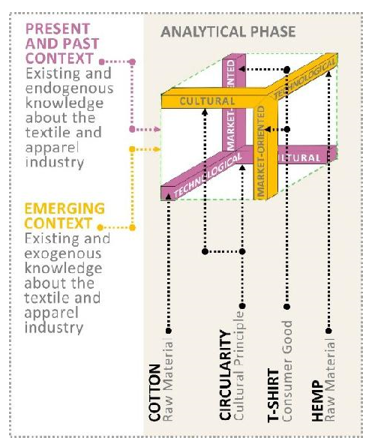
Figure 2 Analytical phase of the Three-Dimensional Strategic Design Matrix applied to the textile and apparel industry. Source: Adapted by the authors based on9.
Circularity as a cultural dimension
TSDM’s first project dimension, circularity, is based on the concept of sustainability, understood as a guideline for human development committed to preserving future generations. Although widely acknowledged and supported by intergovernmental guidelines, such as the United Nations (UN) Agenda 21 and 2030 Agenda, the adoption of sustainable practices has been occurring incrementally.
To change this reality, Circular Economy has been identified as a promising approach, by signaling beneficial interactions between socioeconomic well-being and the environment.13 It proposes systemic change by replacing the traditional linear model of extraction, production, consumption, and disposal for a logic based on the circulation of materials, regeneration and not on waste generation. Circularity operates on three levels of reach: micro (products, services, organizations, and consumers), medium (industrial sectors) and macro (cities, countries, and regions). Because it’s a model under construction, its effectiveness varies as per specific product, industry, and domestic scenario features.
In Brazil, we can see an alignment with global trends. The textile and apparel industry has been inclined towards sustainability, acknowledging it as strategic for the future of domestic fashion. However, effective actions are still in their early stages, especially when it comes to textile waste management, reverse logistics and recycling.
Even though the industry has important standards and regulatory instruments, such as the National Solid Waste Policy, the National Circular Economy Plan and technical standards, the Brazilian textile and clothing ecosystem faces structural obstacles on its path towards circularity, which are exacerbated by regional inequalities. It’s estimated that the industry generates about four million tons of waste per year, including textile, leather, and rubber products, 60% of which are disposed of inadequately.14 Among the main barriers to consolidating circularity in the country, we have a scarcity of specialized recycling facilities, lack of qualified labor, deficiencies in waste collection and sorting, absence of specific tax incentives and legal provisions, low engagement of economic agents regarding accountability for product life cycles, as well as overburdened final disposal systems.
T-shirts as a market-oriented dimension
T-shirts represent TSDM’s second project dimension, one related to consumer goods. They are popular informal clothing items, usually made of knit fabric, with short sleeves, without collar or buttons.15 Their formal simplicity leads to them being commonly described as versatile, practical, basic, universal, casual, comfortable, ubiquitous, unisex clothes.16
The historical background of t-shirts, described by Bass-Krueger,17 makes such versatility clear. Initially used as undergarments by military personnel and laborers in the 19th and 20th centuries with the purpose of protecting against the cold weather or avoiding sweat from soiling the main piece, these clothing items started gaining visibility in the 1930s, as sports attire. Subsequently, they became synonyms with juvenile rebellion in the 1950s; in the 1960s and 1970s, they became symbols of social protest movements. By the 1980s, they had been integrated into the portfolios of high-end fashion brands and had become a canvas for creations by renowned artists.
Since then, t-shirts have consolidated their role as objects with a symbolic, economic, and material character, expressing the idea that social change influences clothing and that, in turn, clothing also contributes to shaping society. They have also adapted to different consumption profiles, from mass-produced versions, aligned to the logic of clothing commodities, to pieces with high added value, with sophisticated and sometimes artisanal finishes. For this reason, they make up a robust expanding global market, with projected sales of 8.3 billion units until 2029.18
Despite their economic relevance, it’s essential to consider the environmental impacts over the entire life cycle of t-shirts, from the cultivation of natural fibers to their disposal, going through the textile production, manufacturing, distribution, and consumption phases. These pieces are not immune to criticism. Under such circumstances, the choice of textile raw material becomes especially relevant, given that its effects extend across the entire production chain.
Vegetable fibers as a technological dimension
The third TSDM dimension focuses on the raw materials used for manufacturing t-shirts, usually made of knit fabrics, a textile category in which Brazil stands out as one of the world’s four major producers.10 Knit fabrics offer flexibility, elasticity, a better fit, and more fluid drape compared to plain fabrics. Thus, this analysis initially approaches cotton as being the dominant fiber in the past and present, then it investigates hemp as an emerging alternative for reasons specific to the Brazilian scenario.
Derived from cotton seeds, cotton fibers are the main raw material used in the production of t-shirt fabrics. It stands out for its technical properties, such as high liquid absorption, quick-drying ability, good color fastness, and moderate resistance to wrinkling, despite low resistance to microorganisms.
In addition to its functional performance, cotton has played a key role since preindustrial manufacturing and continues relevant to contemporary fashion production. In between 60% to 70% of global cotton production is destined for the clothing industry production. However, since the 1990s, cotton fiber has been losing space to other fabrics. In 2023, synthetic fiber represented 67% of the global market, while cotton was responsible for only 25%, a gap that will increase by 2030.19 In Brazil, however, cotton remains as the most used fiber, representing about 40% of women’s clothing, and 70% of men’s clothing.20
This predominance shows the interdependence between cotton farming and the Brazilian textile and apparel industry. Domestic production is mechanized and incorporates advanced technologies in biotechnology, nanotechnology, and genetic improvement.21 In 2024, Brazil consolidated itself as one of the five major global producers and the main world exporter of traditional cotton, leading the production in the scope of Better Cotton Initiative (BCI), with 82% of the national harvest for 2022/23 and 42% of the global volume.11
Although BCI is not exactly a formal certification, it connects producers to the production chain, with focus on sustainable practices for conventional cotton. This model brings both advantages and restrictions. For example, most parts of the production are done without artificial irrigation, reducing water consumption, but also requiring an intense use of pesticides, with a potential of contaminating both soil and groundwater.22 Additionally, there are also traceability issues in the productive processes, frequently mentioned as a frail part of this initiative, including in the Brazilian market.
Considering this global and domestic scenario, the responsibility of adopting more sustainable practices in cotton farming grows in the textile and apparel chain.1 This type of awareness has stimulated interest in alternatives, such as organic, agroecological (or regenerative) and naturally colored cotton.23 Organic cotton, cultivated without pesticides or transgenic seeds, follow certifying protocols, promoting biodiversity, emitting less greenhouse effect gases, consuming less energy, even though they demand more water volume compared to conventional cotton. Agroecological cotton adopts practices inspired by traditional agricultural skills, such as composting, crop rotation and integrated pest management, benefiting soil, water, and biodiversity. Naturally colored cotton, in green or brown shades – distinct from more common tones such as variations of white shades, are the result of biotechnological enhancements, does not require dyeing and reduces the use of water, energy and chemical inputs. This variety may even be granted with a Geographical Indication (GI), due to its environmental, social, and historical value.
Despite environmental benefits, the production of these 3 types of cotton instead of the traditional type still faces structural challenges, including low offer, high costs and certification process efforts, limiting its ability to meet the growing demand for environmentally responsible clothes.19
T-shirts may also be made of fabrics produced from alternative vegetable fibers, such as hemp, derived from the Cannabis sativa L. plant. Extracted from the stem, these fibers have natural varied tones, are long, resistant to traction and ultraviolet radiation, do not retain humidity, inhibit the proliferation of microorganisms and are potentially biodegradable.28
The global interest for hemp cultivation has been growing significantly: the number of producing countries has increased from about 20, in the 1980s, to at least 70 in 2022.25 This increase is due to agronomics characteristics of the plant, which has a quick growth, high yield, soil regeneration capacity and low demand for artificial irrigation, fungicides, and insecticides. Its versatility enables application in various sectors, such as food, paper, civil construction, automotive, biofuels, cosmetics, and personal hygiene, which indicates hemp as an emerging material in the 21st century, after decades of ostracism.26
In the textile and apparel industry, hemp market share is still limited, representing only 0.2% of the global production in 2023.19 This modest result is mostly due to fiber’s controversial history. Even though it’s older than cotton and prominent during the Great Navigation period — especially in the production of ropes and sails, hemp lost ground from the 1930s, being replaced by synthetic and cotton fibers in clothing, and by steel cables in the naval industry.26 But its decline is associated with the repression of psychoactive substance trade, worsened by the difficulty in visually distinguishing between the varieties used for textile production and those intended for marijuana production. Although both derive from Cannabis sativa L.1 , the variety cultivated for clothing does not have psychoactive properties.20
In Brazil, the cultivation of the plant was prohibited in 1938 and — opposite to what happened in several other countries — remains banned, despite recent changes to the regulatory framework. Among other factors, this is due to the understanding of the National Health Surveillance Agency (Anvisa, Agência Nacional de Vigilância Sanitária), which does not distinguish hemp plant variants from psychoactive ones. Moreover, since 2015 the import of derivatives, such as hemp yarn, fabrics and clothing, is permitted, even though this practice is still incipient.27
Environmentally speaking, the impact of hemp on the textile and apparel industry requires further exploration. In this sense, its alignment with strategies oriented to the environmental dimension of sustainable development is evaluated, as well as its compatibility with the Sustainable Development Goals (SDGs) of the UN 2030 Agenda, especially when compared to cotton. These were the design strategies analyzed: (a) Design for raising awareness about and enabling responsibility in the textile and apparel industry, stimulating partnerships to accelerate the transition towards circularity; (a) Design for responsible for textile and apparel production, incorporating circularity since the start of the project and prioritizing the use of fibers, fabrics and clothes with lower environmental impact to prevent environmental damages.28
The consolidation of these approaches identified 10 SDGs and 18 targets grouped according to hemp’s performance against cotton: superiority, parity or challenges to face. Figure 3 shows a summary of these relationships (next page).
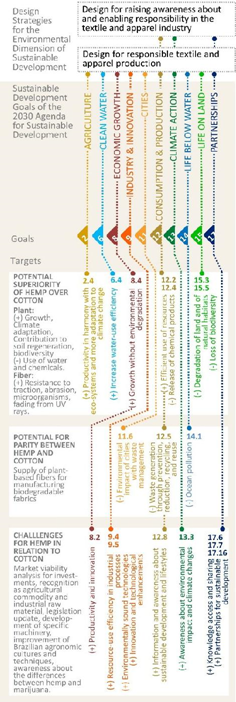
In summary, the analysis highlighted that SDGs 2, 6, 8, 9, 12, 13, 14, 15, and 17 are related to the strategy “Design for responsible textile and apparel production,” while SDGs 12, 13, and 16 align with the strategy “Design for awareness and activation of textile and apparel responsibility”. And, most importantly, this speculative exercise (given the lack of hemp cultivation in Brazil) suggests that:
However, the interest in hemp may be the beginning of a new and lasting fashion cycle justified by its environmental benefits or may only be a passing trend. The introduction of hemp in the production chain still requires time, research, and investment to consolidate it as a sustainable and feasible raw material on a large scale, beyond market niches.
From a wider perspective on material selection, incremental innovations are welcome but must not be confused with systemic changes. Additionally, it is not mandatory that such innovations are scalable to industrial standards since local productions, even with limited volumes, may meet decentralized demands and contribute to environmental regeneration. Finally, the dominance of a fiber may be the result of its agronomic efficiency, but also of the maintenance of economic interests, subsidies and a structural inertia in the production chain that hinders the introduction of emerging alternatives more committed with circularity.
The contemporary design agenda faces organizational challenges related to strategy, innovation, and transformation of processes, while involved in systemic matters of global scale and local action, such as environmental sustainability. Inserted in the logic of industrial competitiveness and in the consumption culture, design must assume its responsibility for environmental impacts generated by the textile and apparel industry. In this setup, beyond the seek for efficiency in selecting raw materials, Strategic Design recognizes systemic discontinuities as chances to transform the status quo aimed at preferred futures.
Therefore, the Three-dimensional Strategic Design Matrix (TSDM) contributed by acting as a navigation map, providing an analytical structure for the strategic interpretation of the industry case. By articulating project dimensions with different time-based contexts, the matrix model organizes fragmented information and establishes critical connections between scattered data. It supports reaction processes to obsolescence and organizational learning in complex and dynamic contexts.
The analysis highlighted changing relationships in three project dimensions:
Thus, the strategic role of design in selecting raw materials in the scope of Circular Economy, either in the t-shirt production, or in other product categories, may benefit from circular initiatives from design processes, including the option for environmentally preferred fibers able to mitigate, for example, the disposability effects of clothing commodities. Particularly, when fabrics and clothes are needed in volumes compatible with the industrial dynamics and the consumer culture of a growing global population.
In a proactive manner, it is clear that design can contribute strategically by: diversifying the raw material portfolio and training suppliers under the perspective of circularity; prioritizing fibers with a positive environmental impact; promoting traceability in fibers and products; seeking for support from trustful certifications and sources; fostering investment in technical training to qualify professionals and strengthen the culture of environmental responsibility; stimulating conscious purchasing decisions through communication strategies based on transparency; supporting public policies and industry engagement for the preservation of nature.
Based on the results, future studies may explore the TSDM creative phase to propose conceptual designs aligned with 21st century values. Although design faces external limitations—over which it has no influence but which impact environmental sustainability—the mapping of contextual changes broadens critical and strategic awareness in the textile and apparel industry. The careful selection of fibers for t-shirts—and, in a broader sense, for other clothing items—, within the circular logic and the renewal of the strategic repertoire of mature industries, shows that Design is capable of redesigning relationships between production chain agents, thus, building a more environmentally responsible ecosystem. The application of TSDM underlined stresses, interdependencies, and potential for transformation by integrating cultural, market-oriented, and technological dimensions. In this strategic research space, articulating these design dimensions with timeframes allows us to rescue neglected traditions, assess the current operation and its developments, in addition to seeking new sources in emerging sectors, even if they have been redefined. Consequently, this approach enabled us to understand the complexity of the industry case and to shift our viewpoint for more coherent design solutions towards circularity, plurality of alternatives and environmental responsibility.
None.
This manuscript has been anonymized for double-blind peer review; author information will be provided upon acceptance.
The authors declare that they have known competing financial interests or personal relationships that could have appeared to influence the work reported in this paper.

©2025 Bergmann, et al. This is an open access article distributed under the terms of the, which permits unrestricted use, distribution, and build upon your work non-commercially.