Advances in
eISSN: 2377-4290


Research Article Volume 15 Issue 3

Regret for the inconvenience: we are taking measures to prevent fraudulent form submissions by extractors and page crawlers. Please type the correct Captcha word to see email ID.
Orotta College of Medicine & Health Sciences, Eritrea
Correspondence: Senait Abraham Tesfamichael, Department of Nursing, Orotta College of Medicine & Health Sciences, Asmara, Eritrea, Tel +2917389153
Received: August 14, 2025 | Published: September 10, 2025
Citation: Tesfamichael SA, Tekleab BG, Kahsay HK, et al. Prevalence of dry eye disease and its association with digital screen use among students of Orotta College of medicine and health sciences, Asmara, Eritrea, 2024. Adv Ophthalmol Vis Syst. 2025;15(3):73-80. DOI: 10.15406/aovs.2025.15.00490
Introduction: Dry Eye Disease (DED) is a prevalent ocular condition characterized by insufficient tear production or excessive tear evaporation, leading to discomfort and visual disturbances. The widespread use of electronic devices has raised concerns about their potential association with DED.
Aim: The study aimed to investigate the association between digital screen usage and DED among Orotta Collage of Medicine and Health Sciences students in Asmara, Eritrea.
Methods: An observational cross-sectional analytical study was conducted and a total of 294 students were sampled using stratified random sampling. A pre-developed self-administered questionnaire and clinical evaluation methods were used. The data were directly entered into SPSS (version 26), and cleaned. Descriptive analysis of the socio-demographic was presented using frequencies (percentages) as appropriate – using graphs and tables. Chi-square test was used for the categorical variables. A bivariate and multivariable logistic regression analyses were used to determine predictors of dry eye. Crude Odds ratio (COR) and Adjusted Odds ratio (AOR) with 95% CI were used to measure the direction and strength of association between explanatory variables and the outcome variable. P-values less than 0.05 was considered statistically significant.
Result: The median age of the participants was 21 years, with 86.7% of them being 25 years or less years.The distribution of students by sex was even, with 52% males and 48% females. Regarding the department, 38.1% were nursing students, while 21.8% were from the medicine department. Third-year students comprised the largest proportion (47.6%), followed by freshmen (20%). The frequency and intensity of symptoms of DED were also assessed, revealing that 25.5% of students reported problems with their eyes when watching screens often or always. Moreover, the study examined the duration of electronic device usage, finding that almost half of the students (50.3%) spent 6 to 10 hours per day using electronic devices. The prevalence of DED was computed with 29.9% of students identified as having DED. Spending 6 to 10 hours per day using electronic devices increased the likelihood of DED by 14 times compared to spending less than 5 hours. Additionally, spending more than 10 hours per day increased the likelihood by more than 45 times. However, age, sex, year of study, and department were not associated with DED. Tear film parameters were compared between students with and without DED, revealing significant differences (p<0.001) in Schirmer’s test and tear breakup time.
Conclusion and Recommendation: This study concluded that the dry eye was prevalent as near one student in every three and directly linked to excessive use of electronic devices. Given the established link between excessive screen time and DED, implementing educational programs specifically aimed at college students becomes crucial.
Implication to the field of nursing: Primarily, the research provided an opportunity for nurses to contribute to the growing body of knowledge in this area. Furthermore, Nurses could have played a pivotal role in raising awareness among patients about the potential risks and implementing preventive measures to minimize dry eye symptoms.
Keywords: dry eye diseases, electronic devices, Orotta College of Medicine & Health Sciences
The use of electronic devices has experienced a significant and exponential increase worldwide, becoming an integral part of our daily lives. This widespread adoption has brought about numerous changes in our daily activities and habits.1 Over the past few decades, there has been a sharp rise in the availability and utilization of personal electronic devices, including laptops, smartphones, tablets, institutional computers, and handheld computers.2 According to a statistics in 2022, about 83.72% of the world’s population, over 6 billion people, use smart phones.3 These devices have evolved beyond their initial purpose of communication and entertainment and have become essential educational tools, providing instant access to reference materials, databases, and reading resources for college students.4 This constant exposure to technology represents a significant change for our eyes. Throughout centuries, our visual system has adapted to viewing a wide variety of objects at different distances. Several studies have previously identified an association between increased multimedia exposure and various health issues.5
Conversely, the increasing usage of these digital devices, along with the accompanying extended screen time, has had a negative impact on general health, particularly in terms of ocular effects like dry eye.4 Dry eye disease (DED) also known as kerato-conjuctivitis sicca (KCS) is the condition of having dry eyes and its prevalent ocular condition is characterized by insufficient tear production or excessive tear evaporation, leading to discomfort and visual disturbances. Other associated symptoms include irritation, redness, discharge, and easily fatigued. DED can occur in association with various congenital, autoimmune, endocrine, and inflammatory disorders, as well as under certain environmental and nutritional conditions.6 The widespread use of electronic devices has raised concerns about their potential association with DED. Dry eye is often a consequence of prolonged periods of staring at screens, accompanied by a decreased blinking rate interval. The significant growth in digital device usage can lead to visual fatigue, also known as electronic device eye strain. This strain can manifest in external symptoms such as eye irritation, a burning sensation, and excessive tearing, which are indicative of the development of DED. The prolonged staring can lead to disturbances in the tear film, which is an essential component of the ocular surface.7 The prevalence rates of dry eye varied across the studies, which was found in china 8.7%8 and India 20.8%.4
In our country, the usage of digital is high and students heavily relied on their electronic devices such as phones and tablets for educational purposes, in addition to the routine activity. To the best of our knowledge, no studies demonstrated a correlation between dry eye diseases and electronic device usage nationally. Therefore, this study aimed to explore the association between the usage of digital screen usage and dry eye disease among the only medical college in the country.
Study design & Setting: This cross sectional study design was conducted between September and November of 2023 conducted to assess the association between dry eye disease and usage of electronic devices. Study was conducted among students at the Orotta College of Medicine & Health Sciences (OCMHS). The Orotta College of Medicine & Health Sciences (OCMHS) is a governmental college and is the only medical college in the country. Students come to the college from the whole country, providing them with the necessary knowledge and skills to contribute to the healthcare sectors in the country.
Study population: All students of the Orotta College of medicine and Health Sciences (OCMHS) from all departments who were enrolled during the study period made the population. The distribution of the students by department and program during the study period is given in Table 1. The eligibility to participate in the study was based on the respondent’s willingness to participate in the study. Students who didn’t consent to participate in the study, those with a preexisting dry eye disease and ocular surface pathologies and those who were not available during the data collection procedure were excluded from the study.
|
S.no |
Department |
Post graduate |
Degree |
Diploma |
Total |
|
1 |
Nursing |
- |
105 |
262 |
367 |
|
2 |
Pharmacy |
- |
26 |
64 |
90 |
|
3 |
CLS |
- |
22 |
77 |
99 |
|
4 |
Radiology |
- |
- |
46 |
46 |
|
5 |
Dental therapy |
- |
- |
88 |
88 |
|
6 |
Environmental health |
- |
- |
67 |
67 |
|
7 |
Medicine |
36 |
160 |
- |
196 |
|
Total |
36 |
313 |
604 |
953 |
|
Table 1 Distribution of current students by department/unit and program, OCMHS, 2023
Sample size: Sample size was calculated based on one sample proportion formula given by
(1)
Where, n1= is the sample size in the study,
Z= standardized normal distribution value for the 95% confidence interval (CI), which is 1.96, P= is the assumed prevalence of the outcome under study (when the prevalence is unknown p=0.5) d= margin of error, which is 0.05
After adjusting for the finite population correction (since the population size was small as compared to the sample size), the sample size was
Finally, after adjusting it for the potential non-responses, the sample size was
(2)
(3)
Sampling technique: Samples were taken using stratified random sampling, taking departments as strata. A sampling frame was taken from each department so as to select samples systematically. The sampling frame contained both degree and diploma students. The number of sampled students was proportionally allocated from each department. The allocation of the sampled students in each department is shown in Table 2.
|
S.no |
Department |
Post graduate |
Degree |
Diploma |
Total |
|
1 |
Nursing |
- |
32 |
80 |
112 |
|
2 |
Pharmacy |
- |
8 |
19 |
27 |
|
3 |
CLS |
- |
7 |
23 |
30 |
|
4 |
Radiology |
- |
- |
14 |
14 |
|
5 |
Dental therapy |
- |
- |
27 |
27 |
|
6 |
Environmental health |
- |
- |
20 |
20 |
|
7 |
Medicine |
11 |
49 |
- |
60 |
|
Total |
11 |
95 |
604 |
290 |
|
Table 2 Distribution of the samples taken from each department by program using proportional allocation
Data collection tools and technique
A questionnaire was adopted from a previous study.4 It is an English version and self-administered type of questionnaire. The first part of the questionnaire included socio-demographic and clinical variables. The variables were age, gender, college department, year of study, type of eye disease, history of ocular trauma, use of eye ointment and existence of systemic disease, the period and daily duration of smart phone usage, the symptoms of dry eye experience and the number of hours spent daily on smartphones. The second part involves a checklist about the presence of dry eye symptoms, the third part is about the duration of electronic device usage and use of protective measures. A clinical evaluation form was also used which consisted a comprehensive eye examination on slit-lamp and evaluation on tear film parameters such as Schirmer’s test, tear film breakup time tear meniscus height, and corneal surface staining. Tear film quantity was examined by Schirmer’s test. (Non-invasive superficial procedure) was performed with the help of a 5x35mm strip.
Data collection procedure
Permission was obtained to conduct the study from the ethical committee of Orotta College of Medicine and Health Science. Students were encountered during the preoperative period, the purpose and the objective of the study was explained to them before informed consent was obtained from each participant. Clinical evaluation, including slit lamp examination and assessment of tear film parameters were made to each participant. Tear film quantity was examined by Schirmer’s test. (Non-invasive superficial procedure). It was performed with the help of a 5x35mm strip of the Whatman-41 filter paper. The strip was folded 5mm from one end and kept in the lower fornix of both eyes at the junction of lateral one third and medial two-thirds. After 5 minutes, the strips were removed and the length of filter paper wetted was recorded in mm. Tear film stability was assessed by the TBUT. The patient sat on a slit lamp and the eye was stained with fluorescein dye strip. The patient was asked to blink 2-3 times and then instructed to look straight ahead without blinking. The interval between the last blink and the appearance of the first corneal dark spot was measured in seconds. The TMH was measured at the slit lamp (Haag Streit model) with a narrow vertical beam of light of 0.3 and 1.0mm from the lower lid margin to the top of the tear meniscus. Keratoepitheliopathy was measured by multiplying the area score by density score after staining with 0.5% fluorescein dye. The staining area was graded on a numerical scale of 0– 3, with 0 representing no punctate staining; 1, less than one-third; 2, one-third to two-thirds; and 3, more than two-thirds. The staining density was graded on a numerical scale of 0–3, with 0 representing no punctate staining; 1, sparse density; 2, moderate density; and 3, high density with overlapping lesions.
Outcome measurements (Diagnosis & scoring of dry eye disease): The presence of DED was diagnosed based on the criteria defined by the Dry Eye Society in 2006. These criteria included the presence of (1) dry eye symptoms, (2) qualitative or quantitative abnormalities of the tear film in one or both eyes (Schirmer’s test results of ≤5 mm or TBUT of ≤5 Seconds); and (3) conjunctivo-corneal epithelial damaged (total staining score of ≥ 3 out of 9 points). Participants meeting all the criteria were considered to have definite DED, and those meeting 2 criteria in one or both eyes were considered probable DED; the presence of 1 or absence of any criterion indicates no DED. Participants with definite and probable DED were classified into the DED group. The total checklist score for protective measures awareness was 13 and cut off point was 70% of the total score and distributed as the follows: < 70% (<9.1from the total score 13) was considered unsatisfactory level of practice while ≥ 70% (≥ 9.1from the total score 13) was considered satisfactory level of practice.
Predictor variables
The dependent variable was the presence or absence of the dry eye disease (DRD). The independent variable are the socio-demographic and clinical variables, usage of electronic device, device screen distance, screen position in relation to the eye level as well as the protective measured used.
Validity & reliability
The original self-administered English version questionnaire (DEQS) had excellent internal consistency (Cronbach’s alpha=0.83 to 0.93) and test and re-test reliability (ICC=0.81 to 0.93).9 In another study, it was found out that the internal consistency of the questionnaire (Cronbach`s alpha= 0.82) and the practices of DED preventive measures questions had the ICC ranged from 0.80 to 0.92, indicating excellent reproducibility. Hence, the questionnaire, was found to be highly reliable. Moreover, another study measured the internal consistency of the subscales ‘bothersome ocular symptoms’, ‘impact on daily life’, and ‘summary scores’ were 0.71, 0.88, and 0.89 respectively.10 In this current study, the face and content validity of the data collection tool were ensured as the instrument was reviewed by key experts from the Orotta College of Medicine & Health Sciences as well as that of the Ministry of Health. The questionnaire was then pre-tested among students of the Asmara College of Education. All needed adjustments which were obtained during the pretest were once revised and the necessary modification was done to fit the study area and study population. The participants were guidance on how to fill out the questionnaire. After the questionnaire is completed, each questionnaire was checked for completeness & consistency.
Data analysis
Data was cleaned, coded and entered into SPSS (Version 26.0) for analysis. Descriptive analysis of the socio-demographic and other covariates was done using frequencies (percentages) as appropriate. Chi-square test was used for the categorical variables to examine the associations between the dependent and independent variables. A bivariate and multivariable logistic regression analyses were used to determine predictors of dry eye disease. Crude Odds ratio (COR) and Adjusted Odds ratio (AOR) with 95% CI were used to measure the direction and strength of association between explanatory variables and the outcome variable. Tables and graphs were used to present the results of the analysis. P-values less than 0.05 was considered statistically significant throughout the analysis.
Socio-demographic characteristics of the participants
The distribution of the students by socio-demographic variables is displayed in Table 3. The median age of the students was 21 years (IQR=3) with majority (86.7%) of them having 25 or less years. The distribution of the students by sex was even (52% males versus 48% females). More than one third (38.1%) of the students were nurses and 21.8% (19.4% medicine and 2.4% post graduate medicine) were from medicine. Almost half (47.6%) of the students were third year and 20% were freshmen followed by second year (12.9%). The sixth year and post graduate students who mainly belong to the medicine comprise of 4.8%.
|
Variable |
Frequency |
Percentage |
|
Age (Md=21.0, IQR=3) |
||
|
< 25 |
255 |
86.7 |
|
> 26 |
39 |
13.3 |
|
Gender |
||
|
Male |
153 |
52 |
|
Female |
141 |
48 |
|
Department |
||
|
Nursing |
112 |
38.1 |
|
Pharmacy |
27 |
9.2 |
|
Laboratory |
30 |
10.2 |
|
Radiology |
14 |
4.8 |
|
Dental therapy |
27 |
9.2 |
|
Environmental health |
20 |
6.8 |
|
Medicine |
57 |
19.4 |
|
Postgraduate |
7 |
2.4 |
|
Year of Study |
||
|
First |
59 |
20.1 |
|
Second |
38 |
12.9 |
|
Third |
140 |
47.6 |
|
Fourth |
27 |
9.2 |
|
Fifth |
16 |
5.4 |
|
Sixth |
7 |
2.4 |
|
Postgraduate |
7 |
2.4 |
Table 3 Socio-demographic characteristics of the study participants
Health related parameters
The history of the students with regards to health was assessed based on the previous existence of any eye disease, ocular trauma, use of ointment, and existence of systemic disease. The results revealed that 6.5% of the students had an eye disease, but no ocular trauma. Only one student was found to use an ointment. Moreover, only one student had an arthritis but three were found to have thyroid disease. No student was found to have diabetes and Sjorgren’s syndrome (Table 4).
|
Variable |
Frequency |
Percentage |
|
Eye disease |
||
|
Yes |
19 |
6.5 |
|
No |
275 |
93.5 |
|
Ocular trauma |
||
|
Yes |
0 |
0 |
|
No |
294 |
100 |
|
Use of ointment |
||
|
Yes |
1 |
0.3 |
|
No |
293 |
99.7 |
|
Existance of systemic disease |
||
|
Diabetes |
0 |
0 |
|
Arthritis |
1 |
0.3 |
|
Thyroid disease |
3 |
1 |
|
Sjorgren's syndrome |
0 |
0 |
|
No |
290 |
98.6 |
Table 4 Socio-demographic characteristics of the study participants
Frequency and intensity of symptoms of dry eye disease
The frequency and intensity of symptoms of dry eye disease are displayed in Table 5. Out of the 294 students in the study, one quarter were found to have problem with eyes often/always when watching screen (25.5%), making the frequently existing symptoms of the fifteen ones. Next to it, almost one out of five students (22.8%) of the students were found to have increased sensitivity to light often/always. Tearing (14.3%), eye redness (12.2%), eye pain (11.6%), itching (9.9%), blurred vision (9.9%), head ache (8.8%) and foreign body sensation (8.5%) were the symptoms reported to exist often/always by almost ten percent of the students. The least frequent symptoms which exist often/always were colored haloes around objects (2%), heaviness of eye lid (2.4%), excessive blink (4.4%) and worsening of feeling sight (4.4%).
|
Symptoms |
Percentage (Often/always) |
Number |
Intensity (Intense) |
|
Burning sensation |
6.5 |
90 |
0 |
|
Itching |
9.9 |
156 |
5.8 |
|
Foreign body sensation |
8.5 |
98 |
3.1 |
|
Tearing |
14.3 |
159 |
6.3 |
|
Excessive blink |
4.4 |
69 |
4.3 |
|
Eye redness |
12.2 |
141 |
2.8 |
|
Eye pain |
11.6 |
132 |
3.8 |
|
Heaviness of eye lid |
2.4 |
46 |
2.2 |
|
Dryness |
9.2 |
74 |
10.8 |
|
Blurred vission |
9.9 |
108 |
6.5 |
|
Problem with eyes when watching screen |
25.5 |
191 |
8.9 |
|
Increased sensitivity to light |
22.8 |
189 |
9 |
|
Colored Haloes around objects |
2 |
33 |
6.1 |
|
Feeling sight is worsening |
4.4 |
63 |
6.3 |
|
Headache |
8.8 |
131 |
6.1 |
Table 5 The frequency and intensity of symptoms of dry eye disease (n=294)
Among those students who reported existence of each symptoms of dry eye disease, the reported intensity (measured as moderate or intense) was assessed. The percentage of intense level of intensity for the symptom dryness was 10.8. Problem with eyes when watching screen at an intense level was reported by 8.9% of the students.
Duration of electronic device usage and protective measures
The average hours spent per day using the electronic device was 8.2 hours (SD=3.55). Almost half (50.3%) of the students spend 6 to 10 hours day and one quarter spend less than five hours (24.1%) and more than 10 hours (25.5%). Almost 90% of the students have used the electronic devices for more than 3 years, but 10.9% used for less or equal 3 years (Table 6).
|
Use of protective measure |
Number |
Percentage |
|
Taking short break every 20 minutes for 20 seconds and looking at objects at least 20 feet away |
43 |
14.6 |
|
Blinking frequently |
95 |
32.3 |
|
More than arm and forearm length from the eyes and below the level of the eyes while using electronic device |
118 |
40.1 |
|
Using an overhead lighting from ceiling other than a desk lamp or light hitting directly on the eyes |
128 |
43.5 |
|
Avoiding sitting where direct blow of air to the eyes or where light is reflected on the screen |
159 |
54.1 |
|
Using an antiglare screen |
65 |
22.1 |
|
Massaging to the eyes |
84 |
28.6 |
|
Using eye drops |
21 |
7.1 |
|
Getting regular eye exam |
23 |
7.8 |
|
Making text larger |
69 |
23.5 |
|
Raising the device's refresh rate |
111 |
37.8 |
|
Lowering the colour temperature of screen |
184 |
62.6 |
|
Putting a humidifier in the room where you often use digital device |
10 |
3.4 |
Table 6 Frequency distribution of the protective measures used by the students
Prevalence of dry eye disease
Prevalence of dry eye disease was computed based on three criteria defined by the Dry Eye Society, in which if a student does have dry eye symptom, abnormalities of the tear film in one or both eyes, and conjunctivocorneal epithelial damage, then he/she is considered as to have definite DED exists. The presence of 2 criteria makes probable DED and presence of 1 or absence of any criterion indicated no DED. The descriptive summary of the criteria for the DED classification are presented in Table 7.
|
Criteria |
Frequency |
Percentage |
|
Presence of DED symptoms |
||
|
Yes |
96 |
32.7 |
|
No |
198 |
67.3 |
|
Ability of tear film |
||
|
Yes |
133 |
45.2 |
|
No |
161 |
54.8 |
|
Corneal staining |
||
|
Yes |
7 |
2.4 |
|
No |
287 |
97.6 |
Table 7 Criteria for defining DED
As per the criteria, the prevalence of definite DED and probable DED were 1% and 28.9% respectively. Hence the prevalence of DED among the students is 29.9% (95% CI: 24.9%, 35.3%) (Figure 1).
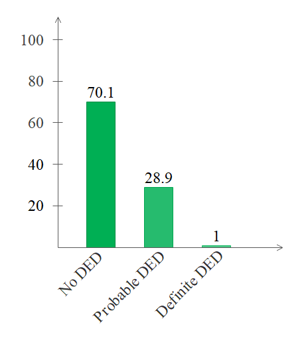
Figure 1 The prevalence of the DED.
Factors affecting dry eye disease
Factors that are associated with dry eye disease are assessed using bivariate logistic regression. From the seven factors assessed only one was found to be significantly associated with dry eye disease. The result showed that students who spend 6 to 10 hours per day are 14 times more as to have DED as compared to those who spend less than 5 hours per day. Similarly, those students who spend more than 10 hours a day in electronic device are more than 45 times to have DED as compared to those who spend less than 5 hours a day. However, age, sex, year of study, and department were not associated with dry eye disease (Table 8).
|
Variable |
COR (95%CI) |
p-value |
|
Age |
||
|
<25 |
0.64 (0.32, 1.29) |
0.214 |
|
>26 |
Reference |
|
|
Gender |
||
|
Male |
0.78 (0.47, 1.29) |
0.334 |
|
Female |
Reference |
|
|
Year of study |
||
|
1st year |
0.40 (0.13, 1.27) |
0.12 |
|
2nd year |
0.94 (0.29, 3.04) |
0.911 |
|
3rd year |
0.51 (0.18, 1.48) |
0.216 |
|
4th year |
0.29 (0.07, 1.17) |
0.082 |
|
fifth year more |
Reference |
|
|
Department |
||
|
Nursing |
0.66 (0.14, 3.09) |
0.596 |
|
Pharmacy |
0.78 (0.15, 4.24) |
0.778 |
|
MLT |
0.67 (0.12, 3.57) |
0.636 |
|
Radiology |
0.36 (0.05, 2.60) |
0.314 |
|
Dental therapy |
0.47 (0.08, 2.62) |
0.387 |
|
Environmental Health |
0.33 (0.05, 2.13) |
0.246 |
|
Medicine |
0.43 (0.09, 2.18) |
0.311 |
|
Postgraduate |
Reference |
|
|
Total hours spent using electronic device |
||
|
6 to 10 |
14.13 (3.31, 60.23) |
<0.001 |
|
>10 |
46.36 (10.57, 203.33) |
<0.001 |
|
<5 |
Reference |
|
|
Electronic device use |
||
|
<3 |
0.40 (0.15, 1.07) |
0.069 |
|
>3 |
Reference |
|
|
Protective measures usage |
1.02 (0.90, 1.16) |
0.714 |
Table 8 Associates of DED using bivariate logistic regression
The percentage of students who use protective measure (who have already used the ten protective measures) was 1.4% (n=4). Four of them were found to have no DED and hence COR could not be computed. In order to find out the effect of use of protective measure on DED, further research with more sample size is needed.
Comparison of tear film parameters
The parameters schirmer’s test I, tear breakup time, tear meniscus height and corneal staining were compared between the DED and non-DED. The results revealed that Schirmer’s test was significantly different between students who have DED and those who do not have DED (p<0.001). Similarly, TBUT was significantly higher among non-DED students as compared to those having DED (p<0.001). However, TMH (p=0.940 and 0.210) and corneal staining (p=0.240 and 0.636) were not significantly different between the two groups of students (Table 9).
|
Film parameters |
DED M(SD) |
Non DED M(SD) |
p-value |
|
Schirmer's Right |
11.28 (8.45) |
17.77 (8.55) |
<0.001 |
|
Schirmer's Left |
10.99 (8.01) |
17.77 (9.12) |
<0.001 |
|
TBUT Right |
5.24 (2.27) |
9.36 (3.12) |
<0.001 |
|
TBUT Left |
5.94 (3.02) |
9.42 (2.95) |
<0.001 |
|
TMH Right |
0.22 (0.21) |
0.22 (0.07) |
0.94 |
|
TMH Left |
0.21 (0.09) |
0.21 (0.09) |
0.21 |
|
Corneal staining Right |
0.009 (0.05) |
0.003 (0.03) |
0.24 |
|
Corneal staining Left |
0.008 (0.05) |
0.005 (0.04) |
0.636 |
Table 9 Comparison of the tear film parameters between DED and non-DED group
Study overview
Dry eye (DE) is a multifactorial condition of the tears and the ocular surface that causes discomfort, visual disruption, and tear film instability, as well as potential ocular surface injury. It is accompanied by increased tear film osmolarity and ocular surface irritation.11 Digital screen use is part of everyday life and is a risk factor for DED development. Possible explanation for the relationship between electronic device usage and DED is that reduced blink rate and increased percentage of incomplete blinks during digital screen use can lead to ocular surface dryness. Thus, this study aimed to investigate and assess the link between electronic device usage and dry eye disease (DED) among students at OCMHS. It sought to address the gap in our knowledge regarding this aspect of electronic device use and its impact on ocular health.
Socio-demographic characteristics
With regard to the socio-demographic characteristics the current study revealed that the age was no significantly (p=0.214) associated with eye dryness and this may be due to inclusion of specific age group. A study done in Serbia was found to be aligned with the current study in which there was no significant (p= 0.130) association with the age.12 In contrast to this study a study done by Eman D.Alabalawi and his colleagues found a significant association between age and dry eye symptoms. Participants aged 18-25 and 36-45 reported experiencing more severe symptoms compared to other age groups (p < 0.001).11 Similar to a study conducted in India, in the current study the distribution of students by sex was balanced (52% male, 48% female) with no significant (p=0.334) association between sex and dry eye symptoms found. However, other studies have reported a higher frequency of dry eye in females compared to males.1,6,12,13 This discrepancy might be due to hormonal differences, as some studies suggest a link between menopause and dry eye symptoms in women, especially those over 50.14,15 Regarding educational level, no significant association was seen with DED. However, study done by Jun Hyung moon and his colleagues, performed comparative analysis of DED in 452 younger grade (1st to 3rd) children and 464 older grade (4th to 6th) children and the prevalence of DED was 4% and 9.1% respectively which was statistically significant (P=0.03) difference.6
Health-related parameters
This study assessed the students' health history regarding eye diseases, ocular trauma, ointment use, and systemic diseases. 6.5% of the students reported having an eye disease, but none reported ocular trauma. Only one student used eye ointment, one had arthritis, and three had thyroid disease. No students reported diabetes or Sjögren's syndrome. This could be suggested that the smaller sample size and age might contribute. These findings differ from a study by Natalia Osial his colleagues in Poland (2023), who identified diabetes (p = 0.001) and allergy (p = 0.023) as significant risk factors for DED.
Frequency and intensity of symptoms of dry eye disease
Among the 294 students, 25.5% reported experiencing frequent or constant eye problems while using screens. Additionally, nearly 23% reported frequent or constant light sensitivity. Tearing (14.3%), eye redness (12.2%), and eye pain (11.6%) were also reported frequently by nearly 10% of the students. The least frequent symptoms reported often or always were colored halos around objects, heavy eyelids, excessive blinking, and worsening vision. The intensity of dry eye symptoms was also assessed. Over 10% of students reported experiencing dryness and problems with their eyes at an intense level when using screens this might be associated with long hours usage. A similar study conducted in Jordan and Iraq in 2022 found that one-third of participants were diagnosed with dry eye symptoms, with over half reporting screen time exceeding 6 hours per day. Additionally, studies have established a clear link between long screen time and dry eye disease. An Egyptian study, for instance, found that information technology professionals who worked more than 6 hours daily on computers experienced dry eye symptoms, including headaches, blurred vision, and burning eyes.16
Several reasons contribute to this association. When using electronic devices, individuals tend to focus intently on the screen for extended periods, often neglecting to blink. This prolonged screen time disrupts the natural tear film, leading to dryness and irritation.16 The increased screen uses during the COVID-19 pandemic further exacerbated this issue, with many individuals spending over 5 hours daily on digital devices.17 A study in Saudi Arabia demonstrated a 76% increase in dry eye symptoms during the pandemic's lockdown period.18
Duration of electronic device usage and association with DED
The current study found that participants spent an average of 8.2 hours (SD=3.55) daily on electronic devices. Compared to students using devices less than 5 hours per day, those spending 6-10 hours were 14 times more likely to have dry eye disease (DED), and those exceeding 10 hours were over 45 times more likely. Similarly, a large study using crowdsourcing data (N=4454) found an association between >8 hours of screen use per day and symptomatic dry eye (Ocular Surface Disease Index [OSDI] total score ≥13) compared to <4 hours per day (Inomata T, 2020). The study done by Uchino M and his colleagues in Japan (2013) (N=561) demonstrated that office workers who used digital screens for >8 hours per day had a higher risk of definite or probable DED (OR=1.94).13 Furthermore, the study done in Japan by Hanyuda A and his colleagues, (2020), (N=102,582) found that greater digital screen use was associated with a higher risk of clinically diagnosed DED (OR=1.18 for each 1 hour/day increment) and severe symptoms of dry eye (OR=1.11 for men and OR=1.12 for women for each 1 hour/day increment).19 Overall, these findings established a relationship between DED and digital screen use. The association between digital screen use and DED has also been found in school-age children, specifically with smartphone 1s1a XZuse. Among a group of 288 children in Korea (age range=10–12 years), the prevalence of smartphone use was higher among children with DED (71.4%) than among children without DED (50%) (Moon JH, 2014). Furthermore, the daily duration of smartphone use (OR=1.86) and total daily duration of digital screen use (OR=1.82) were associated with an increased risk of DED. Evidence also supports a relationship between duration of digital screen use and diagnosed DED.19,13,20,21 However, study done in japan by 2008, no significant relationship was found between duration of screen work and DED.13
DED prevalence
DED was diagnosed based on symptoms of asthenopia and tear film parameters, including Schirmer's test, tear film break up time, tear meniscus height, and corneal staining. This current study found that 29.9% of the college students who used electronic devices had DED. This figure breaks down into 1% with definite DED and 28.9% with probable DED. Similar to our findings, a study in Iraq and Jordan by Dina M. Abdulmannan her colleagues (2022), reported that around one-third (29.0%) of participants were diagnosed with dry eye syndrome by a clinician.16 Additionally, 15.3% reported feeling dry eyes, and 17.3% reported eye irritation. Using the Women's Health Study Questionnaire (WHS) criteria, 33.4% of participants were diagnosed with dry eye symptoms, while only 9.2% reported eye dryness based on the OSDI Questionnaire criteria. In contrast, a cross-sectional study conducted in Jordan and Thailand reported a much higher prevalence of DED, at 71.7% and 70.8%, respectively, based on the OSDI criteria.22,12 This difference could be attributed to the larger sample size in those studies. However, in contrast to these studies, a study done by Jun Hyung moon and his colleagues, found low prevalence which is 6.6%.6
Comparison of tear film parameters
This study compared tear film parameters between students with dry eye disease (DED) and those without. Schirmer's test and tear break-up time (TBUT) were significantly (p<0.001) lower in the DED group compared to the non-DED group. However, tear meniscus height (TMH) and corneal staining did not show significant differences between the two groups (p=0.940 and 0.240, respectively). These findings align with a study done in India by Faruqui and his colleagues, (2020), who reported similar results: lower Schirmer's score (19.08mm±8.24) and TBUT (7.93 ± 3.05) in the DED group compared to the non-DED group.4
Level of practice on preventive measures strategy on dry eye disease
This study investigated the level of practice strategy on the adoption of DED preventive measures among students. The findings revealed low level of practice but no statistically significant. This may be statistically significant with large sample size. Similarly, study done in Egypt by Heba K. Ghazy et al, and Sanodiya et al. (2019) reported that over half of their participants did not employ basic preventative measures like screen filters, appropriate viewing distances, or the "20-20-20 rule".23 Similarly, studies in Islamabad and Saudi Arabia by Hassan and Ghufran and their colleagues respectively showed that a significant proportion of students lacked awareness about preventive measures like regular breaks, blinking exercises, and proper viewing distance.24,25
The study yielded valuable information for eye care professionals and played a crucial role in raising patient awareness about the potential risks of excessive screen time and the importance of implementing preventive measures to minimize dry eye symptoms.
This study investigated the prevalence of Dry Eye Disease (DED) at OCMHS. The results revealed nearly one-third (29.9%) of the student population suffers from DED. This prevalence was found to be directly linked to excessive use of electronic devices. Among the symptoms of DED, experiencing frequent or constant eye problems while using screens was reported as the highest (25.5%). The study also concluded that the average daily spent time on electronic devices was 8.2 hours and those spending from 6-10 hours were 14 times more likely to have DED, and those exceeding 10 hours were over 45 times more likely to have as compared with those who use less than 5 hours (p<0.001).
Interestingly, factors like gender, age, and educational level did not exhibit a significant association with DED. Among the tear film parameters, schirmer’s and TBUT test were significantly different between students who have DED and those who do not have (p<0.001). The study highlighted on improving awareness by organizing workshops within colleges. This workshops should focus mainly on educating students about the negative effects of prolonged screen time on their eyes and include the "20-20-20 Rule" while using screen. In addition, the health care providers or eye care professionals should incorporate timely Digital Eye Strain Screening for symptoms of DED. On the top of that a targeted public awareness campaign should be done through mass media to spread awareness about DED and healthy screen habits.
The authors would like to thank the study participants for their willingness and participation in the research.
Authors’ contributions
BGT: Study conception and design of the study, acquisition, analysis and interpretation of data; HKK: Study conception and design of the study, acquisition, analysis and interpretation of data; LTG: Study conception and design of the study, acquisition, analysis and interpretation of data; SA: revising the manuscript, critically for important intellectual content, submission of manuscript; HAK: revising the manuscript critically for important intellectual content; YMA: revising and drafting the manuscript critically for important intellectual content,. All authors read and approved the final manuscript.
Data availability statement
The datasets generated and/or analyzed during the current study are available from the corresponding author on reasonable request.
The author declares that there are no conflicts of interest.
No funding bodies played any role in study design, data collection and analysis, decision to publish, or preparation of this manuscript.

©2025 Tesfamichael, et al. This is an open access article distributed under the terms of the, which permits unrestricted use, distribution, and build upon your work non-commercially.