eISSN: 2572-8474


Opinion Volume 11 Issue 3

School of Life Science, Shanghai University, China
Correspondence: Da Yong Lu, School of Life Sciences, Shanghai University, Shanghai 200444, PRC, China
Received: May 21, 2025 | Published: July 17, 2025
Citation: Lu DY. Suicide study, past progress and diagnostic transition. Nurse Care Open Acces J. 2025;11(3):75-77. DOI: 10.15406/ncoaj.2025.11.00323
Human suicide is a dangerous phenomenon causing 0.5-1.2 million human mortality annually worldwide. Due to complex features, human suicide study is in a high demand now. Abundant of money and human resources are allocated for developing systems of human suicide prediction, preventions and useful countermeasure. To implement this noteworthy subject, biomedical study is indispensable. Historically, suicide knowledge was greatly based on mental illness study. From long standing suicide and mental disorder relation, the knowledge accumulation and distributions have been evolving mutually. Yet, diagnostic and therapeutic study is almost less advanced in mortality reduction. No 100% effective therapeutics has been dependent. To change this scenario, different fields of suicide studies are discussed.
Keywords: suicide, psychiatric disease, diagnostics, mental illness
Overall scenario
Human suicide is a mystery process for inducing 1.3% human deaths.1-3 Due to many undiscovered character, human suicide biological investigation is critical. In addition to life and economic loses, advanced suicide prediction, prevention and medical management systems should be established.3-7
Risk factors
Many risk factors can lead to human suicide.3-7 Human mental health problems (mood disorder, affective diseases, depressive disorders, schizophrenia and so on) have just been discovered to associate with human suicide and deaths. Scientific study of mental illness and other risk factors should be explored for new knowledge enrichments.
Knowledge evolution
Suicide reports have been lasting from era of Hippocrates (460-377 BC).8-12 The diagnostic and therapeutic studies were evolving in different angels. Table 1 yet, the controversies and challenge of these areas remain. No effective drugs and therapies were popular in the clinic. To face with this dilemma, past reports and literatures should be reevaluated.
|
Timeline |
Major discovery |
|
Ancient Greece |
Four elements and melancholy (excess of black bile) |
|
Aretaeus of Cappadocia |
Clinical feature of depressive |
|
Middle age |
Patients with delusion |
|
16th to 17th |
Clinical diagnosis & behavior abnormal |
|
18th |
Nervous (animal spirits) |
|
19th |
Psychiatric symptoms |
|
20th |
Mood disorder & electroplexy & psychosurgery |
Table 1 Historic order of suicide knowledge changes
Methodology
Human suicide causality is arguable and complex. Today, neuropsychiatric factors and techniques of genomics and molecular biology are noticeable for suicide diagnosis and treatment.13-17 Table 2 shows overall relation and methods between suicide and mental disorders. From the general diagnostics and suicide risks are similar between mood disorders or others (hopeless feeling, self-blame and so on) and genetic alteration (poly-genic). The outside stresses (marriage problems and job/family member losses) are also identical between mood disorders and suicide.18-21
|
Worldwide; totally 15,629 cases |
UK; totally 4,859 cases |
||
|
Mood disorders |
35% |
Mood disorders |
42% |
|
Substance disorders |
22% |
Schizophrenia |
20% |
|
Personality disorders |
12% |
Personality disorders |
11% |
|
Schizophrenia |
11% |
Alcohol dependent |
9% |
|
Anxiety disorders |
6% |
Drug dependent |
4% |
|
Anxiety disorders |
3% |
||
|
Other disorders |
14% |
Other disorders |
11% |
Table 2 The statistics between suicide and other diseases8
Genomic studies
The biomedical studies of human diseases and suicide needs high-quality of suicide prediction, preventions and therapeutics.18, 22-26 It advanced greatly in genetic and molecular scenarios. The biomedical information of mental healthcare problems can be translated to high-quality suicide prediction, prevention and therapeutics.
Mental disease pathogenesis
Mental disorders has high rate of human deaths worldwide. In Hippocrates era, “melancholia”—today “depression” (Unipolar disorder) was reported in ancient records. More recently, these mindsets had been lasted. The core of this mindsets can be further helpful in scientific and medical investigations in the future. The explorations of suicide and mental illness last to nowadays. However, the molecular diagnostics are just begun to flourish. Modern diagnostics (genes or molecular) is a new trend.17-21 Human suicides were reported to be controlled by drugs, such as antidepressants.18-21 However, it has both benefits and risks.26 The improved therapeutics should be discovered.
Psychiatric reviews
The diagnostic guidelines vary Diagnostic and Statistical Manual between mental disorder and suicide. There are many similarities between two systems. Some further studies and streamlines should be made. This form of diagnostic system is the cornerstone of past learning.
Diagnostic insights
Psychiatrics is popular for clinicians or psychiatrists—score or rating for patients. Genetic platforms, like as pharmacogenomics (PG), sequencing, multi-omics or brain image are new frontiers to progress. The analysis of human behaviors mask the disease originations in genetics. The brain features of morphological or visual changes or abnormality see promising outcome in general hospitals and current trends.17-21 The genetic changes in many genes are under evaluations.22-23 At least 40 human genes are reported in human suicide. Many scientific research and challenge should be addressed in future.
Neuropathy and brain image
To establish new suicide diagnostic platforms, brain image study is the key and popular now.25-31 These complex processes have been investigating for two decades (four-fold increase in article number since 2005).32 A number of structural or functional variations have been identified. This is the fastest developing discipline is neuropsychiatric and suicide studies.
Clinical highlights
The progress of suicide studies is rapidly.33-36 Some antidepressants, especially selective serotonin reuptake inhibitor, SSRI show favorable outcomes in the clinic. In addition to antidepressants, other therapeutic selections, such as light therapy (physical treatment),37 emotional regulation,38 education for teenage39 are also useful for suicide reduction.
Mathematics and computation
Mathematics or computation (artificial intelligence, AI) are playing important role. Mathematics methods or equation can increase way or latitude of problem thinking.40-41 AI can simply these research and clinical application.42-44
Genetic- or molecular-based suicide prediction and prevention system are future trends. After these studies, patient diagnostics will be quicker and low costs. Drug therapeutics can be highly effective, personalized and usefulness. Investigational pathways are discussed as
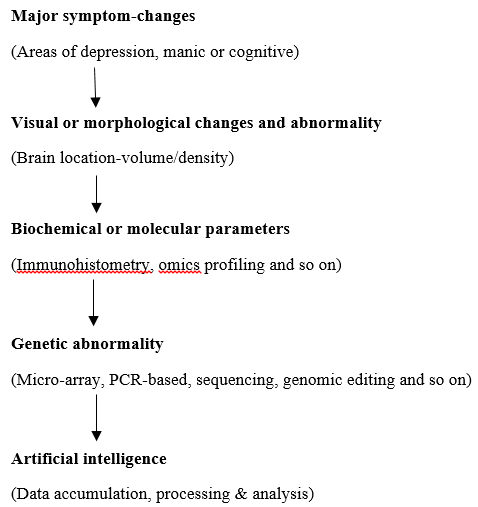
Figure 1 Possible diagram of suicide/mental disorder diagnostic evolutions.
To implement this noteworthy subject, biomedical study is indispensable. Historically, suicide knowledge was mainly based on mental illness study. From long standing suicide and mental disorder relation, the knowledge accumulation and distributions have been evolving mutually.
A lot of knowledge and therapies in suicide studies (comorbid, suicide arms, genomics, molecular biology and risk factors) have been revealed across history. Medical solution should be translated from past studies.
Yet, diagnostic and therapeutic study is almost less advanced in mortality reduction. No 100% effective therapeutics has been dependent. To change this scenario, other fields of suicide studies should be aimed. Human suicidal study and application is very important in the clinic. Many comparison between patients and normal people is highly required. This kind of knowledge, diagnosis, and treatment improvement may possibly save many lives and make this world more harmonies.
None.
None.

©2025 Lu. This is an open access article distributed under the terms of the, which permits unrestricted use, distribution, and build upon your work non-commercially.