MOJ
eISSN: 2379-6383


Review Article Volume 14 Issue 2
 Valeria Pergola,3 Galal Elkilany,4 Ghazi Halabi5
1School of Pharmacy and Biomedical Sciences, University of Central Lancashire Preston, UK
2Halberg Hospital and Research Institute, Moradabad, India
3Department of Cardiology, University of Padua, Padova, Italy
4Sentara, Northern Virginia Hospital,VA, USA
5Halberg Cardiac Center, Alay, Lebanon
Correspondence: RB Singh, MD, FICC, Halberg Hospital and Research Institute, Moradabad, India, Tel +91-9997794102
Received: July 16, 2025 | Published: July 30, 2025
Citation: Manal MA, Singh RB, Pergola V, et al. Brain-heart interactions in prolonged grief disorder. MOJ Public Health. 2025;14(2):210-213. DOI: 10.15406/mojph.2025.14.00491
Prolonged grief disorder (PGD) is characterized with core manifestations of preoccupation and yearning, or both, which could be associated with emotional instability, disturbances in identity, loss of purpose and meaning in life, along with impairment in function. This commentary aims to elaborate these characteristics in the light of biological mechanisms, predisposing cardiovascular diseases (CVDs).The prevalence of PGD varies between 3.4% to 9.8% in various studies. People with bereavement or PGD are at heightened risk of CVDs, including acute myocardial infarction (AMI), heart failure, mortality, stroke, atrial fibrillation and psychological disorders such as depression. Prolonged grief can cause increased sympathetic activity with high stress hormones leading to oxidative stress and inflammation, that potentially affects coronary and heart muscle function. Intense grief may cause physical problems and may trigger AMI, in people with higher baseline risk of CVDs. PGD -induced chronic low-grade inflammation may predispose vasoconstriction, arrhythmias, increase in platelet aggregation, increased pro-inflammatory cytokines and release of endothelin with increased production of fibrinogen known to promote plaque destabilization and a pro-thrombotic state, with involvement of certain regions of the brain.
Keywords: bereavement, grief, stress, inflammation, acute myocardial infarction
When you are sorrowful look again in your heart, and you shall see that in truth you are weeping for that which has been your delight. Kahlil Gibran (Nobel Laureate)
Grief is a natural response of the sadness and emotional manifestation of health, due to the loss of a close relative. The manifestations of grief begin to decline over time, however, if the grief is persistent, intense and prolongs for a few months to longer than one year, it may be considered as prolonged grief disorder (PGD).1–3 The long duration after the grief event is bereavement period.1–3 The prevalence of PGD varies between 3.4% to 9.8%, which is higher in developed countries compared to developing countries. PGD is characterized with core manifestations of preoccupation and yearning, or both, which could be associated with emotional instability, disturbances in identity, loss of purpose and meaning in life, along with impairment in function.1–3 In a landmark review, Killikelly et al, suggested that PGD may have a typical onset of 24 to 48 weeks after the death of the spouse or any close relative.3 It may be associated with various complications, such as cardiovascular diseases (CVDs), increased tendency for suicides, and lack of satisfaction in life, with increase in use of medical services.1–4 It is a distinct mental disorder, also known as complicated grief or persistent complex bereavement disorder, which may develop after a bereavement.1,4 This review of opinion, aims to emphasize on the role of PGD and its mechanisms, as a risk factor of CVDs.
Prolonged grief disorder and risk of cardiovascular diseases
Bereavement is defined as the state of mourning the death of a close relative, which is a severe life event affecting most subjects several times in their lives.3,4 There is rapidly rising evidence that people with bereavement are at an heightened risk of CVDs.4–15 including acute myocardial infarction (AMI),7–9 heart failure,10 mortality,11 stroke,12,13 atrial fibrillation,14,15 and psychological disorders.16 In a cohort study, 266 651 patients with a first AMI were included in the SWEDEHEART (Swedish Web‐system for Enhancement and Development of Evidence‐based care in Heart disease Evaluated According to Recommended Therapies).17 Patients having bereavement, had an increased risk of AMI. The association was strongest for the loss of a partner, followed by the loss of a child, grandchild, sibling, or parent. Following bereavement, there was also an increased risks for total mortality (RR, 1.14 [95% CI, 1.12–1.16]), heart failure (RR, 1.05 [95% CI, 1.02–1.08]), and stroke (RR, 1.09 [95% CI, 1.05–1.13]). Bereavement was associated with a greater risk of poor prognosis after a first AMI.
In a cohort study, involving parents of children (n=2,807,548), mean age 31 years, and the Swedish Medical Birth Register (n=6,711,952) from 1973 to 2014 [5]. During the study period, a total of 126,522 (1.9%) parents lost at least 1 child. Parents with bereavement had a significantly higher risk of coronary disease and AMI compared with the non-bereaved (incidence rate ratios [IRR; 95% confidence intervals, CI]: 1.20, P<0.001, and 1.21, P<0.001, respectively). The risk of AMI was highest in the first week after the loss, when it was over 3 times higher (IRR [95% CI]: 3.67, P<0.001). A case-crossover analysis of 1985 subjects from the multicenter Determinants of Myocardial Infarction Onset Study,9 showed the observed number of deaths in the days preceding MI with its expected frequency. Among the 1985 subjects, 270 (13.6%) experienced the loss of a significant person in the prior 6 months, including 19 within 1 day of their MI. The incidence rate of AMI onset was elevated 21.1-fold within 24 hours of the death. Grief over the death was associated with an increased risk of AMI in the subsequent days.
The origin of this association lies on the impact of prolonged grief on emotions with increased sympathetic activity and stress hormones leading to oxidative stress and inflammation, that potentially affects coronary and heart muscle function.18–22 PGD can predispose and trigger a strong stress response in the body, leading to increase in blood pressure and heart rate. Intense grief may cause physical problems and may trigger AMI, in people with higher baseline risk of CVDs.18–21 It has been reviewed that PGD may contribute to chronic low-grade inflammation, which is a known risk factor for CVDs.4 Apart from increase in blood pressure and heart rate, it may predispose vasoconstriction, arrhythmias, increase in platelet aggregation, increased pro-inflammatory cytokines and release of endothelin with increased production of fibrinogen known to promote plaque destabilization and a pro-thrombotic state,4 with involvement of brain.22
There are several methods for the treatment of PGD which may be related to behavior, psychotherapy and positive emotions.23,24 Randomized, controlled trials indicate that treatment of complicated PGD may produce statistically significantly greater response rates for symptoms of complicated grief compared with a proven efficacious treatment for depression in interpersonal psychotherapy.23,24 It seems that psychotherapy with suggestions to change the behavior is the main treatment for PGD.23,24 In a randomized trial, of 544 treatment-seeking subjects experiencing bereavement, 212 eligible subjects (mean [SD] age, 51.8 [13.3] years; 173 female [82%]) were randomized to PGD-cognitive behavior therapy (CBT) and present centered therapy (PCT) (n = 106 in each group). Treatment with both methods, yielded significant decline in PGD severity at follow-up (PG-CBT: Cohen d = 1.64; 95% CI, 1.31-1.97; PCT: Cohen d = 1.38; 95% CI, 1.09-1.66). After treatment, those subjects receiving PG-CBT revealed significantly more decline in the severity of PGD compared with those receiving PCT. At follow-up, participants in the PG-CBT group showed significantly less depressive and general psychopathological symptoms. Both treatments were effective and acceptable, but PGD-CBT was much better.
Role of positive emotions in PGD
Positive emotions, such as happiness and laughter, have been found to cause beneficial effects on both physical and mental well-being, particularly in the context of stressful conditions.25–27 These beneficial effects can be seen in various aspects of life, indicating greater resilience, improvement in immune function, and higher skills of problem-solving. Therefore, positive psychology movement has created greater interest in examining the potential value of experiencing positive emotions such as happiness, humor and laughter, during the course of bereavement. In a case study, among 292 recently widowed (5-24 weeks) people aged 50 years and above, examined both the perceived importance of and actual experience of having positive emotions in their daily lives, to find out their impact on bereavement adjustments. The results showed that most of the bereaved spouses rated humor and happiness as being very crucial in the daily lives. They were regularly experiencing these emotions at higher levels compared with expected feelings. The experience of happiness, humor and laughter was significantly associated with favorable adjustments with bereavement. There were decreases in grief, sadness and depression regardless of the extent to which the bereaved person valued having these positive emotions.
Similarly, contagious laughter, which means spread of laughing from one another may demonstrate affection and affiliation among people with bereavement.27 It is possible that use of positive emotions such as regular active laughing and activation of hippocampus neurons,28 may be alternative approaches for the management of patients with PGD. An experiment published in Nature has demonstrated that activation of happy memories may cheers mice, via activating specific neurons in the hippocampus, associated with positive memories which may possibly alleviate PGD like behaviors.28 Laughter is a manifestation of joy, whereas sorrow manifests as sadness. Joy can also cause laughter, which may cause release of endorphins, dopamine and serotonin and can increase oxygen intake, reduce stress hormones, and lower heart rate and blood pressure and other biomarkers of CVDs.29 Further research is needed to find out if activation of endo-cannabinoid receptors with increased release anandamides and activation of hippocampus neurons,28 can have positive effects on emotions and relief in PGD.
Mechanisms involved in grief and happiness
Research concerning the mechanisms connecting bereavement with complications was relatively scarce, but differences in rumination, in inflammation, and in cortisol dysregulation between those who adapt well and those who do not are quite interesting. Several landmark experiments have been published in the last two decades to understand the mystery of mind and emotions, which may have concern with PGD and happiness.28–36 While dopamine neurons have been found to modulate depression related behavior,29 a neural mechanism concerned with flavor of the foods,30 may provide post-ingestive feedback and satisfaction, which may be healthful among patients with PGD. Alterations in behaviors are under influence of prefrontal cortex-brainstem neuronal projection,31 whereas input-specific control of reward and aversion are regulated by the ventral tegmental area.32 It seems that social reward requires coordinated activity of nucleus accumbens oxytocin and serotonin which may influence behaviors related to the manifestations of PGD.33 It is possible that hippocampal neurogenesis,34 among adults may buffer stress induced behavior as well as depressive behavior that are common in PGD. An inability to feel pleasure in PGD may be linked to specific synaptic changes in the nucleus accumbens (NAc) that involves the adaptations mediated by melanocortin 4 receptor (MC4R),35 which may influence circuit dynamics of adaptive and maladaptive behaviors,36 resulting in to overall beneficial effects on emotions due to any of the psychological event.
Involvement of brain regions in PGD
PGD may be associated with altered brain region function such as increased amygdala activity and connectivity, particularly when processing negative emotional stimuli.22 Using fMRI, shows an increase in amygdala activity in subjects with PGD compared to those with adaptive grief, particularly during tasks involving emotional expressions. A case study among 117 subjects, examined the independent neural processes underlying emotion processing in participants with PGD, post traumatic disorder (PTSD), and manic depressive disorder (MDD) with functional magnetic resonance (fMRI) that included PGD (n = 21), PTSD (n = 45), MDD (n = 26), and bereaved controls (BC) (n = 25).37 Interestingly, PGD revealed increased activation in the pregenual anterior cingulate cortex (pgACC), bilateral insula, bilateral dorsolateral prefrontal cortices and right caudate and also greater pgACC–right pallidum connectivity concerned with controls, during subliminal processing of happy faces. During the sad faces, PGD was distinct relative to both PTSD and MDD groups with greater recruitment of the medial orbitofrontal cortex during supraliminal processing. However, during subliminal presentation of sad faces PGD were also distinct relative to MDD (but not PTSD) with greater activation in the left amygdala, caudate, and putamen. Surprisingly, during processing of happy faces, there was no distinction between PGD, PTSD, and MDD. These results provide initial evidence of distinct neural profiles of PGD relative to related psychopathological conditions and validates current models of PGD. This emphasizes the roles of yearning and appetitive processes which may be also generated by rewards such as nutrients; tryptophan,38 foods and flavors in PGD,30 and other rewards.39–40 (Figure 1)
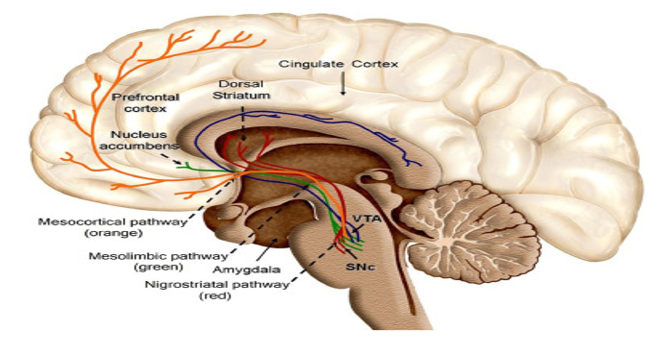
Figure 1 Brain regions involved in prolonged grief disorder (Adapted from reference 39).
In brief, the evidence regarding sorrow or sadness or grief causing adverse effects on CVDs is getting more convincing. PGD may be associated with increased concentration of catecholamines and cortisol, oxidative stress and inflammation with increased platelet aggregation that are risk factors of CVDs. Therapeutic alterations in behavior via behavior therapy inculcation of positive emotions, with an aim to treat PGD may be associated with neural circuit dynamics leading to improvement in the clinical manifestations of PGD. It seems that increased awareness of PGD among the cardiologists, internist physicians and general health practitioners, as well as emotional health specialists, may be key to appropriate early intervention.
None.
The authors declare there is no conflict of interest.
None.

©2025 Manal, et al. This is an open access article distributed under the terms of the, which permits unrestricted use, distribution, and build upon your work non-commercially.
