Journal of
eISSN: 2373-6437


Research Article Volume 17 Issue 5
Department of Critical Care Medicine, King Fahd Military Medical Complex, Saudi Arabia
Correspondence: Khaled Sewify, MD, Department of Critical Care Medicine, King Fahd Military Medical Complex, Saudi Arabia, Tel 966-544802229
Received: October 10, 2025 | Published: October 31, 2025
Citation: Elmasry D, Sewify K, Elmessery R, et al. Protocol-based implementation of combined extracorporeal carbon dioxide removal and continuous renal replacement therapy using prismalung platform: a critical care innovation. J Anesth Crit Care Open Acces. 2025;17(4):140-144. DOI: 10.15406/jaccoa.2025.17.00636
Introduction: The combination of Extracorporeal Carbon Dioxide Removal (ECCO₂R) with Continuous Renal Replacement Therapy (CRRT) represents an essential therapeutic approach for treating hypercapnic respiratory failure and multi-organ dysfunction in critically ill patients. This protocol-based study outlines the implementation of a standardized combined ECCO₂R-CRRT strategy in a critical care setting using the PrismaLung platform.
Methods: We established a comprehensive protocol addressing patient selection criteria, cannulation methods, device settings, and anticoagulation protocols and strategies for managing complications during ECCO₂R-CRRT therapy. The protocol was developed through evidence-based and expert consensus methods to treat patients who have concurrent respiratory and renal failure.
Results: The protocol defines specific inclusion criteria for ARDS patients (driving pressure >14 cmH₂O, plateau pressure >25 cmH₂O), COPD exacerbations (pH <7.25, PaCO₂ >70 mmHg), and concurrent renal failure requiring CRRT. The technical specifications include dual-lumen catheters (≥13F), blood flow rates of 350-450 mL/min, and sweep gas flow of 2-10 L/min. The anticoagulation strategy with systematic monitoring protocols.
Conclusion: The implementation of a structured ECCO₂R-CRRT protocol using PrismaLung in ICU settings proves safe for specific patient populations. This combined approach provides simultaneous lung and kidney protective support and may reduce ventilator dependence in hypercapnic respiratory failure with concurrent renal dysfunction. The safety concerns associated with standalone ECCO₂R machines must be re-evaluated in integrated ECCO₂R-CRRT utilizing this novel protocol.
Keywords: ECCO₂R, CRRT, ARDS, hypercapnia, lung protective ventilation, PrismaLung, extracorporeal support
The low-flow extracorporeal therapy known as Extracorporeal Carbon Dioxide Removal (ECCO2R) functions to selectively remove CO2 while minimizing mechanical ventilation (MV) induced lung injury. The two large randomized controlled trials (RCTs), the SUPERNOVA and REST trials, identified the feasibility of ECCO₂R in removing CO₂ and allowing ultra-protective lung ventilation strategies in ARDS patients.1,2 The high risk of bleeding occurred mostly because of using high doses of anticoagulation, which led to numerous safety concerns about major bleeding. However, this might not be the case when combined CRRT with ECCO₂R-CRRT through a low-flow system minimal anticoagulation that allows simultaneous management of respiratory and renal dysfunction, which frequently occur together in critically ill patients through a low-flow circuit with minimal anticoagulation. ECCO₂R-CRRT strategies implement PrismaLung shared platforms to achieve better efficiency and reduce invasiveness.3,4
Protocol development
We established a comprehensive protocol for ECCO₂R-CRRT implementation through evidence-based systematic review and expert consensus guidelines, and institutional experience. The protocol contains essential information about clinical and technical aspects of therapy implementation.
Patient selection
Inclusion criteria
Our protocol identifies several clinical scenarios where the combined approach may be beneficial:5
CRRT indication
In addition to one of the following:
ARDS patients not responding to the prone position (to allow protective lung strategy):
COPD exacerbation not responding (to prevent intubation and mechanical ventilation):
Other recommendations (bridging therapy):
Exclusion criteria
Technical specifications
The integrated ECCO₂R-CRRT system utilizes the following technical components (Figure 1 illustrates the complete circuit integration):
Figure 2 illustrates the PrismaLung+ membrane cross-section showing the gas exchange surface. Figure 3 shows the detailed PrismaLung ECCO₂R-CRRT cardex used in protocol initiation.
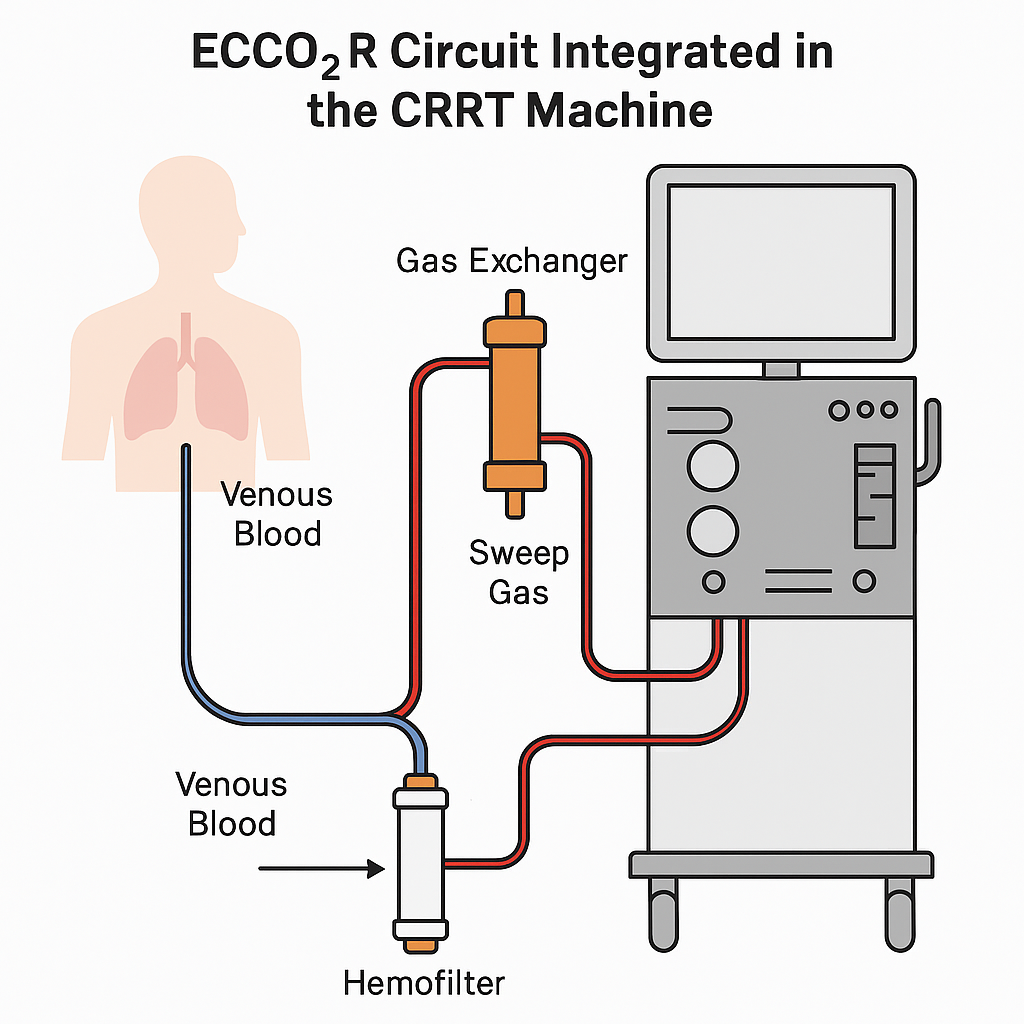
Figure 1 3D Schematic of ECCO₂R Circuit Integrated with CRRT Machine.
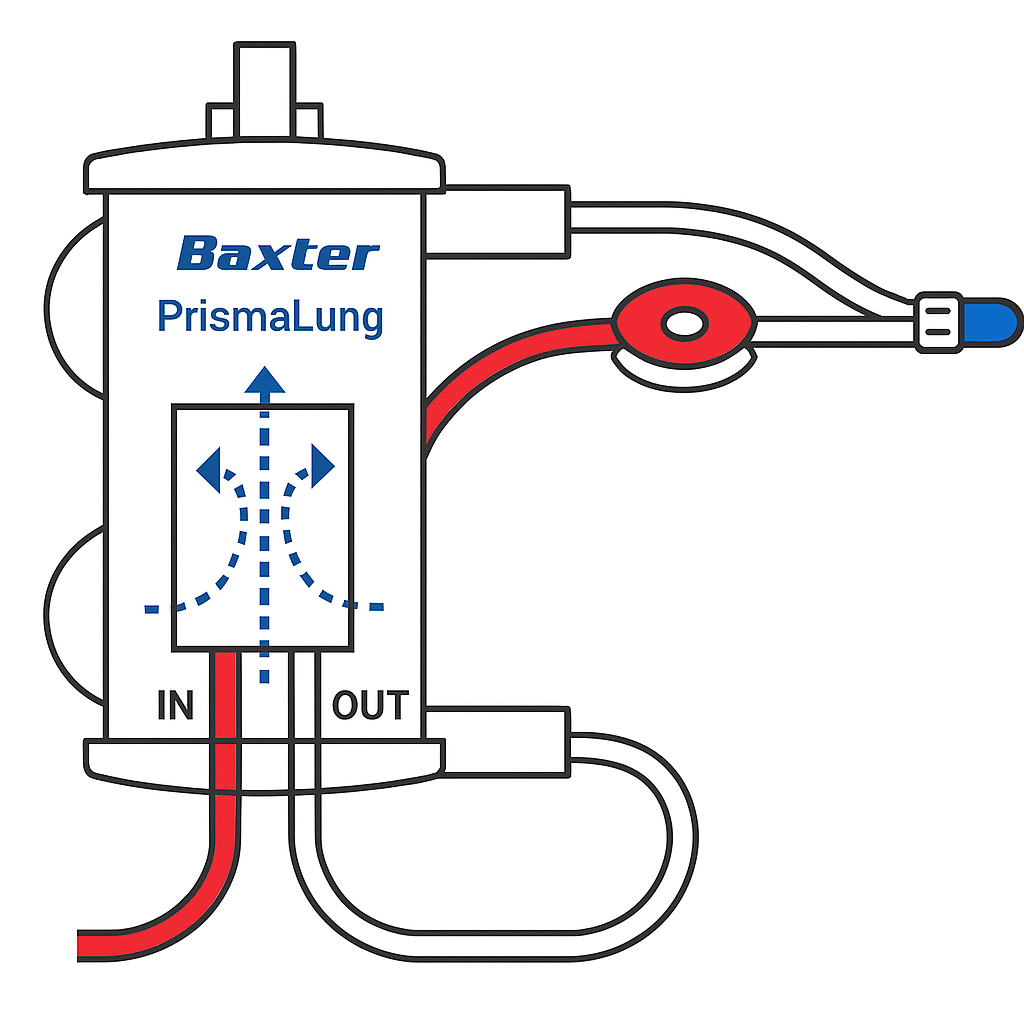
Figure 2 Prisma Lung+ Membrane Cross-Section.
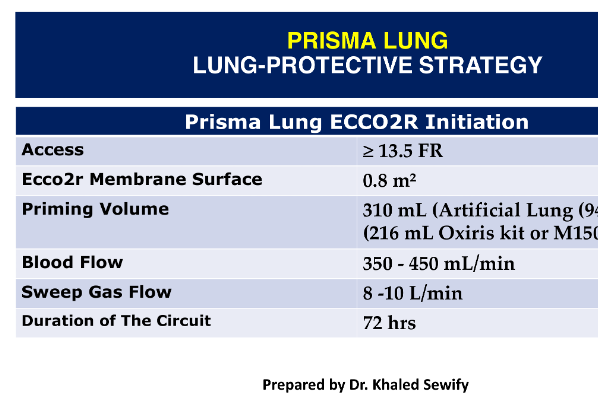
Figure 3 Prisma Lung ECCO₂R-CRRT Cardex used in protocol initiation.
Anticoagulation strategy
Primary anticoagulation - unfractionated heparin protocol:
Alternative anticoagulation strategies
Regional citrate anticoagulation:
Monitoring Protocol
Table 1 outlines the key monitoring parameters and target ranges for safe ECCO₂R-CRRT implementation.
|
Parameter |
Target Range |
Monitoring Frequency |
Action Threshold |
|
pH |
>7.30 |
Every 4-6 hours |
<7.25 or >7.50 |
|
PaCO₂ |
10-20% reduction from baseline |
Every 4-6 hours |
>20% increase |
|
Driving Pressure |
<14-15 cmH₂O |
Continuous |
≥18 cmH₂O |
|
Blood Flow |
350-450 mL/min |
Continuous |
<300 or >450 mL/min |
|
aPTT |
45-60 seconds |
Every 4-6 hours |
<35 or >80 seconds |
|
Hemoglobin |
>7 g/dL |
Every 6-12 hours |
<6 g/dL or >2g/dL drop |
Table 1 Monitoring Parameters and Target Ranges
Weaning and discontinuation protocol
Weaning criteria assessment
Respiratory improvement:
Renal recovery:
Systematic weaning process
Phase 1: Gas exchange weaning (6-12 hours)
Phase 2: Trial off ECCO₂R (4-6 hours)
Phase 3: System discontinuation
ECCO₂R performance
The systematic review data show that 1,672 patients experienced substantial physiological advantages.8
Technology-Specific Performance
PrismaLung+ device studies demonstrate:9
Clinical outcomes by indication
ARDS outcomes
Ultra-protective ventilation achievement:
Clinical outcomes:
COPD exacerbation outcomes
Physiological improvements:
Center clinical experience
We successfully used this protocol without any safety concerns in the following cases:
Complications and safety
Table 2 summarizes the complication management protocols developed for our integrated approach.
|
Complication |
Incidence |
Immediate Actions |
Escalation Criteria |
|
Bleeding (Minor) |
2-3% |
Reduce anticoagulation by 25-50% |
Hemodynamic instability |
|
Bleeding (Major) |
1-2% |
Stop anticoagulation, transfuse |
Hgb drop >2g/dL |
|
Circuit Clotting |
Variable |
Increase anticoagulation, assess flow |
Recurrent clotting |
|
ICH |
<1% (↑ risk) |
Immediate discontinuation |
Any neurological change |
|
Hemolysis |
Rare |
Reduce blood flow, check the circuit |
LDH >1000 U/L |
Table 2 Complication Management Protocols
Key safety considerations:
The PrismaLung+ platform demonstrates significant technological progress through its ability to remove CO₂ more efficiently at low blood flow rates that match standard CRRT procedures. This evolution allows for true integration of respiratory and renal support through single platforms, which could decrease treatment invasiveness and enhance patient tolerance. The first implementation of the ECCO₂R-CRRT protocol proved its practicality by integrating into ARDS and acute kidney injury care bundles. The approach enabled CO₂ reduction within hours, while supporting a protective lung strategy, and providing renal support. This approach matches previous research findings from SUPERNOVA and REST trials, which showed physiologic improvements and ventilation benefits.12,13
The isolated ECCO₂R machines, e.g., HemoLung RAS and Novalung, presented safety concerns because of bleeding complications and increased mortality, which might result from using high-dose anticoagulation for maintaining high blood flow in the circuits. The only Italian study done on integrated ECCO₂R and CRRT did not show any safety concerns.14 However, larger trials are required to validate outcomes and to address any safety concerns related to integrated ECCO₂R with CRRT, where low flow and low-dose anticoagulation are used.
The selection of patients stands as the essential factor for implementing ECCO₂R safely according to expert consensus.15 Our protocol uses driving pressure ≥14-15 cmH₂O as the main selection criterion because the 2022 European roundtable recommendations show this parameter identifies patients who need ultra-protective ventilation strategies.16 The exclusion of patients with severe hypoxemia (PaO₂/FiO₂ <100 mmHg) reflects recognition that these patients require comprehensive ECMO support rather than selective CO₂ removal. Similarly, the emphasis on hemodynamic stability acknowledges that ECCO₂R should not be viewed as rescue therapy for multi-organ failure.
The recent safety data requires more than traditional monitoring protocols used for ECMO or CRRT individually. The increased risk of intracranial hemorrhage requires regular neurological assessment, while the overall bleeding risk demands careful anticoagulation management with lower targets than historically used. Our protocol requires immediate discontinuation of treatment when safety signals appear instead of trying to handle complications during ongoing therapy. This approach demonstrates the understanding that ECCO₂R represents an adjunctive rather than life-saving intervention in most clinical scenarios.
Future research directions and protocol evolution
The current evidence base highlights several critical research needs:
Prospective safety studies: Long-term follow-up data from existing cohorts to better characterize delayed complications and outcomes.
Biomarker development: Identification of patients most likely to benefit from ECCO₂R intervention through predictive modeling and biomarker analysis.
Technology optimization: Continued membrane and circuit development to maximize CO₂ removal while minimizing complications.
Comparative effectiveness research: Direct comparison of ECCO₂R-enabled ultra-protective ventilation versus alternative lung-protective strategies.
Implementation considerations and institutional requirements
Successful implementation of combined ECCO₂R-CRRT programs requires substantial institutional commitment:
Expertise requirements: Multidisciplinary teams with experience in both ECCO₂R and CRRT technologies.
Infrastructure needs: Dedicated ICU space with enhanced monitoring capabilities and immediate access to emergency interventions.
Quality assurance: Systematic data collection for ongoing safety monitoring and outcome assessment.
Ethical framework: Institutional review and ethics committee oversight are given for the experimental nature and safety concerns.
Limitations and protocol constraints
This protocol has several important limitations:
Evidence quality: Limited high-quality RCT data and a highly selected group of patients with concerning safety signals requiring conservative recommendations.
Technology specificity: Focusing on the PrismaLung+ platform may limit generalizability to other ECCO₂R systems.
Patient population: Recommendations based primarily on ARDS and COPD populations with limited data for other indications.
Long-term outcomes: Insufficient data on long-term neurological and functional outcomes following ECCO₂R exposure.
A structured ECCO₂R-CRRT protocol using PrismaLung can be safely implemented in ICU settings for selected patients. This integrated strategy enables simultaneous lung- and kidney-protective support in moderately severe ARDS and may reduce ventilator dependence in hypercapnic respiratory failure with concurrent renal dysfunction. The safety concerns related to isolated ECCO₂R machines with high blood flow circuits must be re-evaluated in integrated ECCO₂R-CRRT low flow circuits utilizing this novel protocol. Further prospective studies are needed to validate clinical outcomes and establish optimal patient selection criteria.
All protocol materials, monitoring forms, and implementation tools will be made freely available upon publication to facilitate widespread adoption and standardization of combined ECCO₂R-CRRT therapy.
None.
None.

©2025 Elmasry, et al. This is an open access article distributed under the terms of the, which permits unrestricted use, distribution, and build upon your work non-commercially.
