Journal of
eISSN: 2373-6437


Research Article Volume 18 Issue 2
1Professor and HOD, Department of General Medicine, Al-Ameen Medical College and Hospital, India
2Senior Resident, Department of General Medicine, Al‑Ameen Medical College & Hospital, India
3Junior Resident, Department of General Medicine, Al-Ameen Medical College & Hospital, India
Correspondence: Bilal Bin Abdullah, Department of General Medicine, Al‑Ameen Medical College, Athani Road, Vijayapura, Karnataka 586108, India
Received: January 12, 2026 | Published: March 23, 2026
Citation: Abdullah BB, Rathod SV,Yusufzai W, et al. Posterior circulation stroke “it’s significance based on mri findings”. J Anesth Crit Care Open Acce. 2026;18(1):40-44. DOI: 10.15406/jaccoa.2026.18.00649
Posterior circulation stroke (PCS) involving the vertebrobasilar system constitutes about 20% of ischemic strokes. Unlike anterior strokes, PCS often presents with non-specific symptoms such as dizziness, vomiting, and visual disturbances, leading to frequent misdiagnosis and treatment delay. Owing to its distinct vascular anatomy and varied presentation, integrated clinical and radiological evaluation is vital for early diagnosis and management.
Objectives: To assess the clinical patterns and risk factors associated with posterior circulation stroke in patients presenting to a tertiary care hospital.
Methods: A prospective cross-sectional study was conducted over 18 months at Al-Ameen Medical College Hospital, Vijayapur, including 100 confirmed cases of PCS. Data were obtained through structured clinical evaluation, laboratory testing, and neuroimaging. MRI and MRA confirmed the diagnosis and vascular localization. Clinical features, risk factors, and arterial territories were analyzed using SPSS version 26.
Results: The mean age was 55.2 ± 12.3 years, with males comprising 63%. Hypertension (61%) was the most common risk factor, followed by smoking (27%), dyslipidemia (24%), alcohol use (23%), and diabetes (18%). The leading symptoms were giddiness/vomiting (58%), motor weakness (47%), cranial nerve deficits (38%), cerebellar signs (28%), and visual field defects (24%). Radiologically, the posterior cerebral artery (47%) and posterior inferior cerebellar artery (45%) were most frequently involved, followed by the superior cerebellar (20%) and basilar (17%) arteries.
Conclusion: PCS predominantly affects males over 50 years and is strongly linked to hypertension and smoking. Presentations are often non-specific, requiring high clinical suspicion. MRI plays a key role in diagnosis. Early detection and targeted management based on vascular involvement and risk factors can enhance patient outcomes.
Keywords: posterior circulation stroke, vertebrobasilar stroke, ischemic stroke, MRI, cerebellar infarct, basilar artery, giddiness, hypertension
Posterior circulation stroke (PCS) involving the vertebrobasilar system constitutes about 20% of ischemic strokes. Unlike anterior strokes, PCS often presents with non-specific symptoms such as dizziness, vomiting, and visual disturbances, leading to frequent misdiagnosis and treatment delay. Owing to its distinct vascular anatomy and varied presentation, integrated clinical and radiological evaluation is vital for early diagnosis and management.
Objectives: To assess the clinical patterns and risk factors associated with posterior circulation stroke in patients presenting to a tertiary care hospital.
Methods: A prospective cross-sectional study was conducted over 18 months at Al-Ameen Medical College Hospital, Vijayapur, including 100 confirmed cases of PCS. Data were obtained through structured clinical evaluation, laboratory testing, and neuroimaging. MRI and MRA confirmed the diagnosis and vascular localization. Clinical features, risk factors, and arterial territories were analyzed using SPSS version 26.
Results: The mean age was 55.2 ± 12.3 years, with males comprising 63%. Hypertension (61%) was the most common risk factor, followed by smoking (27%), dyslipidemia (24%), alcohol use (23%), and diabetes (18%). The leading symptoms were giddiness/vomiting (58%), motor weakness (47%), cranial nerve deficits (38%), cerebellar signs (28%), and visual field defects (24%). Radiologically, the posterior cerebral artery (47%) and posterior inferior cerebellar artery (45%) were most frequently involved, followed by the superior cerebellar (20%) and basilar (17%) arteries.
Conclusion: PCS predominantly affects males over 50 years and is strongly linked to hypertension and smoking. Presentations are often non-specific, requiring high clinical suspicion. MRI plays a key role in diagnosis. Early detection and targeted management based on vascular involvement and risk factors can enhance patient outcomes.
Keywords: posterior circulation stroke, vertebrobasilar stroke, ischemic stroke, MRI, cerebellar infarct, basilar artery, giddiness, hypertension
According to the World Health Organization (WHO), stroke is defined as a rapidly developing clinical disturbance of cerebral function, lasting more than 24 hours or leading to death, with no cause other than vascular origin. Stroke is broadly classified into ischemic and hemorrhagic types, with ischemic stroke resulting from cerebral thrombosis or embolism and hemorrhagic stroke due to intracerebral or subarachnoid haemorrhage.1 Globally, stroke remains a major public health concern, with the World Stroke Organization reporting a 70% increase in incident cases and a 43% rise in deaths from 1990 to 2019, disproportionately affecting low- and middle-income countries.2
Ischemic strokes, accounting for approximately 85% of all strokes, are primarily caused by either thrombotic or embolic events leading to decreased cerebral blood flow.3,4 The Trial of Org10172 (TOAST) classification system identifies five major subtypes of acute ischemic stroke: large artery atherosclerosis, cardioembolism, small vessel occlusion, other determined etiology, and undetermined etiology.5 Ischemic strokes can also be categorized by vascular territory as anterior circulation stroke (ACS) or posterior circulation stroke (PCS). PCS arises from vertebral or basilar artery involvement and accounts for about 20% of ischemic strokes.2 Compared to ACS, PCS patients tend to be younger, more often male, and may have a different risk factor profile—such as higher rates of diabetes in PCS and atrial fibrillation in ACS.6-10 Clinical presentations of PCS are diverse and may include vertigo, ataxia, diplopia, dysphagia, and sensorimotor deficits, frequently leading to misdiagnosis and delayed management.
PCA territory infarctions often present with homonymous hemianopia and can also cause sensory, motor, cognitive, or neuropsychological deficits,9-11 sometimes simulating MCA stroke presentations.12 Given the variability and nonspecificity of PCS symptoms, imaging plays a crucial role in diagnosis. While non-contrast CT (NCCT) is often the initial modality, its sensitivity for PCS is limited (41.8%).13 MRI with diffusion-weighted imaging (DWI) offers greater sensitivity but may be less accessible in many settings. CT angiography (CTA) is standard for evaluating vertebrobasilar occlusion and vessel status,14 and CT perfusion (CTP) may help predict outcomes in basilar artery occlusion, though validated thresholds are lacking.15 Early, accurate diagnosis with combined clinical and advanced imaging assessment is vital to improve outcomes in PCS. The primary aim of this study is to evaluate the diverse clinical presentations of posterior circulation stroke and to systematically analyze the associated risk factors in affected patients. By identifying the spectrum of clinical patterns and underlying risk factors, the study seeks to enhance diagnostic accuracy and inform better management strategies for posterior circulation stroke (Tables 1-4).
|
Characteristic |
Category |
|
|
Age Group, N (%) |
31–40 |
8 (8.0%) |
|
41–50 |
12 (12.0%) |
|
|
51–60 |
18 (18.0%) |
|
|
61–70 |
30 (30.0%) |
|
|
>70 |
32 (32.0%) |
|
|
Gender, N (%) |
Male |
63 (63.0%) |
|
Female |
37 (37.0%) |
|
|
BMI, Mean ± SD |
26.42 ± 4.95 |
|
Table 1 Demographic characteristics of patients with posterior circulation stroke (N = 100)
|
Characteristic |
Category |
|
|
Arterial Involvement |
Posterior Cerebral Artery (PCA) |
49 (49.0) |
|
|
Posterior Inferior Cerebellar Artery |
44 (44.0) |
|
|
Superior Cerebellar Artery |
20 (20.0) |
|
|
Basilar Artery |
17 (17.0) |
|
|
Vertebral Artery |
13 (13.0) |
|
Infarct Location |
Cerebellum |
37 (37.0) |
|
|
Brainstem |
36 (36.0) |
|
|
Thalamus/Medial Temporal/Occipital |
18 (18.0) |
Table 2 Arterial involvement and infarct location in posterior circulation stroke (N = 100)
|
Symptom |
Present Study |
Indraneel et al.18 |
Dubey et al.19 |
Mogileswari et al.20 |
Bhat et al.21 |
|
Giddiness & Vomiting |
58 |
59 |
Dizziness: 52, Vomiting: 42 |
Dizziness: 58, Vomiting: Not specified |
- |
|
Weakness |
47 |
48 |
30 |
- |
- |
|
Cranial Nerve Involvement |
38 |
35 |
12 |
- |
IX & X: 10 cases, III & VII: 4 cases each, Optic pathway: 2 cases |
|
Cerebellar Signs |
28 |
38 |
34 |
- |
- |
|
Headache |
24 |
27 |
28 |
38 |
- |
|
Visual Field Defects |
24 |
25 |
30 |
10 |
- |
|
Hemisensory Loss |
19 |
15 |
- |
- |
- |
|
Altered Sensorium |
15 |
16 |
- |
- |
- |
|
Seizures |
7 |
9 |
- |
8 |
- |
|
Speech Problems |
- |
- |
Dysarthria: 32 |
10 |
- |
Table 3 Comparison of clinical symptoms across the studies
|
Study |
Most affected artery (%) |
Other arteries involved (%) |
Most common infarct site (%) |
Other Infarct Sites (%) |
Hemorrhagic stroke findings |
|
Present Study |
PCA (47) |
PICA (45), SCA (20), Basilar (17), Vertebral (12) |
Cerebellum (37) |
Brainstem (33), Thalamus/Temporal/Occipital (18) |
- |
|
Indraneel et al18. |
PCA (45) |
PICA (38), Basilar (19), SCA (17), ACA (12), Vertebral (11) |
Brainstem (40) |
Cerebellum (36), Thalamus/Temporal/Occipital (24) |
- |
|
Bhat et al21 |
- |
- |
Cerebellum (19) |
Occipital (14), Medulla (12), Pons (9), Midbrain & Temporal (6) |
Lacunar infarcts in multiple territories (23 cases) |
|
Kora et al22. |
- |
- |
Occipital (33.3) |
Cerebellum (26.6) |
Pontine hemorrhage (50%), Cerebellar hemorrhage (33%) |
|
Dubey et al19 |
- |
- |
Cerebellum (30) |
Occipital (20), Medulla (10), Pons (10) |
Cerebellar (6%), Occipital (10%), Pons (2%), Medulla (0%) |
|
Mogileswari et al20 |
- |
- |
Combined Cerebellar & Brainstem (36) |
Isolated Cerebellar (32), Medulla (14), Occipital (18), Brainstem (20) |
- |
Table 4 Comparison of vascular and anatomical involvement in posterior circulation stroke across studies
This cross-sectional prospective study was conducted over 18 months (July 2023 to December 2024) at Al-Ameen Medical College Hospital, Vijayapur, Karnataka. The study included patients presenting with signs and symptoms of posterior circulation stroke, confirmed by radiological evidence, attending the outpatient or inpatient departments of the medicine department. Patients with clinical or neuro-otological features of vestibular or labyrinthine disorders, or with subarachnoid, extradural, or subdural hemorrhage, were excluded. All eligible patients were enrolled using a structured proforma designed to capture demographic details (age, sex, occupation, income), comprehensive symptomatology (including dizziness, diplopia, dysphagia, nasal regurgitation, speech disturbances, headache, seizures, altered sensorium, unsteadiness, sensory disturbances, incoordination, and motor weakness), and a detailed assessment of risk factors such as hypertension, smoking, alcoholism, dyslipidemia, diabetes mellitus, coronary artery disease, rheumatic heart disease, peripheral vascular disease, previous anterior circulation stroke, and family history of cerebrovascular disease. A thorough clinical and neurological examination was conducted for each patient, with findings systematically documented. Laboratory investigations included routine biochemical and hematological tests, ECG, echocardiography, and chest X-ray for all participants. In patients younger than 40 years, an additional workup for hypercoagulability (including hyperhomocysteinemia, protein C and S deficiencies, and antiphospholipid antibodies) was performed. Neuroimaging, primarily MRI and magnetic resonance angiography (MRA), was utilized selectively for further vascular evaluation as needed. This comprehensive diagnostic approach enabled accurate identification and characterization of posterior circulation stroke and its underlying risk factors.
All data were compiled in Microsoft Excel and analyzed using SPSS version 26.0. Descriptive statistics summarized the data; qualitative variables were presented as frequencies and percentages, while quantitative variables were expressed as mean and standard deviation. The chi-square test was used to compare proportions, and Student’s t-test or ANOVA was employed for comparison of mean values, with statistical significance set at 5% (α = 0.05).
The age distribution indicates that posterior circulation stroke predominantly affected older adults in this cohort, with 62% aged 61 years and above, and a mean age of 55.22 years. The majority of patients were male (63%), and the average BMI was 26.42, suggesting that the population was generally overweight. These demographic trends highlight the importance of age, male gender, and elevated BMI as common features among patients with posterior circulation stroke. Hypertension emerged as the most prevalent risk factor among patients, affecting 61% of the study group. Smoking was the next most common, present in 27% of patients, followed by dyslipidemia in 24%, and alcohol use in 23%. Diabetes mellitus was seen in 18% of individuals, while ischemic heart disease was documented in 16%. A history of transient ischemic attack (TIA) was found in 6% of the cases. These findings underscore hypertension as a leading modifiable risk factor in the pathogenesis of posterior circulation stroke.
In terms of clinical presentation, the most frequently observed symptoms were giddiness and vomiting, occurring in 58% of patients. Weakness was noted in 47% of the individuals, while cranial nerve involvement was seen in 38%. Cerebellar signs were present in 28%, and 24% each experienced headache and visual field defects. Hemisensory loss was reported in 19% of cases, altered sensorium in 15%, and seizures were the least common, occurring in only 7%. These findings highlight the variability in clinical manifestations, with some symptoms being more prominent than others in posterior circulation stroke. The most commonly involved arteries in posterior circulation stroke were the posterior cerebral artery (47%) and the posterior inferior cerebellar artery (45%). The most frequent infarct locations were the cerebellum (37%) and brainstem (33%), with fewer cases involving the thalamus, medial temporal, or occipital lobes (18%). This highlights the predominance of PCA and PICA involvement, correlating with the observed distribution of infarct locations in the study population (Figure 1&2).
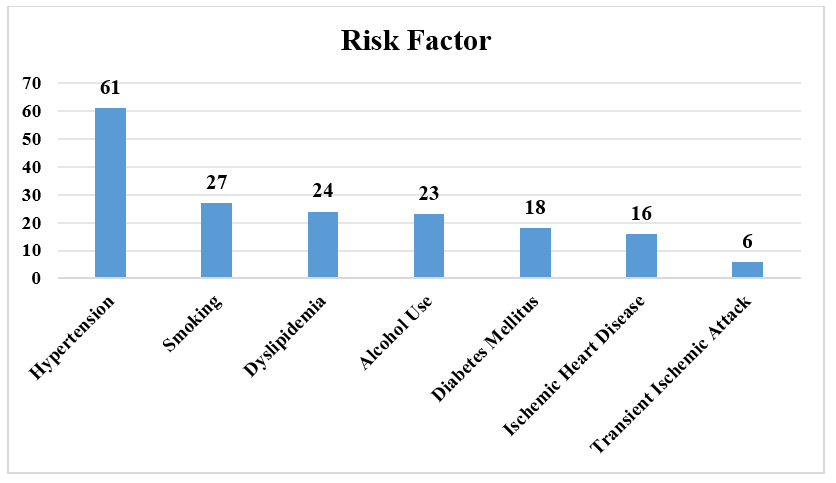
Figure 1 Risk Factor.
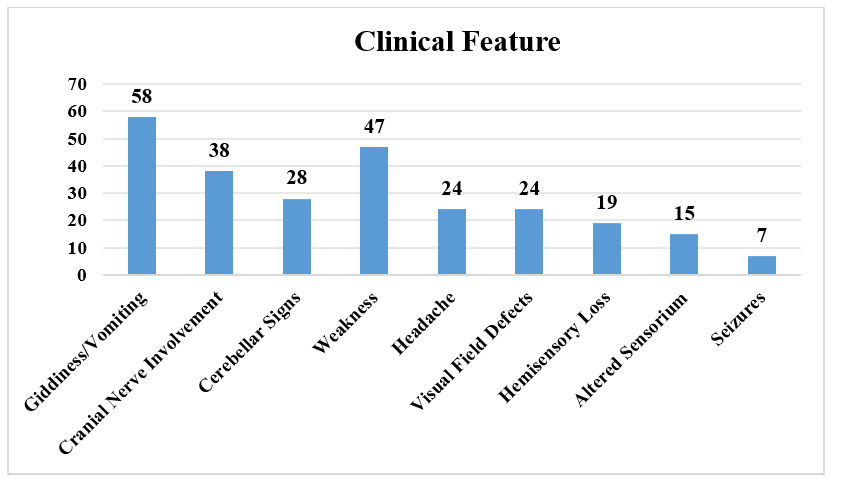
Figure 2 Clinical Patterns of Posterior Circulation Stroke.
Cerebrovascular accidents remain a major contributor to neurological morbidity and mortality, with strokes classified into anterior and posterior circulation types based on vascular territory. The posterior circulation supplies vital areas such as the brainstem, cerebellum, occipital lobe, thalamus, and parts of the parietal and temporal lobes. Given the critical nature of these regions, posterior circulation strokes (PCS) often result in severe morbidity and potentially life-threatening complications.16 PCS represent about 9.2% of all stroke cases. Their clinical presentations are often non-specific and can mimic peripheral vestibular disorders or even anterior circulation strokes, leading to frequent diagnostic delays and challenges in early management.7,17
In our study of 100 patients, the majority were elderly, with 62% aged 61 years or older (mean age: 55.22 ± 12.35 years). This pattern is consistent with Indraneel et al.,18 who reported a mean age of 57.8 years and 46% over 60 years. Similarly, Dubey et al.19 found that 48% of cases were aged 41–60 years and 42% were 61–80 years, while Mogileswari et al.20 identified the 40–60 age group as most commonly affected (64%), followed by those above 60 years (24%). Bhat et al.21 also reported a mean age of 61.3 ± 14 years, with more than half of patients above 65 years, closely aligning with our findings.
Gender distribution in our study showed a male predominance (63% male, 37% female), which is consistent with previous reports. Indraneel et al.18 found similar results, while Dubey et al.19 observed an even higher male predominance (78% male), and Mogileswari et al.20 and Bhat et al.21 both reported over 65% male cases. This pattern underscores the consistent trend of higher PCS prevalence among males across diverse study populations.
In the current study, the average BMI of the patients was 26.42 ± 4.95 kg/m2. In our study, hypertension was the most prevalent risk factor, affecting 61% of patients. Smoking was observed in 27%, followed by dyslipidemia in 24% and alcohol use in 23%. Diabetes mellitus was noted in 18% of cases, while ischemic heart disease was present in 16%. A history of transient ischemic attack (TIA) was documented in 6% of the patients. Similarly, Mogileswari et al.20 study identified hypertension as the most common risk factor (80%), followed by ischemic heart disease and alcohol consumption (both 68%), whereas diabetes mellitus was present in 58%, and smoking in 62% in their study.
Similar to our study, Indraneel et al.18 reported higher rates of alcohol use (33%) and smoking (32%), and hypertension was more prevalent (61%). They observed a lower prevalence of ischemic heart disease (9%), while diabetes was among 17% of their cases, respectively. Similar to our study, Dubey et al.19 found an even higher prevalence of 78%, significantly greater than anterior circulation strokes (68%, p = 0.021), 48% with DM, 46% with dyslipidemia, and smoking and alcohol consumption were also more common with 24% and 18%, respectively, in their study. These findings highlight hypertension as a leading modifiable risk factor contributing to posterior circulation stroke. At the same time, diabetes mellitus (53.5%) and hypertension (48.8%) were most common, followed by dyslipidemia (25.6%), ischemic heart disease (11.6%), and hypothyroidism (9.3%), whereas Smoking (48.8%) and alcohol consumption (16.3%) were the primary modifiable risk factors in the Bhat et al.21 study.
In this study, giddiness and vomiting were the most common presenting symptoms of posterior circulation stroke, reported in 58% of patients. Weakness was observed in 47%, cranial nerve involvement in 38%, and cerebellar signs in 28%. Headache and visual field defects were each noted in 24% of cases, while hemisensory loss, altered sensorium, and seizures were less frequent (19%, 15%, and 7%, respectively). These findings closely parallel those of Indraneel et al.,18 who also identified giddiness and vomiting as the most prevalent symptoms (59%), followed by weakness (48%), cerebellar signs (38%), and cranial nerve involvement (35%). Headache (27%), visual field defects (25%), altered sensorium (16%), hemisensory loss (15%), and seizures (9%) were observed with similar frequency. Dubey et al.19 reported dizziness in 52% and vomiting in 42%, along with ataxia (34%), visual field defects (30%), limb weakness (30%), and cranial nerve palsies in 12% of cases. Similarly, Mogileswari et al.20 found dizziness (58%) and vomiting to be the most common, followed by headache (38%), vision disturbances (10%), speech problems (10%), and seizures (8%). Bhat et al.21 further highlighted cranial nerve involvement, with IX and X palsies in 10 cases, III and VII in 4 cases each, and optic pathway involvement in 2 patients.
In our study, the posterior cerebral artery (PCA) was the most frequently involved vessel in posterior circulation stroke, observed in 47% of cases, followed closely by the posterior inferior cerebellar artery (PICA) in 45%. The superior cerebellar artery, basilar artery, and vertebral artery were affected in 20%, 17%, and 12% of patients, respectively. This distribution underscores the predominance of PCA and PICA involvement in our cohort. These results are consistent with Indraneel et al.,18 who also found the PCA as the most commonly affected vessel (45%), followed by PICA (38%), basilar artery (19%), superior cerebellar artery (17%), and vertebral artery (11%). Both studies highlight a pattern of frequent involvement of the distal arterial system in posterior circulation strokes. Regarding infarct location, our study found the cerebellum to be the most common site (37%), followed by the brainstem (33%), and the thalamus, medial temporal, or occipital lobes (18%). Indraneel et al.18 similarly reported brainstem infarcts as most frequent (40%), cerebellar involvement in 36%, and thalamic/medial temporal/occipital infarcts in 24%. Bhat et al.21 also observed the cerebellum as the most affected anatomical region, followed by the occipital lobe, medulla, pons, and other territories, with a notable proportion of multiple territory infarcts.
However, Kora et al.22 on the other hand, reported a high prevalence of occipital strokes (33.3%) and cerebellar strokes (26.6%) in ischemic cases, while pontine hemorrhage (50%) and cerebellar hemorrhage (33%) were the most common in hemorrhagic strokes. Also, Kora et al.22 reported that CT scan positivity was 100% in hemorrhagic strokes but only 43% in ischemic infratentorial lesions, excluding the cerebellum. Also, Dubey et al.19 found ischemic strokes to be far more common (82%) than hemorrhagic strokes (18%) and reported cerebellar infarcts in 30% of cases, occipital infarcts in 20%, medulla infarcts in 10%, and pons infarcts in 10%. Hemorrhages were much less frequent, with cerebellar bleeds (6%) and occipital bleeds (10%) being the most common, while pons bleeds (2%) and medulla bleeds (0%) were rare in their study. Notably, Dubey et al.19 found a 100% detection rate for hemorrhagic strokes on CT scans. In another study by Mogileswari et al.20 reported that the most common imaging findings were a combination of cerebellar and brainstem infarcts (36%), followed by isolated cerebellar infarcts (32%). Other findings included medullary infarcts (14%), occipital hemorrhage (18%), and brainstem infarcts (20%) in their study.
Our study identified that posterior circulation stroke was predominantly observed in elderly males, with hypertension being the most common risk factor. Clinical presentations were highly variable, with giddiness, vomiting, weakness, and cranial nerve involvement being the most frequently observed symptoms. Radiologically, the posterior cerebral artery and posterior inferior cerebellar artery were the most commonly affected vessels, while cerebellar and brainstem infarcts were the most frequent anatomical locations. These findings emphasize the need for early recognition and targeted management of posterior circulation strokes to improve patient outcomes.
None.
None declared.
Approved by the Institutional Ethical Committee of Al‑Ameen Medical College & Hospital.

©2026 Abdullah, et al. This is an open access article distributed under the terms of the, which permits unrestricted use, distribution, and build upon your work non-commercially.
