Journal of
eISSN: 2373-6437


Case Report Volume 17 Issue 4
University of South Alabama College of Medicine, USA
Correspondence: Payal K Patel, University of South Alabama College of Medicine, USA
Received: July 31, 2025 | Published: August 25, 2025
Citation: Patel PK. Adrenal crisis from supplement cessation. J Anesth Crit Care Open Acces. 2025;17(4):115-117. DOI: 10.15406/jaccoa.2025.17.00631
Background: This is a case report of a patient who presented in adrenal crisis after the abrupt cessation of a supplement, Artri King®, which is marketed for the treatement of joint pain. Artri King® was the subject of a 2020 Food and Drug Administration (FDA) advisory due to the product containing undisclosed dexamethasone, diclofenac, and methocarbamol.
Case report: This patient used Artri King® daily for 2 years to manage her chronic joint pain and abruptly stopped, yielding a presentation of hypotension that was unresponsive to aggressive fluid resuscitation and initiation of peripheral vasopressors. The patient’s blood pressure stabilized after stress-dose steroids were given and peripheral vasopressors were up-titrated.
Why should an emergency physician be aware of this?
To our knowledge, this is the first case of a patient developing adrenal shock after discontinuing a health supplement that contains undisclosed corticosteroids. This case shows the broad presentation of adrenal crisis and emphasizes the importance of asking about the use of over-the-counter supplements when evaluating patients.
Keywords: adrenal crisis, adrenal insufficiency, Artri King®, Cushing syndrome, Cushingoid
SAT, Surface Air Temperature; SSS, Sea Surface Salinity; SST, Sea surface temperature; RH, Relative Humidity; DO, Dissolved Oxygen; BOB, Bay of Bengal; IO, Indian Ocean
Adrenal insufficiency occurs when the adrenal cortex has inadequate secretion of glucocorticoids or mineralocorticoids.1 Primary adrenal insufficiency is due to failure of the adrenal gland to produce aldosterone and cortisol, which is typically autoimmune.2 Whereas, secondary adrenal insufficiency is due to the lack of stimulation by pituitary adrenocorticotropic hormone (ACTH) or hypothalamic corticotropin-releasing hormone (CRH). Secondary adrenal insufficiency is more prevalent and is usually seen in patients taking exogenous glucocorticoids for underlying chronic medical conditions.1,2
Adrenal crisis is a life-threatening emergency. It is characterized by an acute decline in clinical condition associated with absolute hypotension, with a systolic blood pressure <100 mm Hg, or relative hypotension, with a systolic blood pressure ≥20 mm Hg lower than the patient’s baseline.3 Adrenal crisis should be on the differential diagnosis in patients with known adrenal insufficiency or those with risk factors for developing adrenal insufficiency. This case report will outline the presentation of a patient who abruptly stopped Artri King® and developed an adrenal crisis. This was rapidly identified and treated due to high clinical suspicion. This case report shows that a high level of suspicion and early intervention can prevent fatal outcomes from adrenal crisis.
A 52-year-old female with medical history significant for hypertension, hyperlipidemia, and hypothyroidism presented to the emergency department with one week of vague symptoms including fatigue, headache, myalgias, and decreased urine output. During the initial interview, the patient reported that she had been taking a supplement that was purchased in Mexico, Artri King®, which was abruptly stopped one week prior. She has been taking six tablets of Artri King® daily for the past two years. Physical examination revealed a cushingoid appearance including a prominent dorsocervical fat pad and red striae on the abdomen, bilateral arms, and bilateral thighs (Figures 1 & 2). Initial vitals were remarkable for hypotension and tachycardia. Her hypotension did not improve despite aggressive resuscitation with 30cc/kg of lactated ringers (Ringer's) and initiation of peripheral norepinephrine at 0.01mcg/kg/min. The differential diagnosis also included septic shock and the patient was initiated on vancomycin, piperacillin-tazobactam, and azithromycin. Based on her physical examination and recent history of Artri King® cessation, there was a high clinical suspicion for adrenal crisis after reviewing the FDA advisory published on Artri King®.

Figure 1 Prominent abdominal striae and central obesity.

Figure 2 Moon facies.
We administered stress dose steroids, specifically 100mg hydrocortisone IV, and increased peripheral norepinephrine to 0.03mcg/kg/min. While the patient remained hypotensive, her blood pressure began to improve with mean arterial pressure (MAP) staying around 65, up from the 50's. She was admitted to the medical ICU for close monitoring of her condition. In the intensive care unit, she was given 50 mg of hydrocortisone IV every six hours for two days. After this point, her condition stabilized, and she was moved to a general ward bed. She was then given 25 mg of hydrocortisone IV every six hours for the next two days. After four days of IV hydrocortisone, her blood pressure normalized to MAPs well above 65, and she was transitioned to oral hydrocortisone, 40mg AM and 20mg PM. Due to the prolonged use of hydrocortisone, she developed persistent hyperglycemia and required IV insulin therapy for management. Her creatinine was elevated to 7.92 on presentation from a baseline of 0.5. However, by treating her condition and cessation of Artri King®, her renal function improved back to baseline. The patient was discharged with a hydrocortisone taper and educated on using stress-dose steroids for acute illnesses. She was instructed to discontinue her use of Artri King®.
The Food and Drug Administration regulates dietary supplements; however, they are not held to the same level of scrutiny as pharmaceutical products. Most dietary supplements do not need to undergo clinical trials or premarket testing for safety. Instead, the FDA monitors the safety of dietary supplements after they reach the market through post-marketing surveillance. The FDA may issue a warning to the public or suggest changes to the manufacturer if adverse events occur. The FDA may also recall or ban the product.5-7
The FDA requires supplement manufacturers to list ingredients on the product label. However, supplement product labels may not accurately reflect the actual content in a product. The Food and Drug Administration advised consumers to be wary of Arti King®, which is advertised to help with joint pain and arthritis.
The FDA laboratory confirmed Artri King® contains the following ingredients: glucosamine, chondroitin, collagen, vitamin C, turmeric, and omega-3 fatty acid; however, Artri King® also contains undisclosed amounts of dexamethasone, methocarbamol, and diclofenac. However, the latter ingredients were not mentioned on the product label for consumers to read, as shown below in Figure 3. Dexamethasone is a corticosteroid and when used for long periods, it can carry numerous risks, such as adrenal suppression, hyperglycemia, immunosuppression, muscular injuries, and psychiatric issues.8 The exact pathophysiology of adrenal crisis is not completely understood. Glucocorticoids exhibit permissive effects on adrenergic receptors in both the heart and the vasculature. In the absence of glucocorticoids, catecholamines are unable to exert their impact on the receptors. Hence, patients in adrenal crisis often are found to be in profound shock with refractory hypotension that is unresponsive to fluids and vasopressors.9 Methocarbamol is a centrally acting skeletal muscle relaxant and anti-spasmodic that is commonly used for acute musculoskeletal pain, with broad adverse side effects that range from lightheadedness and drowsiness.10 Diclofenac is a non-steroidal anti-inflammatory drug that increases the risk of cardiovascular issues, gastrointestinal bleeding, ulceration, and even perforation.8
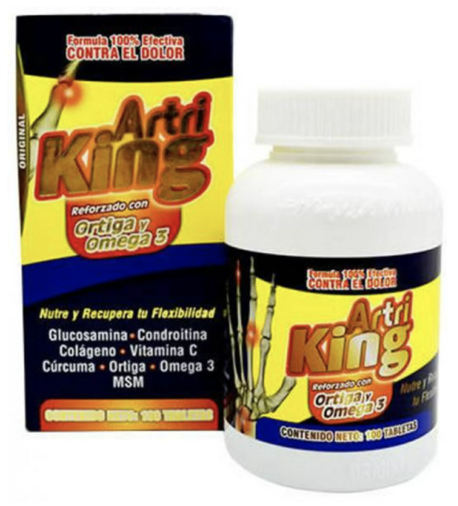
Figure 3 Artri King®, a supplement taken by the patient. Artri King® contains an undeclared amount of dexamethasone, diclofenac, and methocarbamol.10
We propose that this patient’s acute presentation of adrenal crisis was due to the abrupt cessation of Artri King® after using it chronically. The findings related to adrenal crisis can be non-specific, thus clinician need to consider in hemodynamically unstable patients with undifferentiated shock, especially if refractory to fluids and vasopressors. Shown below in Table 1 is a summary table outlining the nonspecific symptoms, physical exam findings, and laboratory findings.
|
Symptoms seen in adrenal crisis |
|
Fatigue |
|
Myalgia |
|
Nausea and vomiting |
|
Abdominal pain |
|
Dizziness |
|
Physical exam findings in Adrenal Crisis |
|
Dehydration |
|
Hypotension |
|
Shock |
|
Fever |
|
Laboratory findings in Adrenal Crisis |
|
Hypoglycemia |
|
Hyponatremia |
|
Hyperkalemia |
|
Hypercalcemia |
|
Metabolic Acidosis |
|
Azotemia |
Exogenous corticosteroids can cause secondary adrenal insufficiency. However, when a patient has concomitant hypotension and clinical deterioration, adrenal crisis should be on the differential diagnosis. The management of adrenal crisis involves establishing intravenous access with two large-bore needles as is standard for unstable patients in the emergency department. Next, obtain laboratory studies such as serum electrolytes, glucose, plasma cortisol, and ACTH.1 Patients will need aggressive resuscitation with 0.9% normal saline. Often 4-6L is necessary for the first 24-48 hours due to the severe volume depletion and sodium deficiency. Monitor sodium closely, especially if sodium is found to be <120.2 Patients with resistant hypotension in adrenal crisis should be treated with 100mg hydrocortisone IV as an initial stress dose. This is followed by 50mg hydrocortisone IV every 6 hours for 24-48 hours or until oral therapy is tolerated.1,2 Some studies have shown that IV/IM 50 mg hydrocortisone four times daily or IV/IM 200 mg every 24 hours provides adequate cortisol concentrations.11 Lastly, it is important to correct electrolyte abnormalities and reassess frequently.
Why should an emergency physician be aware of this?
History with emphasis on vitamin and supplement use, physical examination, and clinical suspicion are key to identifying adrenal crisis and early intervention prevents fatal outcomes. As clinicians, it is important to identify adrenal crisis and to be able to adequately manage it due to the high morbidity and mortality. The mortality rate in patients with known adrenal insufficiency who are educated regarding symptoms of concern is 6%. However, patients who do not know they have adrenal insufficiency likely would carry a mortality rate greater than 6%.12
None.
None.

©2025 Patel. This is an open access article distributed under the terms of the, which permits unrestricted use, distribution, and build upon your work non-commercially.
