Journal of
eISSN: 2373-6437


Research Article Volume 17 Issue 4
Karadeniz Technical University, Faculty of Medicine, Department of Anesthesiology and Reanimation, Türkiye
Correspondence: Ahmet Eroglu, Karadeniz Technical University, Faculty of Medicine, Department of Anesthesiology and Reanimation, Trabzon, Türkiye
Received: August 22, 0025 | Published: September 3, 2025
Citation: Özden EK, Eroglu A. A retrospective comparison of the effects of low-flow and high-flow anesthesia on hemodynamics, neutrophil-to-lymphocyte ratio, and postoperative outcomes in Tympanoplasty and Myringoplasty surgeries. J Anesth Crit Care Open Acces. 2025;17(4):119-123. DOI: 10.15406/jaccoa.2025.17.00632
Objective: The neutrophil-to-lymphocyte ratio (NLR) is increasingly utilized as a practical and cost-effective parameter for evaluating systemic inflammation and predicting the prognosis of various diseases. This study aimed to compare the effects of low-flow and high-flow anesthesia on hemodynamic parameters and NLR levels.
Methods: With ethics committee approval, this retrospective study included 50 patients who underwent tympanoplasty or myringoplasty. Patients receiving high-flow anesthesia (Group Y) at 3 L/min and those receiving low-flow anesthesia (Group D) at 0.75 L/min were included. Data on age, sex, weight and hemodynamics were obtained from anesthesia records. NLR was calculated from preoperative and postoperative complete blood count results. Sevoflurane consumption was also determined.
Results: The groups did not differ significantly in terms of age, sex, body mass index, anesthesia duration, and complication rates. A significant postoperative increase in NLR was observed in Group Y, but not in Group D. Intergroup comparison revealed that postoperative NLR was significantly lower in Group D compared to Group Y. Sevoflurane consumption was also significantly lower in the low-flow group.
Conclusion: Low-flow anesthesia may offer environmental and economic advantages by reducing volatile anesthetic consumption. Furthermore, it may help attenuate the systemic inflammatory response, suggesting a potential clinical benefit in its use.
Keywords: Low-flow anesthesia; High-flow anesthesia; Neutrophil-lymphocyte ratio; Systemic inflammatory response; Myringoplasty; sevoflurane
High-flow anesthesia is defined as an anesthetic technique in which the fresh gas flow rate ranges between 2–4 L/min, with only 5–20% of the delivered gas being rebreathed by the patient.1 In contrast, low-flow anesthesia refers to inhalational anesthesia delivered through a partially closed circuit that allows the recirculation of at least half of the exhaled gases.2 In this method, a significant portion of the exhaled gases is filtered and recirculated, thereby reducing the consumption of volatile anesthetic agents and associated costs. Under standard monitoring conditions, low-flow anesthesia maintains anesthetic depth while minimizing atmospheric gas emissions, reducing environmental pollution, lowering healthcare expenses, and enhancing the humidification and warming of inhaled gases.3
The neutrophil-to-lymphocyte ratio (NLR) is a simple, accessible parameter that reflects systemic inflammation. It was initially used in cardiology to predict mortality risk following major cardiac events.4 Over time, studies have demonstrated that NLR is not only valuable in cardiovascular diseases but also serves as a prognostic marker in various malignancies. It has been reported that an elevated NLR value (e.g., above 5.87) is the sole indicator of poor 90-day prognosis in critically ill stroke patients.5 Furthermore, NLR is frequently used to support diagnosis, assess disease activity, and monitor treatment response in inflammatory conditions, infections, and postoperative inflammatory states. Numerous studies in the literature have evaluated NLR as an indicator of acute inflammatory response.5,6
This study aimed to compare the effects of low-flow and high-flow anesthesia on the systemic inflammatory response through the NLR in tympanoplasty and myringoplasty surgeries, and to retrospectively evaluate the intraoperative and postoperative outcomes of both methods. In this context, it was hypothesized that low-flow anesthesia would result in less change in NLR, whereas high-flow anesthesia would significantly increase NLR.
This retrospective study evaluated patients who underwent tympanoplasty or myringoplasty surgery at the operating rooms of Karadeniz Technical University Faculty of Medicine between September 1, 2022, and April 1, 2023. This study was approved by the Institutional Review Board of the Faculty of Medicine at Karadeniz Technical University (Approval No. 24237859-470; Protocol No. 2023/122). All procedures were conducted in accordance with the ethical standards of the Declaration of Helsinki (revised 2013). Participants were excluded based on the following criteria: age under 18 or over 75 years, incomplete clinical data, body mass index (BMI) <18.5 kg/m² or >29.9 kg/m², presence of neurological disorders, and a history of renal or hepatic failure. A total of 59 patients aged between 18 and 75 years, with ASA (American Society of Anesthesiologists) physical status scores of I–III and BMI values between 18.5 and 29.9 kg/m², were initially included in the study. Following the exclusion of nine patients with missing data, the final study population consisted of 50 individuals (Figure 1).
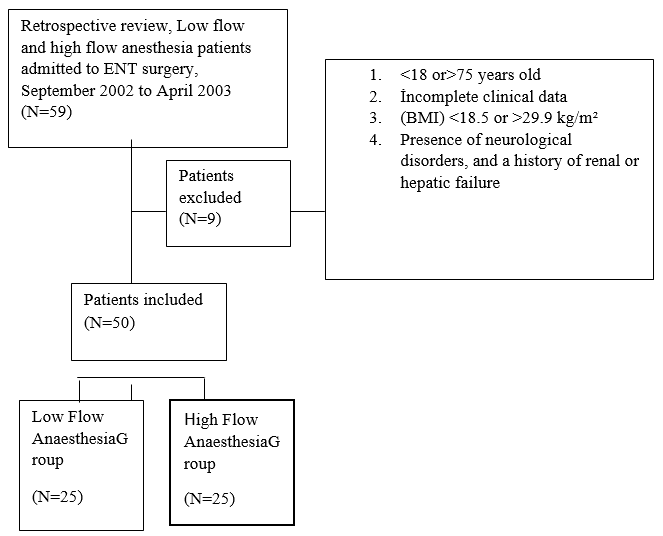
Figure 1 Patients in inclusion flowchart.
According to the standard procedures implemented in our hospital and clinic, electrocardiography (ECG), pulse oximetry, non-invasive blood pressure monitoring, body temperature, minimum alveolar concentration (MAC), and bispectral index (BIS) monitoring were applied once the patients were brought into the operating room. Following induction and endotracheal intubation, all patients were initially ventilated with a fresh gas flow rate of 4 L/min for a sufficient period. Thereafter, patients whose anesthesia was maintained with a flow rate of 0.75 L/min were assigned to the low-flow group (Group D), while those maintained at 3 L/min were classified as the high-flow group (Group Y).
Data on patient demographics including age, sex, weight, smoking status, comorbidities, and ASA scores were retrieved from preoperative anesthesia records. Hemodynamic and respiratory parameters (heart rate, blood pressure, SpO₂, EtCO₂, FiO₂, EtSev), body temperature, MAC, and BIS values were retrospectively recorded from anesthesia follow-up forms at the following time points: baseline, 5 minutes after induction, at the time of surgical incision, and at 5, 30, 45, and 60 minutes after incision, as well as pre-extubation and post-extubation periods. As part of routine clinical practice, hemogram values were assessed in the preoperative and postoperative periods. The neutrophil-to-lymphocyte ratio was determined from the hospital’s digital laboratory database by calculating the ratio of absolute neutrophils to absolute lymphocytes. Additionally, the amount of volatile anesthetic agent (sevoflurane) used was retrospectively obtained from the anesthesia machine records.
Statistical analysis
Sample size estimation was performed using G*Power statistical software (version 3.1.9.4; Faul and Erdfelder, 1998).7 Assuming a Type I error rate of 5%, an effect size of 1, and a power of 90%, based on the power calculation, the minimum sample size was set at 23 individuals per group. Therefore, 50 patients were ultimately enrolled, with 25 in each group, were planned to be included in the study.
Statistical analyses were conducted using SPSS software version 27.0 (IBM Corp., Armonk, NY, USA). Descriptive data were presented as mean ± standard deviation, median (min–max), frequencies, and percentages, where applicable. Normality of distribution for continuous variables was evaluated using the Kolmogorov–Smirnov and Shapiro–Wilk tests. Independent quantitative variables were compared using either the Independent Samples t-test or the Mann–Whitney U test, depending on data distribution. Categorical variables were analyzed with the Chi-square test. A p-value less than 0.05 was considered indicative of statistical significance.
In this study, patients who received low-flow anesthesia were classified as Group D, while those who received high-flow anesthesia were classified as Group Y. Each group consisted of 25 patients, with a total of 50 patients included in the study. The groups were comparable in terms of age, gender, BMI, ASA scores, comorbid conditions, and smoking habits, with no statistically significant differences identified (p > 0.05) (Table 1). No significant differences were observed between the groups regarding anesthesia duration, operative time, surgical procedure type, or incidence of complications (p > 0.05). Heart rate, systolic blood pressure, and diastolic blood pressure values did not differ significantly between Group D and Group Y (p > 0.05). The pre-extubation FiO₂ value was found to be significantly higher in Group D compared to Group Y (p = 0.038*) (Figure 2). The pre-extubation EtCO₂ value was significantly higher in Group D compared to Group Y (p = 0.008) (Figure 3). Preoperative and pre-extubation BIS values were comparable between the two groups, with no statistically significant differences detected (p > 0.05). Throughout the intraoperative period, BIS values in both groups remained within the target range of 40–60.
|
|
|
Group D (Low-Flow Anesthesia) |
|
Group Y (High-Flow Anesthesia) |
p-value |
|||||||
|
|
Mean ± SD / n (%) |
Median |
|
Mean ± SD / n (%) |
Median |
|||||||
|
Age (years) |
39.8 |
± |
14.4 |
38.0 |
37.4 |
± |
12.3 |
38.0 |
0.516 |
t |
||
|
Gender (F/M) |
Female |
11 |
|
44.0% |
|
|
15 |
|
60.0% |
|
0.258 |
X² |
|
Male |
14 |
|
56.0% |
|
|
10 |
|
40.0% |
|
|||
|
BMI (kg/m²) |
25.3 |
± |
3.6 |
25.5 |
24.7 |
± |
3.4 |
24.7 |
0.563 |
t |
||
|
ASA Score |
I |
11 |
|
44.0% |
|
|
11 |
|
44.0% |
|
1.000 |
X² |
|
II |
13 |
52.0% |
12 |
48.0% |
||||||||
|
III |
1 |
|
4.0% |
|
|
2 |
|
8.0% |
|
|||
|
Comorbidities |
(-) |
14 |
|
56.0% |
|
|
13 |
|
52.0% |
|
0.777 |
X² |
|
(+) |
11 |
|
44.0% |
|
|
12 |
|
48.0% |
|
|||
|
Smoking Status |
(-) |
15 |
|
60.0% |
|
|
21 |
|
84.0% |
|
0.059 |
X² |
|
(+) |
10 |
|
40.0% |
|
|
4 |
|
16.0% |
|
|||
|
Note: t: Independent Samples t-test, χ²: Chi-square test, BMI: Body Mass Index, ASA: American Society of Anesthesiologists, SD: Standard Deviation |
||||||||||||
Table 1 Distribution of demographic characteristics by anesthesia groups
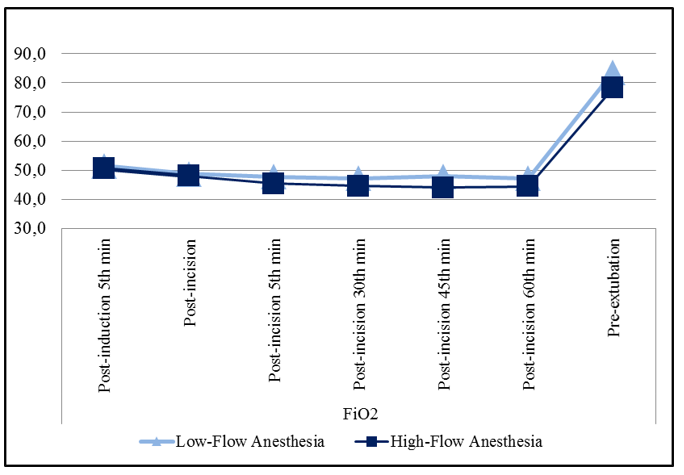
Figure 2 Comparison of FiO2 values between anesthesia groups.
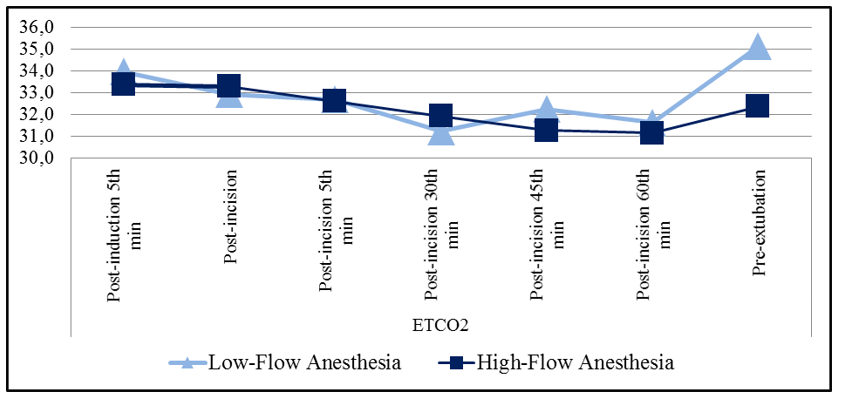
Figure 3 Comparison of ETCO₂ values between anesthesia groups.
Pre-anesthetic NLR values did not differ significantly between the groups (p > 0.05). However, the post-anesthetic NLR was significantly lower in Group D compared to Group Y (p = 0.014). In the within-group comparisons, no significant change was observed in Group D between pre- and post-anesthetic NLR values (p > 0.05), whereas Group Y showed a statistically significant increase in post-anesthetic NLR compared to pre-anesthetic values (p<0.001) (Table 2). The total amount of sevoflurane administered was significantly reduced in Group D relative to Group Y (p<0.001*) (Figure 4).
|
|
Group D (Low-Flow Anesthesia) |
|
Group Y (High-Flow Anesthesia) |
p-value |
||||||||
|
|
Mean ± SD / n (%) |
Median |
|
Mean ± SD / n (%) |
Median |
|||||||
|
NLR |
|
|
|
|
|
|
|
|
|
|
||
|
Pre-anesthesia |
2.2 |
± |
1.4 |
1.9 |
1.5 |
± |
0.5 |
1.3 |
0.053 |
m |
||
|
Post-anesthesia |
1.7 |
± |
0.7 |
1.6 |
2.6 |
± |
2.2 |
2.0 |
0.014* |
m |
||
|
Intra-group p-value |
0.056 |
w |
<0.001* |
w |
||||||||
Table 2 Intra-group and inter-group comparison of neutrophil-to-lymphocyte ratio (NLR)
m: Mann-Whitney U Test / w: Wilcoxon Test (Mean ± SD: Mean ± Standard Deviation)
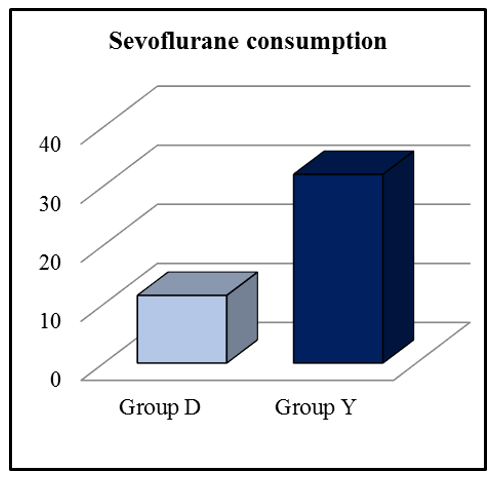
Figure 4 Sevoflurane consumption.
In this study, the intra-group and inter-group changes in NLR, a marker of inflammation, were evaluated in patient groups receiving low-flow and high-flow anesthesia. Within the high-flow anesthesia group, postoperative NLR values were significantly increased compared to the preoperative period. Between-group comparisons revealed that the postoperative NLR was significantly lower in the low-flow anesthesia group than in the high-flow group. However, the groups did not differ significantly in terms of demographic features, hemodynamic and respiratory variables, duration of anesthesia, operative time, type of surgical procedure, or incidence of complications. Kaymak et al. compared hemodynamic parameters during high-flow and low-flow desflurane anesthesia using thoracic electrical bioimpedance monitoring and reported no significant changes in heart rate or mean arterial pressure in the low-flow group receiving 1 L/min desflurane at concentrations below 1 MAC.8 Similarly, in our study, the hemodynamic parameters—including systolic arterial pressure, diastolic arterial pressure, and heart rate—showed comparable values between both groups, with no statistically significant differences observed.
During low-flow anesthesia, reducing the fresh gas flow without adjusting the gas mixture also lowers the inspired oxygen concentration. Therefore, when the flow is decreased, the oxygen concentration in the fresh gas mixture must be increased to maintain an adequate inspired oxygen level.9 In this study, no statistically significant change was observed in intraoperative FiO₂ values in the low-flow anesthesia group. However, prior to extubation, FiO₂ levels were significantly higher in the low-flow group, likely to support rapid recovery and to prevent hypoxia. Intraoperative oxygen saturation (SpO₂) values for all patients included in the study ranged between 96% and 100%, and no cases of intraoperative hypoxia were observed in either group.
Lowering the fresh gas flow rate to 0.5 L/min significantly increases the demand for CO₂ absorbent, approximately by a factor of four compared to a flow rate of 3 L/min. Therefore, EtCO₂ and FiCO₂ monitoring are essential during low-flow anesthesia.10 In a study by Yıldırım et al.11 investigating low-flow anesthesia, both inspired and expired CO₂ levels showed a statistically significant increase starting from the 60th minute. Concurrent arterial blood gas analyses revealed a significant rise in PaCO₂ levels, although this increase did not affect blood pH.11 Similarly, in our study, no significant difference was found between low-flow and high-flow anesthesia groups in intraoperative EtCO₂ levels. However, prior to extubation, EtCO₂ levels were significantly higher in the low-flow anesthesia group compared to the high-flow group. This finding underscores the need to remain vigilant about potential CO₂ accumulation during low-flow anesthesia.
NLR is increasingly utilized as a biomarker in various pathologies, including infections, providing valuable prognostic and predictive information. According to a study by Turkmen et al., NLR, along with other pro-inflammatory biomarkers including interleukins and TNF-α, may act as a reliable marker of systemic inflammation in the context of renal diseases.12 Another study demonstrated that patients with a preoperative NLR ≥2 exhibited higher inflammatory activity, suggesting that NLR could guide the selection of preemptive epidural analgesia in thoracotomy surgeries.13 In a study conducted to compare the effects of general anesthesia and spinal anesthesia on the inflammatory response in patients undergoing infraumbilical surgery, results demonstrated a significant postoperative increase in neutrophil-to-lymphocyte ratio in the spinal anesthesia group, whereas this increase was more limited in the general anesthesia group. This suggests that spinal anesthesia may provoke a stronger inflammatory response. However, it was concluded that both anesthesia types influence the surgical stress response and modulate inflammation.14
NLR is an important marker of inflammation. It has been reported that NLR may be an important indicator of inflammation and immune responses in critically ill stroke patients and it may help us understand the pathophysiology of diseases, thus contributing to the development of new treatment strategies.15 In this study, the postoperative NLR value in the low-flow anesthesia group did not show a significant change compared to the preoperative period. In contrast, the high-flow anesthesia group demonstrated a statistically significant increase in postoperative NLR compared to the preoperative values. The significant postoperative rise in NLR among patients receiving high-flow anesthesia suggests a more pronounced systemic inflammatory response in this group. It is hypothesized that the increased amount of anesthetic agent passing through and contacting body tissues, associated with the higher fresh gas flow, may contribute to the observed enhancement in inflammatory response.
In the literature, there are no studies directly comparing NLR between high-flow and low-flow anesthesia techniques. The current investigation revealed significantly increased postoperative NLR values in patients receiving high-flow anesthesia versus those with low-flow anesthesia. This finding suggests that low-flow anesthesia more effectively suppresses the systemic inflammatory response than high-flow anesthesia. It is believed that low-flow techniques provide more stable gas concentrations and cause less irritation to the tracheobronchial mucosa, resulting in a more limited systemic inflammatory reaction. In this context, the association of low-flow anesthesia with a reduced inflammatory response may support its preference, especially in the patient populations with vulnerable immune systems.
Igarashi et al. examined 60 children who initially received sevoflurane at a high flow rate, followed by low flow (0.6 L/min) and high flow (6 L/min) administration. Their results showed that sevoflurane consumption at low flow was approximately one-seventh of that at high flow.16 In another study low-flow anesthesia with sevoflurane reduced the consumption of sevoflurane, the volatile anesthetic agent used, by 40%.17 In the present study, which compared low flow (0.75 L/min) and high flow (3 L/min) anesthesia, the amount of sevoflurane used differed by approximately one-third, with a significantly lower total consumption in the low flow group. This finding aligns with the literature demonstrating that low flow anesthesia reduces the use of volatile anesthetic agents, thereby increasing cost-effectiveness, and supports the results of this study.
As this was a single-center retrospective study, the findings are limited to a specific population and geographic region. Hence, further multicenter, prospective studies involving larger cohorts are warranted to validate these results.
The low-flow anesthesia technique allows gases to circulate within the system more efficiently; thus, while maintaining a stable concentration within the circuit, it requires less fresh anesthetic agent. Therefore, although the amount of "effective agent" delivered to the body is similar, the total agent load to which body tissues are exposed may be slightly higher in high-flow anesthesia. The findings of this study suggest that the neutrophil-to-lymphocyte ratio could serve as a potential marker indicating the inflammatory response induced by anesthesia in the body. With the increased adoption of low-flow anesthesia techniques, the consumption of volatile anesthetics is expected to decrease, which may contribute positively to ecological balance and reduce costs; additionally, a reduction in inflammatory responses in patients is anticipated.
What is known: Low-flow anesthesia techniques decrease the consumption of volatile anesthetics, which may contribute positively to ecological balance and reduce costs.
The neutrophil-to-lymphocyte ratio (NLR) is an important marker of the systemic inflammatory response.
What is new: This study directly compared NLR between high-flow and low-flow anesthesia techniques in tympanoplasty and myringoplasty surgeries.
When NLR is used as a marker, these findings suggest that low-flow anesthesia suppresses the systemic inflammatory response more effectively than high-flow anesthesia.
None.
The authors declare no conflicts of interest.
The authors declare that they have not received funding.

©2025 Özden, et al. This is an open access article distributed under the terms of the, which permits unrestricted use, distribution, and build upon your work non-commercially.
