Journal of
eISSN: 2572-8466


Research Article Volume 12 Issue 3
1Faculty of Agricultural and Environmental Sciences, Master’s Degree in Agricultural Sciences and Local Management, Mexico
2Faculty of Chemical and Biological Sciences, Autonomous University of Guerrero, Mexico
Correspondence: Agustín Damián-Nava, Faculty of Agricultural and Environmental Sciences. Master’s Degree in Agricultural Sciences and Local Management, Mexico
Received: May 30, 2025 | Published: June 10, 2025
Citation: Ramírez-Castorena E, Damián-Nava A, Vázquez-Villamar M, et al. Physicochemical, nutritional and microbiological analysis of bovine and goat manure composts. J Appl Biotechnol Bioeng 2025;12(2):94-100. DOI: 10.15406/jabb.2025.12.00390
Composting is an aerobic process that makes possible the utilization of organic wastes where microorganisms participate transforming degradable wastes such as: animal manure and plant residues, which can be safely and beneficially used as biofertilizers and soil amendments. This study evaluated the physicochemical, nutritional, and microbiological composition of two composts: one based on bovine manure and the other on goat manure. A random block design was used, with four treatments, four replications, to compost as an experimental unit (goat and cattle). It was found that in the thermophilic phase temperatures were similar in composting, between 55.12 ⁰C (goat) and 54.25 ⁰C (cattle). The moisture content of both types of compost was initially 80%, then between 70-60% and 34% at the end of composting. The final pH of the composts was 8.5 in goats, which was statistically higher than 7.8 in cattle. The C/N ratio was higher in the daily removal composts with 17.3 in goat and 21.3 in cattle, respectively: the organic matter (OM) was equally higher in composts with daily removal of 21.1 for goats and 16.9 for cattle. In the nutrient content in the goat composts that were removed daily showed values of: N with 0.71%, P with 1700 mg/kg, K 5000 mg/kg, Fe 14648 mg/kg, Mn 350 mg/kg, Zn 91.08 mg/kg and those of cattle, N with 0.46%, P with 700 mg/kg, K with 2700 mg/kg, Fe 12136 mg/kg, Mn 250 mg/kg, Zn 66.16 mg/kg. Goat compost is shown to be superior in terms of macro and micronutrient values, C/N ratio and MO. The microbiological analysis of the goat and cattle composts showed negative results for the presence of Escherichia coli and Salmonella sp.
Keywords: composting, manure, microorganisms
Composting is a process of aerobic decomposition of plant and animal waste, which can be usedto reduce the excessive use of chemical fertilizers that have generated serious pollution problems in water, air and soil.1 The management of manure from livestock can represent an important source of nutrients when recycled through composting.2
Composting is a natural decomposition practice that produces nutrient-rich substrates; unfortunately, their nutritional potential is not always preserved because the composting process is sometimes uncontrolled; furthermore, there is no certainty regarding the characteristics or nutrient content of the raw material used; therefore, studies of its physical, chemical, and microbiological characteristics are necessary.3–6
Temperature, pH, and humidity are common control parameters used to monitor the composting process. Temperature helps accelerate the process and eliminate pathogenic microorganisms present between 50 and 70°C in their thermophilic or sanitation phase; while humidity is a key factor in the metabolic activities of mesophilic and thermophilic microorganisms that make up mixed populations, degrading OM organic matter. This must be maintained in the compost between 40 and 60%, and at the end of the process, an adequate pH value between 7 and 8 must be reached.7,8
The most relevant benefit of composts when added to the soil is the increase in organic matter (OM) and therefore the availability of nutrients,9 so it is necessary to evaluate the content of macronutrients in composts: N, P, K, Ca, Mg and S and micronutrients: Fe, Cu, Mn, Zn, among others; as well as the OM and the Carbon-Nitrogen ratio.10
The source of degradable composting materials determines the diversity and population of pathogenic microorganisms that may exist in the compost, such as Escherichia coli and Salmonella sp., which cause diarrhea and infections in humans. Therefore, to ensure the safe use of composts in crops, evaluation methods and regulatory limits are carried out to identify these pathogens.11 Therefore, the objective of this research was the physical, chemical, nutritional, and microbiological evaluation of composts based on bovine and goat manure.
Study site
The research was carried out in the town of Jaleaca de Catalán, Municipality of Chilpancingo de los Bravo, Guerrero, Mexico is located at a Longitude (dec): -99.858056; Latitude (dec): 17.446944 and altitude of 774 m. The average temperature of the warmest month (April) is 30.7 °C, while the coldest month (January) is 11.2 °C. The highest relative humidity occurs from June to October, but September stands out with 89% humidity; conversely, the driest period is from December to April, but the lowest is April with 54%. Likewise, the greatest rainfall occurs in September (309 mm); while the lowest is in January (18 mm) (Annual and monthly weather - Jaleaca de Catalán, Mexico, 2002-2025)https://www.weather-atlas.com/es/mexico/jaleaca-de-catalan-clima).
Materials forthe elaboration ofcomposts
To make the compost, manures were useddry of bovine and caprine, ofapproximately three months; as well asland of mountains and leaf litter from different types of treesof: soursop (Annona muricataL.), oak (Quercus xalapensisHumb. & Bonpl), mango (Mangifera indicaL.), quapinol (Hymenaea courbarilL.), tanalocote (Homalium senarium ex DC.);In addition, it was used, sawdust from ayacahuite trees (Pinus ayacahuiteEhrenb.exSchltdl).
Composting
Composting was carried out according to the methodology reported by Román et al.12 The piles were 1.5 m wide and 1 m long, with a weight of 190 kg. Both types of compost (goat and bovine)they settled downon a polyethylene plastic, in layers, in the following order: 15 cm leaf litter, 15 cm manure, 10 cm mountain soil and 10 cm sawdust, each layer was watered evenly, then, they were covered with a polyethylene plasticblack with a thickness. The field capacity was determined by the fist test (which consists(Take a handful of the substrate and squeeze it; if about three drops of water drip between your fingers and it doesn't crumble, it's fine; if many drops of water come out, there's excess water.)13 Subsequently, both composts underwent two removal treatments:daily and every third day.
The evaluation of the physicochemical, nutritional and microbiological characteristics of the composts consisted of considering two factors: factor 1 = type of manure: level 1 (goat) and level 2 (bovine); factor 2 = compost removal times(time elapsed between one removal and the next): level 1 (daily removal) and level 2 (removal every third day); removal consisted of stirring the compost twice, forward and then backward, ensuring that the materials were well mixed and that the temperatures and humidity achieved optimal conditions for the microorganisms to thrive. The following four treatments were obtained by combining factors and levels:goat + daily removal, goat + removal every third day, cattle + daily removal, cattle + removal every third day.Each treatment was carried out in 4 repetitions, resulting in a total of 16 composts.
Recording temperature, humidity and pH in the composting process
Temperature, humidity, and pH were recorded every eight days from 12:00 to 2:00 p.m., from July to October 2021.For temperature, a Brannan® mercury thermometer (⁰C) was used, placed in the middle of the compost. Moisture (%) was measured with a Generic® 5-In-1 Soil Tester digital device in the middle of the compost, and pH was measured with a Hanna® HI98131 potentiometer, diluting 10 g of compost in 20 mL of distilled water.
Nutritional analysis
The determination of the nutrient content and organic matter was carried out in early November; for this purpose, a composite sample of the four replicates, 250 g/replicate, was used for each treatment.From each treatment, these samples were sievedand then weighed on an ADIR® digital kitchen scale); they were then placed in ziploc® hermetically sealed plastic bags and labeled according to the instructions of the Soil and Nutrition Analysis Laboratory, Fertilab(where the samples were analyzed),with certification number: ER-0223/2020.ISO 9001:2015.
Microbiological analysis
At the end of composting, samples were collected based on NMX-AA-180-SCFI-2018(establishes the methods and procedures for the aerobic treatment of the organic fraction of urban solid waste (USW) and special management waste (SWM), as well as the commercial information and quality parameters of the final products);the quantification of microorganisms,it was donein the Agricultural Microbiology Laboratory of the Faculty of Agricultural and Environmental Sciences, Autonomous University of Guerrero. Total and fecal coliforms were determined using the most probable number (MPN) method and a confirmatory test for Escherichia coli.14 It started with the presumptive test: 10 g of sample from the four treatments were weighed, homogenized in 90 mL of diluent solution, then 1 mL was taken and added in two dilutions with 9.0 mL of diluent solution, subsequently it was seeded in triplicate in sodium lauryl sulfate broth tubes (BD Bioxon®) and left to incubate at 35 ° C for 24 h, then the positive tubes were observed from which 1.0 mL were inoculated by taking into tubes of brilliant green lactose bile 2% broth (BD Bioxon®) (total coliforms) and in tubes of E. coli broth (BD Bioxon®) (fecal coliforms) were incubated at 35 ° C for 48 h and then the positive tubes were read according to the table presented by NOM-210-SSA1-2014 for the MPN of total coliforms and fecal matter/g of sample. For the identification and isolation of Escherichia coli from positive tubes, E. coli was cultured on MacConkey agar plates (BD Bioxon®) and left to incubate at 35 °C for 24 h. To confirm the presence of Escherichia coli, biochemical tests were performed in Voguesproskauer, methyl red, Kosser citrate (BD Bioxon®) and the tubes were subsequently read. The identification of Salmonella sp. was carried out based on that described in NOM-210-SSA1-2014. A 10 g sample was weighed and added to a 90 mL pre-enrichment medium, incubated for 18 h at 37 °C, then 0.1 mL was transferred to a 10 mL tube of Rappaport-Vassiliadis (RVS) broth (SigmaAldrich®) and 1 mL to a tube containing 10 mL of Muller-Kauffmann tetrathionate novobiocin (MKTTn) broth (GranuCult®). The RVS broth was incubated at 41 °C and the MKTTN broth at 37 °C for 24 h. Positive samples were inoculated onto four selective media (BD Bioxon®); Hektoen Enteric Agar (EH), Bismuth Sulfite Agar (BSA), Xylose Lysine Deoxycholate (XLD), and Brilliant Green Agar (BGA). For biochemical tests, typical Salmonella sp. colonies were inoculated in the following media: Lysine Iron Agar (LIA) (BD Bioxon®), Triple Sugar Iron Agar (TSI) (GranuCult®) and L-lysine decarboxylase broth (BD Bioxon®) and left to incubate at 37 °C for 24 h before reading the tubes.
The data obtained from the variables were sorted in the Excel program and then wereprocess them in the statistical package Statiscal Analysis System SAS® 9.1., in which an analysis of variance and LSD means test (P ≤ 0.05) were executed.
Temperature, humidity and pH during the composting process
The analysis of variance for the sampling dates during the composting process (13 weeks), found that the variables temperature, humidity and pH were highly significant (Table 1).
|
Variables |
CV |
DF |
Mean square |
Pr > F |
|
Temperature |
3.13 |
12 |
538.52 |
<.0001 |
|
Humidity |
6.27 |
12 |
845.28 |
<.0001 |
|
pH |
3.86 |
12 |
9.09 |
<.0001 |
Table 1 Analysis of variance of temperature, humidity, and pH variables by sampling dates for goat and cattle Composts
CV, coefficient of variation; DF, degrees of freedom
The behavior of the temperature in the composting process of the two types of compost goat and bovine presented differences, it was found that in the fourth week the highest value was recorded 55.12 and 54.25°C, respectively, which statistically exceed(P ≤ 0.05),to the values of the third week (50.12 and 50.00°C); likewise the latter exceeded the second week (50.12 and 48.12 °C, respectively) and fifth week (45.62 in both composts), the weeks that presented intermediate temperature values (45.50 to 30.75°C) were from the sixth to the eleventh week; the weeks with lower statistical values were from (25.87 to 25.00°C) ending the compost process.The temperature behavior between both types of compost during the composting process did not show statistical differences (Figure 1).
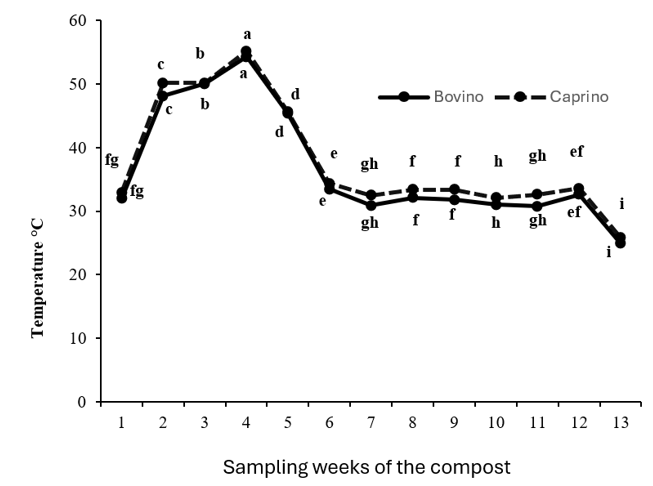
Figure 1 Temperature during, the goat and bovine composting process. LSD (α ≤ 0.05). Medians with the same letter are not significantly different.
Tortarolo et al.,15 indicate that the composting process develops in stages that depend on temperature behavior; in the first mesophilic stage, the activity of bacteria and fungi raise the temperature to about 40 °C. In a second thermophilic stage, the temperature is between 40 and 60 °C. In the third cooling stage, it drops to room temperature; the same stages were carried out in the composting process of the four treatments in this study, in goat and cattle composts. López et al.,6 found that in the stages indicated above, at the beginning in goat composts it presented a temperature of 28 °C, then reached 53 °C and finally, dropped to 20 °C; while in cattle composts they started at 25 °C, rose to 35 °C and ended at 20 °C; that is, there was similarity with this research, only in goat composts.Delgado et al.,16 mention thata temperature greater than 50 °C in the thermophilic phaseindicates that the composts meet the hygiene requirements; which suggests that the goat and cattle composts in this study are free of pathogenic microorganisms since they reached temperatures of 55°C and 54 °C. Jara et al.,17 states that the temperature considered optimal to eliminate most pathogens should be between 60-70 °C.
Humidity during the composting process
In the first week, both types of compost had the highest humidity level (80%), which was statistically higher than in the second, third, and eighth weeks (74.75% to 54.87%, respectively); the remaining weeks had intermediate humidity levels (between 60% and 70%), sufficient to maintain microbial activity in the compost, since a large amount of water evaporates during the process, which reduces microbial activity. The statistically lowest values were seen in the last week of composting (34%), which corresponds to the cooling phase of the compost. There were no statistical differences in humidity levels during the composting process for the two types of goat and bovine compost (Figure 2).
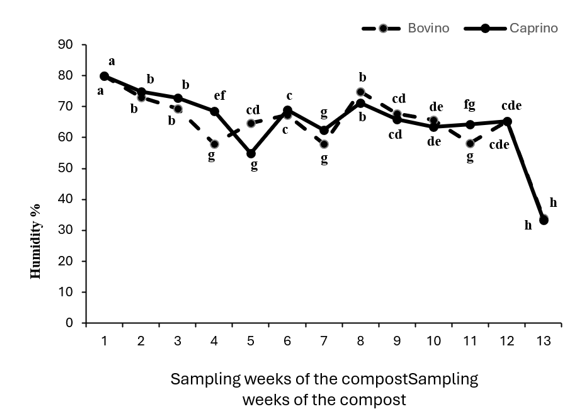
Figure 2 Evolution of the moisture during the goat and cattle composting process. LSD (α ≤ 0.05). Medians with the same letter are not significantly different .
López et al.,6 indicate that goat and cattle composts maintained humidity at 60% throughout the entire process, compared to this study, which maintained these values from the second to the twelfth week (70-60%). These data are relevant because adequate humidity (50 and 60%) favors more intense activity of microorganisms, which is achieved by applying water until reaching saturation point and frequently removing the compost. Delgado et al.,16 and Modupe et al.,11 found that, for adequate composting, humidity is a fundamental parameter in all its phases, since if the humidity at the beginning of the process is below 35-40%, microbial activity decreases, which can reach inhibition and affect the entire process; something similar occurred in this study, values were maintained between 60%, in accordance with what was recommended and it is advisable to maintain it between 50 and 60% during the process, which in this study was fulfilled in maintaining a similarity in humidity values according to what was recommended.
pH during the composting process
The pH recorded during the composting process of both goat and cattle composts was higher in goat manure compost, which was statistically significantly different from that of cattle compost. The highest values were 8.56 for goat manure and 7.81 for cattle manure, occurring in the last two weeks of composting, which were higher than those of the ninth to eleventh week (8.30 and 7.31, respectively); the intermediate pH values were present from the second to the seventh week, 7.59 for goat manure and 6.63 for cattle manure; the statistically lower pH values of 4.02 were present at the beginning of composting, in both types of compost (Figure 3). The results of this study are similar to those reported by Colín et al.,18 in goat manure composts, which reported an alkaline pH of 8.8, and Pérez et al.,19 in bovine composts presented values of a final pH of 7.3. López et al.,6 goat and bovine compostsreporteda pH of 9.0 and 9.1 respectively, values higher than those obtained in this study.
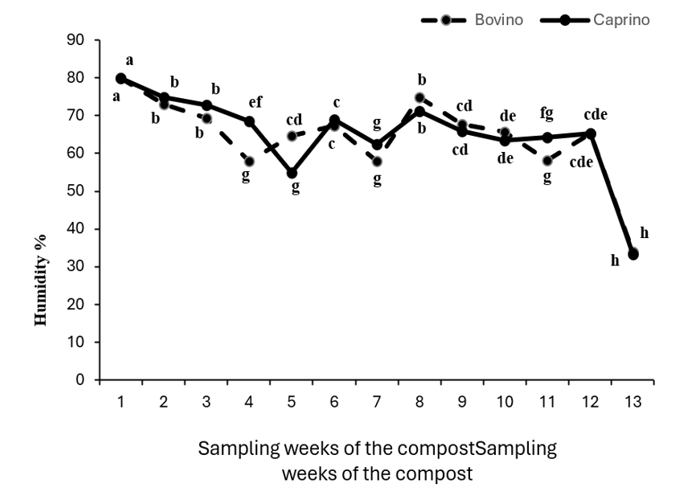
Figure 3 Evolution of pH during the goat and cattle composting process. LSD (α ≤ 0.050. Medians with the same letter are not significantly different.
Effect of compost removal period on temperature, humidity and pH.
Regarding the parameters measured in the comparison between goat and bovine composts, it was found that the temperature of the goat-based compost (37.84 °C) was statistically higher than that of the bovine (36.72 °C); similarly occurred with the pH (7.62 and 6.78, respectively), while the humidity was similar in both types of compost (Table 2).
|
|
Variables |
|
|
|
Compost |
Temperature °C |
Humidity % |
pH |
|
Goat |
37.84 a |
65.05 a |
7.62 a |
|
Bovine |
36.72 b |
64.28 a |
6.78 b |
|
Pr > F |
<.0001 |
0.1732 |
<.0001 |
Table 2 Comparison of means of composts based on goat and cattle manure, related to temperature, humidity and pH
Medians with the same letter are not significantly different. LSD (α ≤ 0.05)
Campos et al.,20 obtained temperature measurements close to 40 °C, which demonstrates a relationship in the activity of mesophilic microorganisms towards the increase in temperature, this same temperature evolution is between the values obtained in the goat and cattle compost of this study. Velasco et al.,21 recommends humidity between 60% and 70% therefore the values in the goat and cattle compost of this study remained between the same results;although no differences were found between types of compost.Méndez et al.,22 shows that the addition of origin-dependent manure increases pH values, the same difference in the use of goat and cattle manure, comparing their pH values in this study.
Temperature, humidity and pH in compost removal
Regarding the parameters measured by the effect of compost removal time, it was found that the humidity (65.32%) of the compost removed daily statistically exceeded that of the compost removed every third day (64%), while the temperature and pH of daily and third-day removal were similar (Table 3).
|
|
Variables |
|
|
|
Removal |
Temperature °C |
Humidity % |
pH |
|
Daily removal |
37.27 a |
65.32 a |
7.21 a |
|
Removal every third day |
37.29 a |
64.00 b |
7.20 a |
|
Pr > F |
0.9054 |
0.0212 |
0.9048 |
Table 3 Comparison of means of the types of compost removal, related to temperature, humidity and pH
Medians with the same letter are not significantly different. LSD (α ≤ 0.05).
Oviedo et al.,23 and Méndez et al.,22 mention that the management of aeration or continuous turning (removal) allows better conditions in the composting process, reflected in the results of temperature, humidity and pH obtained in this study.
Effect of compost removal period on macronutrient content
The average macronutrient contents of bovine and goat composts were as follows: N presented higher values in goat manure; both in daily removal (0.71%) and every third day (0.59%); in turn, daily removal had higher N values in both types of composts. Something similar happened in P, the highest values corresponded to the daily removal of the composts: goat (1700 mg / kg) and bovine (700 mg / kg). Regarding K, removal every third day presented higher values, both in goat (10400 mg / kg) and cattle (2899.9 mg / kg). In Ca, the highest value was in goat compost that was removed every third day with 14599.9 mg/kg, Mg was higher in goat compost that was removed daily with 4100 mg/kg, Na was higher in goat compost that was removed every third day with 1200 mg/kg and S equally in goat compost that was removed every third day with 1600 mg/kg (Table 4).
|
Composts |
N |
P |
K |
AC |
Mg |
Na |
S |
|
% |
mg/kg |
mg/kg |
mg/kg |
mg/kg |
mg/kg |
mg/kg |
|
|
Goat + daily removal |
0.71 |
1700 |
5000 |
12600 |
4100 |
500 |
1100 |
|
Goat + removal every third day |
0.59 |
1600 |
10400 |
14599.9 |
3499.9 |
1200 |
1600 |
|
Bovine + daily removal |
0.46 |
700 |
2700 |
3300 |
2300 |
200 |
1100 |
|
Bovine + removal every third day |
0.41 |
700 |
2899.9 |
2300 |
3300 |
200 |
400 |
Table 4 Macronutrients present in the treatments of goat and cattle composts
N, Nitrogen; P, Phosphorus; K, Potassium; Ca, Calcium; Mg, Magnesium; Na, Sodium; S, Sulfur
Olivares et al.,24 found N contents of 1.20% and 1.86% in soils fertilized with vermicompost and cattle manure, P contents of 5400 mg/kg and 7199.9 mg/kg, and K contents of 1200 mg/kg, respectively; these N and P values are higher than those found in this study in the four treatments based on goat and cattle manure; while K was higher in this study.
Da Costa et al.,25 indicate that in composts of household organic solid waste with plant residues and bovine manure at the end of composting they presented values of N with 0.83%, P with 7500 mg/kg and K with 5250 mg/kg, which also exceeded the treatments in this study. On the other hand, López et al.,6 indicate that in goat composts they obtained N with 2.7%, P with 8355 mg/kg, K with 24900 mg/kg; while, in cattle, N was 1.9%, P with 8725 mg/kg and K with 28400 mg/kg, these values were also higher than those obtained in this study.
Ramírez et al.,26 in a characterization of organic fertilizers highlighting the compost made with different components of floricultural soils and using bovine manure, they presented N of 2.22%, 3.18%, 0.86%, 1.51%, 0.64%, P of 177.42 mg / kg, 343.98 mg / kg, 194.12 mg / kg, 182.29 mg / kg, 186.96 mg / kg and K of 3200 mg / kg, 4400 mg / kg, 3200 mg / kg, 200 mg / kg, as for N it was higher in the two treatments of this study based on bovine, unlike P which was lower and K was also higher; the composts being prepared from different organic residues differ in their agronomic value.
Effect of compost removal on micronutrient content, OM and C/N
(Fe), Copper (Cu), Manganese (Mn), Zinc (Zn), Boron (B) and OM (Organic Matter), C/N (Carbon-Nitrogen).
Iron (Fe), Copper (Cu), Manganese (Mn), Zinc (Zn), Boron (B) and OM (Organic Matter), C/N (Carbon-Nitrogen).
In relation to the micronutrient content of the composts, it was found that the highest values were obtained in goat manure;Fe (6745 mg/kg) and B (3.35 mg/kg) were removed every third day; while for Cu (9.73 mg/kg), Mn (350 mg/kg), Zn (91.08 mg/kg) were removed daily in the compost (Table 5).
|
Composts |
Faith |
Cu |
Mn |
Zn |
B |
MO |
C/N |
|
|
mg/kg |
mg/kg |
mg/kg |
mg/kg |
mg/kg |
% |
|
|
|
|
|
|
|
|
|
|
|
|
|
|
|
|
|
|
|
|
Goat + daily removal |
1465 |
9.737 |
350 |
91.08 |
0.1 |
21.1 |
17.3 |
|
Goat + removal every third day |
6745 |
9.046 |
204 |
76 |
3.35 |
10.1 |
10 |
|
Bovine + daily removal |
1214 |
11.46 |
250 |
66.16 |
0.1 |
16.9 |
21.3 |
|
Bovine + removal every third day |
1256 |
11.87 |
289 |
113 |
0.001 |
11.9 |
16.8 |
Table 5 Micronutrients present in the four treatments of goat and cattle composts
Fe, Iron; Cu, Copper; (), Mn, Manganese; Zn, Zinc; B, Boron; OM, Organic Matter, C/N, Carbon-Nitroge
López et al.,6mention that the micronutrient content found in goat compost was: Fe with 3235 mg/kg, Zn with 350 mg/kg, Cu with 46.5 mg/kg, Mn with 870 mg/kg, B with 950 mg/kg and in cattle compost: Fe with 3840 mg/kg, Zn with 465 mg/kg, Cu with 57.5 mg/kg, Mn with 640 mg/kg, B with 1265 mg/kg, which are mostly higher values than those obtained in this study.
Hernández et al.,27 in goat composts found Fe with 402.63 mg/kg, Mn with 362.70 mg/kg,Cu with 38.15 mg/kg and Zn with 304.85 mg/kg; while in bovine manure they were: Fe with 545 mg/kg, Mn with 166.35 mg/kg, Cu with 20.40 mg/kg and Zn with 131.3 mg/kg; the values of Fe and Mn, which were mostly lower than those obtained in this study.
Oviedo et al.,23 indicates that frequent composting turns cause low values in macro and micronutrients due to the frequency of turning in compost piles causing the release of NH3 and which is usually volatilized by the increase in temperature and pH during turning, so the composting turns in this study were too frequent which could have caused the decrease in macro and micronutrients equally.
The C/N ratio in goat compost with daily removal and goat with removal every third day were 17.3 and 10.0 and the organic matter of 21.1% and 10.1% presenting higher values in goat composts with daily removal. In cattle composts with daily removal and cattle with removal every third day, the C/N ratio was 21.3 and 16.8 and the organic matter of 16.9% and 11.9% presenting higher values in cattle composts with daily removal, compared to the two types of compost the highest values regarding macro and micronutrients, the C/N ratio and organic matter were in goat compost with daily removal as shown in Table 5.
Olivares et al.,24 reported a C/N ratio of 8.13 for cattle vermicompost, while organic matter (OM) was 0.78% lower than that obtained in the four treatments in this study. On the other hand, López et al.,6 reported a C/N ratio of 15.2 for goat compost and 20.7 for cattle compost; of these, the goat compost was lower than that found in this study of goat composts that were stirred daily; while the values for cattle were higher.]
In a study by Da costa et al.,25 using organic solid waste with plant residues and bovine manure at the end of composting presented a value in the C / N ratio of 12.1, compared to the treatments of this study it is only higher than goat compost + removal every third day. Also, Acebedo et al.,28 mentions in a study carried out with organic amendments based on cattle and sheep manure an organic matter (OM) 18.19% and 20.22%, respectively, regarding the C / N ratio of 10.43 and 12.82, the organic matter being higher than the treatments in this study and the C / N ratio was only lower in the goat compost treatments with removal every third day. Colín et al.,18 in goat manure compost obtained an organic matter (OM) of 72.2% and a C/N ratio of 15.9, the organic matter being greater than that obtained in this study and the C/N ratio was only lower in goat composts with removal every third day of this study.
Microbiological quality of composts
In the estimation of microbial density to determine the presence of coliforms, total and fecal, by the most probable number technique (MPN), the reference values of the Mexican Official Standard NOM-210-SSA1-2014 were used.29 The samples of the four treatments goat compost + daily removal and goat compost + removal every third day, the results of total coliforms of 28 MPN / g and fecal coliforms of 15 MPN / g in both treatments and treatments bovine compost + daily removal and bovine compost + removal every third day, the average of the results of total coliforms of 20 MPN / g and fecal coliforms of 7.3 MPN / g in both treatments, according to standard NADF-020-AMBT-2011,30 the four treatments do comply with the tolerance limits since the results present a lower value (Table 6).
|
Analysis |
Tolerance |
Goat compost + daily removal of NMP/g |
Goat compost + removal every third day |
Bovine compost + daily removal |
Bovine compost + removal every third day |
|
Total coliforms |
<1000 NMP/g |
28 |
28 NMP/g |
20 NMP/g |
20 NMP/g |
|
Fecal coliforms |
<1000 NMP/g |
15 NMP/g |
15 NMP/g |
7.3 NMP/g |
7.3 NMP/g |
|
Salmonella sp. |
<3 NMP |
Absent |
Absent |
Absent |
Absent |
|
Escherichia coli |
<1000 NMP/g |
Absent |
Absent |
Absent |
Absent |
Table 6 Results of analysis of total and fecal coliforms, Salmonella sp. And Escherichia coli present in the four goat and cattle compost treatments
Subsequently, the isolation of the strains and biochemical tests for identification of Salmonella sp. and Escherichia coli from the four treatments presented negative results, Table 6.
Hernández et al.,27 carried out on vermicompost with goat and cattle manure treatments had negative results in fecal coliforms and Salmonella sp., compared to this study that presented positive results in fecal coliforms. Guerrero and Monsalve,31 in compost derived from the slaughter and dressing of cattle presented fecal coliforms of 43 NMP / g, a value higher than those obtained in the four treatments of this study.
García et al.,32 in the identification of pathogenic microorganisms in bovine compost there was the presence of total coliforms of 220 NMP / g and the absence of Salmonella sp. Another study by Colin et al.,18 in compost and vermicompost of goat manure also did not observe the presence of Escherichia coli and Salmonella sp. Peralta et al.,33 in a study of an organic fertilizer with cattle excrement reports in the microbiological analysis the absence of total coliforms and Salmonella sp., the composts must comply with permissible microbiological specifications, therefore the composts of the treatments of this study do comply according to the tolerance level.34–36
The temperatures of goat and cattle compostswere similarDuring the composting period, the highest temperature was reached in the fourth week (thermophilic phase), which was optimal for eliminating pathogenic organisms.
According to the humidity of the composts, the activity of the microorganisms was optimal during the composting process.
During composting, the pH of goat compost was higher than that of bovine compost; however, both started with an acidic pH and ended with an alkaline pH.
N, P, and Mg contents were higher in both composts when they were removed daily; conversely, K, Ca, Na, and S were higher in composts removed every other day. The goat manure compost had higher K, P, Ca, Mg, S, and Na contents, while the cattle manure compost had higher K contents.
The C/N ratio of the compost was higher in cattle than in goats, both with daily and three-day removal.
The organic matter in goat compost was higher than in bovine compost in daily removal; but it was similar in removal every three days.
The composts studied do not present a risk for use on crops, since they are within the permissible limits for coliforms, both total and fecal, and also had negative results for the presence of Escherichia coli and Salmonella sp.
The data sets used or analyzed during the current study are available from the author upon reasonable request.
To the National Council of Humanities, Sciences and Technologies (CONAHCYT) for the financial support provided to achieve the research.
Authors declare that there are no conflicts of interest.

©2025 Ramírez-Castorena, et al. This is an open access article distributed under the terms of the, which permits unrestricted use, distribution, and build upon your work non-commercially.