Journal of
eISSN: 2572-8466


Research Article Volume 12 Issue 3
1Department of Parasitology, Universidad Autónoma Agria Antonio, Calzada Antonio Narro #1923 Buenavista, Saltillo ZP 20230, Coahuila, México
2Environmental Microbiology Laboratory, Institute of Chemical Biological Research, Universidad Michoacana de San Nicolas de Hidalgo, Morelia, Michoacan, México
Correspondence: Juan Manuel Sánchez-Yáñez, Environmental Microbiology Laboratory, Institute of Chemical Biological Research, B3 Building, University City, Universidad Michoacana de San Nicolas de Hidalgo, Street Fco. J Mujica S/N, Col Felicitas del Rio, ZP 58,00, Morelia, Michoacán, México
Received: June 17, 2025 | Published: July 1, 2025
Citation: Gallegos-Morales G, Hernández-Castillo FD, Ignacio-De JLC, et al. Melilotus indica is a legume with potential as green manure, fodder and source of Sinorhizobium melliloti for domestic legumes. J Appl Biotechnol Bioeng. 2025;12(3):114-119. DOI: 10.15406/jabb.2025.12.00393
A common weedy legume in Mexico is Melilotus indicus of diverse ecological value: forage production, due to its low percentage of lignin and high in organic nitrogen compounds, for the recovery of saline, eroded soils, due to its ability to adapt to extreme climates, with the advantage that in soils in mineral nitrogen it can establish symbiosis with the genus Sinorhizobium useful to restore soil fertility, in addition it can be a source of this genus to be applied in domestic legumes to reduce and optimize nitrogen fertilizer. : Therefore the objectives of this work were: a) to isolate Sinorhizobium meliloti from M. indicus nodules ii) to evaluate the effectiveness and efficacy of Sinorhizobium isolates on Phaseolus vulgaris at a dose of 50% nitrogen fertilizer iii) to biochemically and molecularly identify infective and effective S.meliloti. For this purpose, flowering M. indicus plants were selected from various areas of Buenavista, Coahuila, México. At flowering, M. indicus showed characteristic red or pink coronary nodules on the roots, which were disinfected and inoculated onto Congo red mannitol agar (COREMA). New isolates of S. meliloti were inoculated onto P. vulgaris to determine their phenology: plant height, root length, biomass: fresh and dry weight of aerial and radical components as well as nodulation type and color. S. meliloti were then identified by biochemical and molecular profiling.
The results showed that after 70 days on M. indicus, it was possible to obtain 3 isolates of S. meliloti, which when inoculated onto M. indicus and P. vulgaris caused a pattern of infective and effective pink coronary nodules, with a positive effect on the phenology and biomass of P. vulgaris. While the biochemical profile showed salinity-tolerant S. meliloti isolates capable of effectively nodulating P. vulgaris, the interspecific gene sequences (ITS) demonstrated beyond doubt that this is S. meliloti, inoculated with M. indicus. It is a source of infective S. meliloti, effective for inoculating domestic legumes such as P. vulgaris, as well as for restoring the fertility and structure of deteriorated soils for reuse in diverse agricultural production.
Keywords: wild legume, infective/effective Sinorhizobium, cross-inoculation group, forage, green manure, fertility
The legume weed called Melilotus indicus belongs to Fabaceae Family. M. indicus belongs to the kingdom: Plantae; subkingdom: Tracheobionta vascular plants; superdivision: Spermatophyta seed plants; division: Magnoliophyta flowering plants; class: Magnoliopsida dicotyledons; subclass: Rosidae; order: Fabales and is commonly known by other names such as sweet clover, yellow clover, alfalfa, white clover.1,2 In México is considered a weed that exists in the states of Aguascalientes, Baja California Norte, Baja California Sur, Chiapas, Chihuahua, Coahuila, Colima, México City, Durango, Guanajuato, Hidalgo, Jalisco, State of México, Michoacán, Morelos, Nuevo León, Oaxaca, Querétaro, Sinaloa, Sonora, Tlaxcala and Veracruz.1,3 M. indicus establishes symbiosis with Sinorhizobium melliloti that can be useful to inoculate domestic legumes.2,4 In México there are 3 types of clover M. indicus, M. alba and M. officinalis3,5 M. indicus is the most common, in rocky environments of temperate climates, occasionally as weed, in agricultural soils in México. M. indicus is a common weed in semi-desert soil in winter.5–7 M. indicus is an erect branched legume 30-50 cm tall, hairy stem, with lanceolate leaflets, 3 to 5 mm long, flowers with small yellow or white corollas in clusters 3 to 5 cm long.1,8,9 The fruit is a beaked legume with a seed that blooms in spring.10,11 M. indicus in soil poor in mineral nitrogen forms a symbiosis with Sinorhizobium by biological fixation of N2,4,12 so it can be used as green manure or fodder due to its nitrogen content that can be used as protein and to improve the structure of overexploited agricultural and livestock soils.3–5 Currently, there is no seed of M. indicus available for commercialization on the market. It is a plant native to India and introduced to the American continent and adapted naturally by spreading as a seed among other legumes during its commercialization.1,2 It is considered an unwanted plant as a weed.1–3 Originally from the Mediterranean, North Africa, Macronesia and Europe, it is widely adapted in America, Australia, Asia and Europe. Melilotus derives from the generic name of the Greek words: meli, which means "honey", and lotos, legume, while indicus refers to its geographic origin, India.1–3 M. indicus grows at the end of winter, blooms in spring, and bears fruit in mid-summer and early fall. M. indicus is an annual summer weed with a cycle from March to December, flowering between September and October. Like other weeds, it grows with alfalfa and other graminae5–7 growing all year round in different phenological phases; in winter it exists as a seed.8,9 It is registered as a weed in crops of flax, wheat, alfalfa, beans, beets, pumpkin, barley, corn, rye, fruit trees, garlic, cotton, oats, safflower, peas, citrus, asparagus, fruit trees, chickpeas, apples, cactus, prairies, sorghum, soybeans, tomatoes, and grapes.10–12 M. indicus is an unwanted weed in cereals, especially in wheat, due to the characteristic odor of the coumarin that is detected in grains and flour.13 The seeds of M. indicus are foreign bodies of alfalfa and flax. In contrast, due to its nutritional properties for livestock. It is forage, useful as green manure and suitable for the pasture of alkaline and semi-desert soil, to recover soils poor in organic matter and nitrogen, given that M. indicus is associated with the genus Sinorhizobium that in environments non nitrogen fixes N2 in nodules.14–16 Therefore, the objectives of this work were: a) to isolate Sinorhizobium meliloti from M. indicus nodules ii) to evaluate the effectiveness and efficacy of Sinorhizobium isolates on Phaseolus vulgaris at a dose of 50% nitrogen fertilizer iii) to biochemically and molecularly identify infective and effective S. meliloti.
Collection of M indicus from agricultural areas of Buenavista, Coahuila, México during the winter of 2021 and spring of 2022, a sampling of weed plants of the genus Melilotus was carried out from garlic cultivation areas of Buenavista, Saltillo, Coahuila, Mexico. M. indicus was carefully collected to obtain the complete root system in 10kg black plastic balls based on its phenological characteristics.
Isolation of S. melilotus from M. indicus
The recovered nodules are shown in Figure 1 placed in sterile plastic tubes.9 This consisted first of removing the soil adhering to the nodule with sterile water in a second phase it was washed with 0.1% (v/v) liquid soap to clean the nodules and in a third the nodule was disinfected with 3% sodium hypochlorite for 5 minutes and washed with sterile water 5 to 7 times on a vortex. The nodule was crushed with a sterile glass rod with a minimum of water to release S. melliloti from the nodules, from the suspension with a bacteriological loop Congo red mannitol agar9,10 was sown and incubated at 30°C for 48-72 h until the growth of colonies of S. melliloti roses were cultured to obtain axenic cultures.11,14
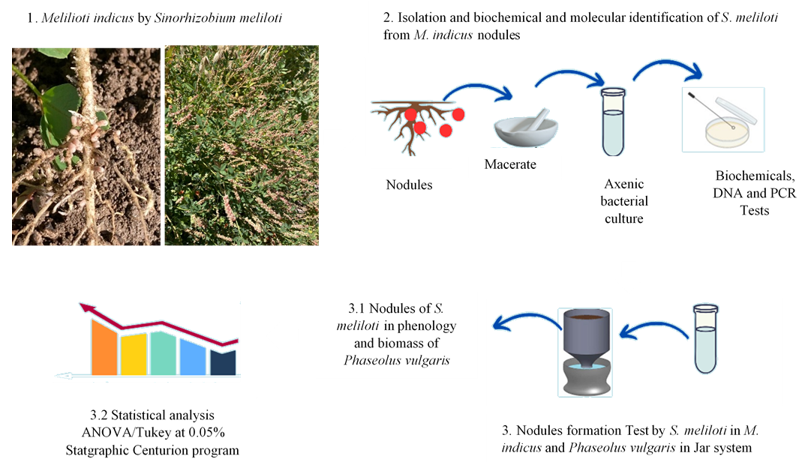
Figure 1 Isolation, identification and effectiveness of Sinorhizobium meliloti from Melilotus indicus on M. indicus and Phaseolus vulgaris
Infectivity and biological effectiveness test in Melilotus indicus and Phaseolus vulgaris
Sinorhizobium isolates were inoculated onto M. indicus and P. vulgaris seeds to assess infectivity and effectiveness. For this purpose, isolated were inoculated with a suspension of 1x10⁹ cells in 0.85% sterile saline solution. The seeds were sown in pots and Leonard’s Jar in sterile soil. Nodulation of each plant was observed after 70 days17–19 associated with this Fabaceae family.
Biochemical characterization and molecular sequencing of Sinorhizobium isolates
Each Sinorhizobium isolate was observed under a microscope by Gram staining, mobile by peritrichous flagella during the analysis of the biochemical profile, it grew in various concentrations of NaCl, generates indole and catalase, accumulates beta hydroxy butyrate, uses urea, releases H2S, according to several researches.16, 20–22 The molecular identification was carried out by the Microbiological and Molecular Services Laboratory of IPICYT in the city of San Luis Potosi, SLP; México by real-time PCR, using the labeled deoxynucleotide method in the 3500 and 3130 Genetic Analyzer sequencers by Applied Biosystems.2,17,18,21
Morphological characterization of M. indicus collected in the soils of Buenavista, Coahuila, Mexico1–3 was observed with lanceolate leaves, linear stems with 5 horizontal and vertical branches with lanceolate stipules, as well as 2 types of M. indicus, one with an average height of 59 cm and the other 98 cm, as shown in the Figure 2.
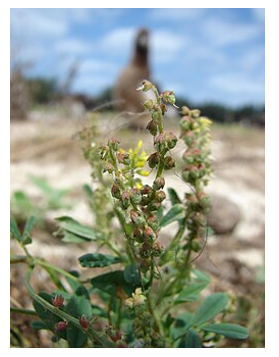
Figure 2 Melilotus indicus with seed sample were collected in the experimental field ''El Bajio'' of Buenavista, Saltillo, Coahuila, México.
The nodules of each M. Indicus plant collected are probably a mixture of at least two S. meliloti species since the flowering observed were small yellow flowers 1-3 mm long and other white flowers 4-5 mm long, as shown. The raceme is short, compact and with a short peduncle, the leaf at the beginning but longer at the end of flowering, the pods are very small and spherical in shape, as are the seeds (Figure 3).6–8
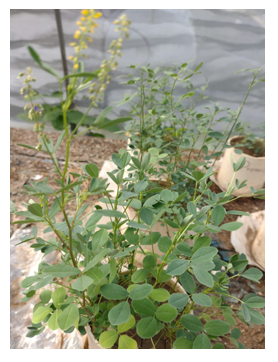
Figure 3 Melilotus indicus with yellow flower leaves, branched stem.
Isolation of S. meliloti from M.indicus nodules
On Figure 4 it is shown plant nodules characteristic reddish lobed nodules of S.meliloti in M. indicus which ones were infective and effective pink nodules are observed due to the presence of leghemoglobin that indicates that the nodules have the capacity to fix N2 from the air due to S. meliloti in the roots of M. indicus when it grows in a soil with deficiency of this essential mineral for plant life, from these nodules at least two possible types of S. meliloti were recovered that were inoculated in P. vulgaris.9–11
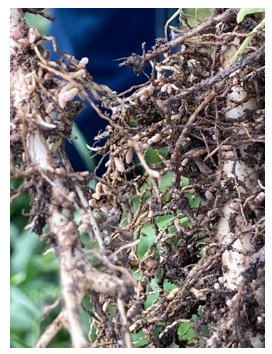
Figure 4 Shows the Sinorhizobium meliloti nodules on the root system of Melilotus indicus.
Figure 5 shows the maceration of each nodule observed under a compound microscope with the bacteroids of S. meliloti inside the plant cell of the nodule of M. indicus. The morphology corresponds to spheroplasts since the interior of the plant cell of the nodule does not require the cell wall because it is an isotonic osmotic environment. These bacteroids remain as spheroplasts until the nodule dies, when the fraction of cell wall that bacteroids preserved allows to completely form the complete cell wall to go out to the ground waiting to infect again a legume that has a genetic relationship with M. indicus.14,17,19
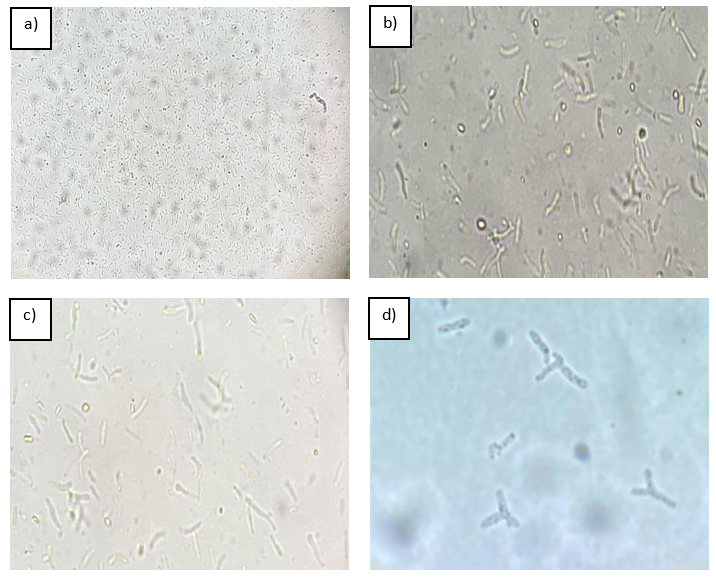
Figure 5 Shows the microscopic morphology of a) 4X, b) 10X, c) 40X and d) 100X of S. melilioti bacteroids obtained by maceration of M. indicus nodules.
In Figure 6: a) it is shown three very similar isolates of produce colonies of the genus S. melilioti were obtained from nodules of pinkish or b) reddish appearance from individual M. indicus plants.
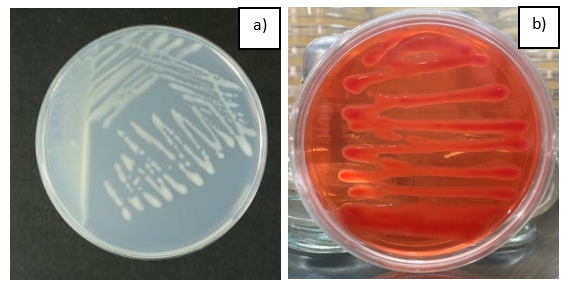
Figure 6 shows the colonies of S. meliloti grown on Congo red mannitol agar. Colonies were relatively large, circular in size, with a diameter of between 3 and almost 6 mm, a) convex and with a semi-transparent to mucoid white appearance after 4 days of incubation. The colonial morphology of S. meliloti b) the color changes due to its ability to absorb Congo red and during the aging of the culture (12,13)
In Figure 7 it is observed a) the mobility of S. meliloti by the hanging drop technique, b) the Gram stain is blue (positive) because during growth the newly formed wall goes from positive to negative when reaching cell maturity, while in c) the formation of mucopolysaccharide of S. meliloti is shown used to recognize possible legumes to start the invasion of radical hairs and then go to the plant cells where it will induce the formation of the characteristic nodule of this species, in d) the ability of S. meliloti to grow in different concentrations of NaCl is shown based on the fact that it can synthesize osmolytes such as betaine, glycine and proline useful when M. indicus is used to recover saline soils and e) shows that S. meliloti synthesizes indole from tryptophan.11,13,16
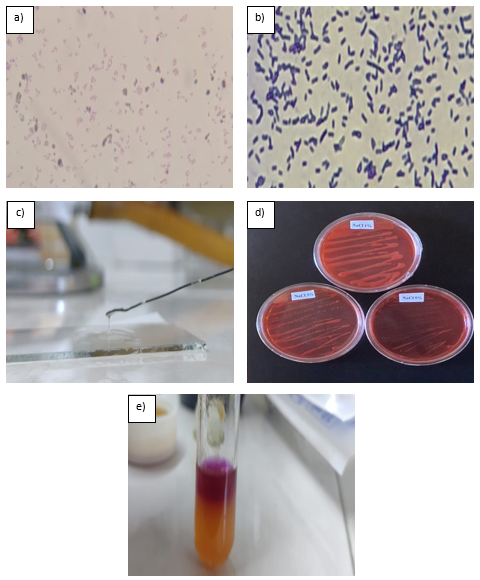
Figure 7 It is shown a) Gram staining, b) flagella, c) polysaccharide production, d) S. meliloti growth of M. indicus on Congo red mannitol agar and in 3 different NaCl concentration and e) indole production.
Table 1 shows the effect of S.meliloti isolates 1 and 2 on the phenology and biomass of P. vulgaris where isolate M-1 caused in the phenology: 17 dark green leaves, 24 brown crown nodules, a PH of 38.1 cm, a RL of 22.1 cm, while the biomass a TFW of 20.0g, a TDW 2.07g in contrast to isolate M-2 had 19 dark green leaves, 31 red crown nodules, a PH of 41.1, a RL of 24.3 cm; These values were statistically equal or different compared to the values of P. vulgaris with the dose of NH4NO3 recommended for this variety not inoculated with S. meliloti which registered a phenology of 17 dark green leaves, without nodules in the root, with a PH of 41.1 cm, a RL of 20.0 while the biomass recorded a TFW of 20.2g, a TDW of 1.1g. All phenology and biomass values of P. vulgaris inoculated with S. melliloti, as well as P. vulgaris fed with the recommended dose of NH4NO3, not inoculated or called as a relative control, were statistically different from the phenology and biomass values of P. vulgaris irrigated only water uninoculated, where were nodulated by infective Rhizobium but not effective. It was evident that S. meliloti, that in addition to nodulating M. indicus also belongs to the cross-inoculation group, was infective and effective for P. vulgaris and other legumes (data not shown) ,since the dark color of the leaves indicates that biological N2 fixation favored better photosynthesis, as well as the color of the nodules due to the presence of leghemoglobin, which was seen in the biomass and phenology of P. vulgaris.20–24
|
Parameter*/isolate |
Total fresh weight (g) |
Total dry weight (g) |
Plant height (cm) |
Root length (cm) |
Leaves number |
Leaves color |
Nodules number and color |
|
S. meliloti M-1 |
20c** |
2.07a |
38.1b |
22.1a |
17a |
Dark green |
24b dark brown |
|
S. meliloti M-2 |
22.9a |
2.1a |
41.2a |
24.3a |
19a |
Dark green |
31a red |
|
Relative control (RC) fed with recommended dose of NH4NO3 |
20.2b |
1.1b |
41.1a |
20b |
17a |
Dark green |
None |
|
Absolute control, non NH4NO3, uninoculated |
13d |
0.7c |
19.1b |
16.2c |
12c |
Light green |
20c whites |
Table 1 Effect of Sinorhizobium melliloti isolated from Melilotus indica on Phaseolus vulgaris at
50% NH4NO3 dose
*All values are average of 6 repetitions, **values with the same letter had no statistical difference
according to ANOVA/Tukey (P<0.05).
Figure 7, In the greenhouse trial, where M. indicus and P. vulgaris seeds were sown and inoculated, it was observed that S. meliloti isolates induced indeterminate nodules of cylindrical and branched shape in the crown of the root (Figure 8), characteristic of the symbiotic nodules of the genus S. meliloti. This demonstrates that these S. meliloti isolates are infective and effective in fixing N2 from the air. This nodules indicated the presence of leghemoglobin that protects nitrogen from oxygen so that the legume can grow without problems in the soil poor in mineral nitrogen and/or saline, which supports its use to recover soils deteriorated by overexploitation, saline soils and at the same time it can be used as fodder for cattle.25,26 At the same time, inoculation of S. meliloti in domestic legumes allows for the reduction and optimization of NH4NO3 dosage, preventing the loss of organic matter and the generation of greenhouse gases, thereby mitigating global warming caused by overfertilization during agricultural production.27–31 This also mitigates the decrease in soil fertility that leads to the contamination of surface water and aquifers.32
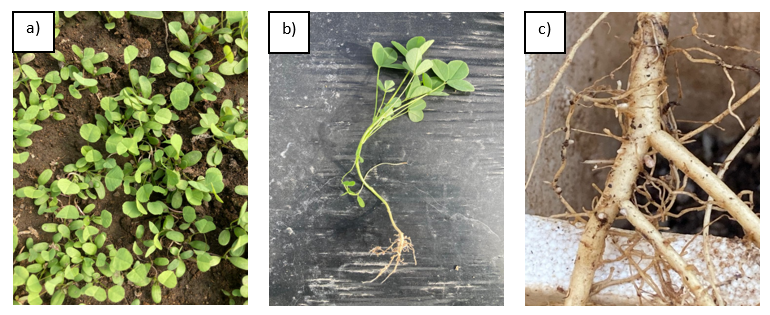
Figure 8 Melilotus indicus inoculated with Sinorhizobium meliloti after a) 25 days, b) 60 days, and c) 75 days of culture. Note the bifurcated lobed nodules very similar to the original nodules used for isolation.
Table 2 shows biochemical tests were used to differentiate the 3 isolates of M. indicus genera Bradyrhizobium Rhizobium and Sinorhizobium based on motility, which requires yeast extract source of vitamins B consistent with this genus, which synthesizes indole from tryptophan, as well as H2S from sulfur amino acids, with the enzyme peroxidase for being an aerobic genus, which grew in 1, 3, 5% NaCl genetic property fundamental for nodulation even in soil of relatively high salinity, with the ability to grow in both acidic and alkaline pH, which produces a polysaccharide that is useful to interact with the roots of certain families of legumes.9,31
|
Biochemical test |
Isolates |
||
|
1 |
2 |
3 |
|
|
Growth in NaCl 1, |
+ |
+ |
+ |
|
Growth in NaCl 3% |
+ |
+ |
+ |
|
Growth in NaCl 5% |
± |
± |
± |
|
Flagella |
+ |
+ |
+ |
|
Gram stain |
- |
- |
- |
|
Indole production |
+ |
+ |
+ |
|
Peroxidase production |
+ |
+ |
+ |
|
H2S production |
+ |
+ |
+ |
|
KOH (polysaccharides synthesis) |
+ |
+ |
+ |
(+) positive reaction, (-) negative reaction.
Table 2 Biochemical prefile of Sinorhizobium melliloti isolated from Mellilotus indicus from Buenavista, Coahuila, México
Molecular characterization of S. meliloti
The result of the Blass analysis of the sequences of the interspecific genomic regions (ITS) of the genomic DNA of one of the isolates of Sinorhizobium obtained and compared to the sequences reported in the gene bank (GenBank) showed that it is S. meliloti strain with 97.26% identity with the type of strain of this species and with access code MT197373.1. Different authors report this bacterial isolate as microorganisms that are symbiotically associated with legumes and with a great capacity to fix nitrogen and form nodules in the roots of these plants even plants even in highly alkaline soils.13,15, 31
It was shown that in nodules of wild alfalfa Melilotus indicus, from the experimental field of the Universidad Autónoma Agria Antonio Narro del Bajío de Buenavista, Saltillo, Coahuila, México. It was possible to isolate Sinorhizobium meliloti which in seeds of M. indicus, Phaseolus vulgaris and other domestic legumes, had a positive effect on phenology and biomass. Biochemical and molecular identification confirmed the existence of S. meliloti in M. indicus infective and effective for other domestic legumes, to reduce and optimize nitrogen fertilizer, as well as the potential for the recovery of saline soil, also green manure to restore fertility and high nutritional value for cattle forage
To the academic and research authorities of the Universidad Autónoma Agraria Antonio Narro for their support in carrying out this research.
To the Coordinación de Investigación Científica de la UMSNH “Aislamiento y selección de microrganismos endófitos promotores de crecimiento vegetal para la agricultura y biorecuperacion de suelos” from the Research Project (2025), Universidad Michoacana de San Nicolas de Hidalgo, Morelia, Michoacán, México. To Phytonutrimentos de México and BIONUTRA S, A de CV, Maravatío, Michoacán, México for the P. vulgaris seeds and verification of greenhouse tests.
The authors declare that there is no type of conflict of interest in its planning, execution and writing with the institutions involved, as well as those that financially supported this research.

©2025 Gallegos-Morales, et al. This is an open access article distributed under the terms of the, which permits unrestricted use, distribution, and build upon your work non-commercially.