Journal of
eISSN: 2572-8466


Research Article Volume 12 Issue 5
 Jesus Jaime Hernandez-Escareño,2 Nazario López Ortiz,3 Dilek K Dogutan,4 Daniel G Nocera5
1Environmental Microbiology Laboratory, Biology and Chemistry Research Institute, B3 B, University City, Universidad Michoacana de San Nicolás de Hidalgo, Francisco J Mújica S/N, Col Felicitas del Rio, ZP 58030, Morelia, Michoacán, México
2Microbiology Department, Facultad de Medicina Veterinaria y Zootecnia, Universidad Autónoma de Nuevo León, Fco Villa, ex Hacienda el “Canada, General Escobedo ZP 66050, Nuevo León, México
3Centro de Investigaciones Químicas, IICBA, Universidad Autónoma del Estado de Morelos, Cuernavaca, Morelos, México
4Signal Transduction Laboratory, Biology and Chemistry Research Institute University City, Universidad Michoacana de San Nicolás de Hidalgo, Francisco J Mújica S/N, Col Felicitas del Rio, ZP 58030, Morelia, Michoacán, México
5Faculty of Chemical Engineering, University City, Universidad Michoacana de San Nicolas de Hidalgo, Francisco J Mújica S/N, Col Felicitas del Rio, ZP 58030, Morelia, Michoacán, México
Correspondence: Juan Manuel Sánchez-Yáñez, Environmental Microbiology Laboratory, Biology and Chemistry Research Institute, B3 B, University City, Universidad Michoacana de San Nicolás de Hidalgo, Francisco J Mújica S/N, Col Felicitas del Rio, ZP 58030, Morelia, Michoacán, México
Received: September 08, 2025 | Published: October 9, 2025
Citation: Sánchez-Yáñez JM, Hernandez-Escareño JJ, Ortiz NL, et al. Effect of Xanthobacter autotrophicus on growth of Capsicum annuum at different doses of nitrogen and phosphate fertilizer. J Appl Biotechnol Bioeng. 2025;12(4):198-202. DOI: 10.15406/jabb.2025.12.00403
Capsicum annum is an agricultural crop of high economic food and industrial value that demands nitrogen fertilization such as NH4NO3 and phosphate or PO4-3 necessary for healthy plant growth, that applied without regulation cause a fertility problem with plant growth that affects profitable yield, as well as the low availability of PO4-3 due to the narrow solubility constant (Kps) and pH of the soil. An alternative solution is to regulate the dose of both and inoculate the seed with Xanthobacter autotrophicus, an endophytic genus that promotes plant growth that improves the uptake of NH4NO3 as well as the synthesis of alkaline acid phosphatases for healthy growth of C. annuum. The objectives of this study were: a) to analyze the effect of X. autotrophicus on the growth of C. annuum at various doses of nitrogen and phosphate fertilizers, b) to evaluate the effect of various doses of nitrogen and phosphate fertilizers on the phosphatase activity of C. annuum inoculated with X. autotrophicus.
To this end, C. annuum seeds were inoculated with varying doses of nitrogen and phosphate fertilizers in soil poor in mineral nitrogen and phosphates placed in a Leonard's semi-hydroponic jar system. The response variables used were days and percentage to germination, phenology, plant height, root length, fresh and dry weight of the aboveground and root parts to seedling. All data were analyzed by ANOVA-Tukey.
The results demonstrated a positive effect of X. autotrophicus at various doses of nitrogen and phosphate fertilizer on the germination time and percentage of C. annuum, as well as on the phenology and biomass, corroborating with the acid and alkaline phosphatase activity in C. annuum improved by X. autotrophicus compared to the growth of C. annuum fed with the recommended dose without inoculation with X. autotrophicus. This demonstrates that reducing the dose of nitrogen and phosphate fertilizer through the phytohormonal and phosphatase action of X. autotrophicus in C. annuum prevents the loss of soil fertility as well as the release of N2O to mitigate global warming.
Keywords: soil, C. annuum, NH4NO3, PO4-3, X. autotrophicus, phytohormones, phosphatases, greenhouse gases.
Capsicum annuum (chili) in México is one of the main agricultural crops of dependent on of chemical fertilizers applied without regulation.1–3 The production system of C. annuum a problem is the restitution of the minerals uptake by C. annuum, under specific chemical and physical soil conditions, 2,4,5 causes loss of the productive capacity of the soil, due to the rapid decrease of organic matter, the imbalance of the carbon: nitrogen ratio (C: N), that includes the low availability of PO4-3 (phosphates) in the soil, that compromises the health of C. annuum, for a forecast of profitable yield with the risk of release of greenhouse gases: nitrogen oxide (N2O) due to overfertilization.1–3,5 An alternative of reducing the dose of NH4NO3 and PO4-3 and inoculation of the C. annuum seed with Xanthobacter autotrophicus an endophytic plant growth promoting bacteria that optimizes the uptake of both.1–3,5,6 Therefore, the objectives of this work were: i) to analyze the growth of C. annuum with X. autotrophicus with different doses of NH4NO3 and PO4-3 ii) activity of acid and alkaline phosphatases of X. autotrophicus in steam and root C. annuum at different doses of NH4NO3 or (NIF) and PO4-3 or (POF).
This research at the greenhouse of the Environmental Microbiology Laboratory -Research Institute in Biology and Chemistry at Universidad Michoacana de San Nicolás de Hidalgo, Morelia, Mich., México. The research was performed under greenhouse environmental conditions with average values: T = 23.2°C, luminosity = 450 µmol•m2/s, relative humidity = 67%. The agricultural soil was collected from 19°37’10” north latitude and 101°16’41.00” west longitude, with an altitude of 2013 meters above sea level, at a temperate climate zone called “Uruapilla” municipality of Morelia, Michoacán, México, soil physicochemical proprieties are shown in Table 1. The X. autotrophicus strain was kindly donated by Dr. Nocera of the Department of Chemical Biology, Harvard University, Boston, Mass, USA. While the C. annuum seed was donated by the Ministry of Agriculture of the Government of México.
The soil used was sieved through a No. 20 mesh and solarized at 70°C/48 h to minimize pests and diseases, then 1.0 kg of soil, in Table 1 shows the properties of the agricultural soil used to grow C. annuum in that the pH was slightly acidic with a poor concentration of organic matter of 2.27%, total nitrogen of 0.15% as well as phosphates (PO4-3) that limits the healthy growth of this vegetable, these conditions allowed to evaluate the response of C. annuum inoculated with X. autotrophicus to different doses of NH4NO3 or NIF and PO4-3 or POF. This agricultural soil was placed in the upper part of a Leonard jar, while water or nitrogen NH4NO3 (NIF) and phosphate (PO4-3) fertilizer (POF) were added to the lower part. Both parts of the jar were joined with a 20 cm cotton strip shown in Figure 1. While Figure 2 shown colony and microscopic morphology at Gram stain of X. autotrophicus when was activated on agar without nitrate and sucrose at pH of 7.0 and incubated at 30°C/48 h. Then seeds of C. annuum were disinfected with 5% NaClO/5 min, then rinsed 5 times with sterile tap water, disinfected in 70% alcohol/5 min, washed 5 times with sterile tap water, then for every 10 seeds of C. annuum were inoculated with 1.0 mL of X. autotrophicus, finally sown in Leonard's jars by randomized block diagram with 3 controls, 6 treatments (T) with 6 replicates: absolute control (AC) = C. annuum uninoculated irrigated only with water; relative control one (RC1) = C. annuum uninoculated fed with NIF at 100%; relative control two (RC2)= C. annuum uninoculated fed with NIF and POF at 25%; (T1)= C. annuum with X. autotrophicus with NIF at 50% and POF at 100%; (T-2)=C. annuum with X. autotrophicus with NIF at 100% and POF at 50%; (T-3)=C. annuum with X. autotrophicus with the NIF at 100% and POF at 50%; (T-4)= C. annuum with X. autotrophicus with the NIF at 0 % and POF at 50%; (T-5)= C. annuum with X. autotrophicus with NIF at 25 % and POF at 25%; (T-6)= C. annuum with X. autotrophicus with NIF and POF at 0%. The response variables were germination percentage and days to emergence phenology: height plant (PH), root length (RL), biomass: fresh and dry weight (AFW/RFW/ADW/RDW) parts of plant;7–9 the experimental data obtained were analyzed by ANOVA and Tukey (P ≤ 0.05), to establish the minimum significant difference using the Statgraphics Centurion software.8
|
Parameter* |
Value and interpretation |
|
pH (1:2) |
6.68 (slightly acidic) |
|
Electrical conductivity:2 (H2O) (ms/cm) |
0.33 (slightly saline) |
|
Apparent density (s/mL) |
0.80 |
|
Organic Matter (%) |
2.27 (poor) |
|
Texture |
Loam |
|
Apparent density of soil (g/cm3) |
0.92 |
|
Total Nitrogen (%) |
0.15 (poor) |
|
Nitric Nitrogen (ppm) |
30.16 (poor) |
|
Potassium (ppm) |
368 |
|
Phosphorus (ppm) |
4.65 (poor) |
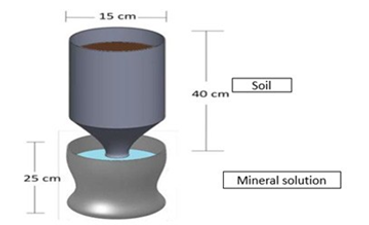
Figure 1 Leonard’s jar design for agricultural soil experiment.
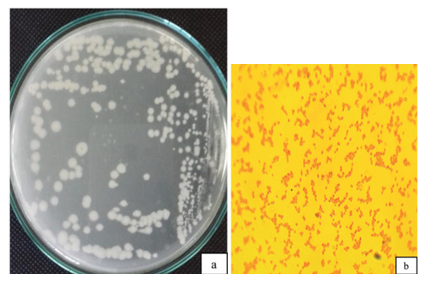
Figure 2 Colonial (a) and microscopic morphology of the (b) Gram of Xanthobacter autotrophicus grown on agar without nitrogen or carbon for 48 h at 30oC.
To determine the acid and alkaline phosphatase activity of Xanthobacter autotrophicus, the leaves, stem and root of C annuum with different doses of NIF and POF was carried out as follows: the plant organs were disinfected with 5% NaClO/5 min, then rinsed 5 times with sterile tap water, disinfected in 70% alcohol/5 min, washed 5 times with sterile tap water, then the tissues were macerated in a previously sterilized mortar with 10 mL of 0.85% detergent saline solution, the liquid was recovered and the different macerates were labeled. In total there were 6 different macerates with three replicates. From each of the macerates, 5 mL were taken with 45 mL of sterile distilled water, transferred to 20 mL of universal buffer adjusted to pH 5.5 and 9.0 for the determination of acid and alkaline phosphatases, respectively. The preparations were homogenized at 800 rpm/30 sec, 3 mL of the suspension was recovered and 1.0 mL of p-nitrophenyl phosphate 0.025 M was added, incubated for 37°C/3h, and again centrifuged at 2000 rpm/10 min, 0.5 mL of the supernatant was taken with 4.5 mL of NaOH 0.5 M. The released p-nitrophenol was measured in spectrophotometer at 410 nm.3,10–13 The experimental data obtained were analyzed by ANOVA and Tukey (P ≤ 0.05), to establish the minimum significant difference.8
Table 2 shows the positive effect of X. autotrophicus on C. annuum with various doses of NH4NO3 and PO4-3 fertilizer, on the days to emergence and germination percentage, especially with 100% NH4NO3 and 50% PO4-3 as well as when without applying NH4NO3 and 50% PO4-3 a germination time of 10 days was registered with 100% germination of the C. annuum seed indicating that X. autotrophicus recognized the seed exudates invaded it and then colonized the interior of the young C. annuum roots by converting organic compounds from the root metabolism X. autotrophicus synthesized phytohormones to accelerate germination time and increase the germination percentage of C. annuum, the positive effect of accelerating germination and increasing the germination percentage was registered when X. autotrophicus. It was inoculated into the seed of C. annuum, that demonstrates the capacity of this genus and endophytic species to promote plant growth;2,5–7;12–26 compared to when was registered with the recommended dose of NH4NO3 and PO4-3 at 100% or RC1 which was used with the 25% dose of both fertilizers or RC2 was used. This supports why it is advisable to inoculate C. annuum with X. autotrophicus at reduced doses of PO4-3.19,20,27–32
|
Treatment (T) Capsicum annum* |
Days of emergence |
Germination percentage (%) |
|
(AC) Water or absolute control uninoculated non fed with of NH4NO3 and PO4-3 fertilize |
14b** |
50c |
|
(RC1) NH4NO3 (NIF) and PO4-3 fertilizer (POF) at 100% uninoculated or relative control-1 |
14b |
50c |
|
(RC2) NIF y POF at 25%, uninoculated or relative control 2 |
14b |
50c |
|
T-1 X. autotrophicus + NIF at 50% and POF at 100% |
10ª |
75b |
|
T-2 X. autotrophicus + NIF at 100% and POF at 50% |
10ª |
100ª |
|
T-3 X. autotrophicus + NIF at 50% and POF at 50% |
10ª |
68.75b |
|
T-4 X. autotrophicus + NIF at 0% and POF at 50% |
10ª |
100a |
|
T-5 X. autotrophicus + NIF at 25% and POF at 25% |
10ª |
93.73a |
|
T-6 X. autotrophicus + NIF at 0% and POF at 0% |
10ª |
62.2b |
Table 2 Effect of Xanthobacter autotrophicus on seed germination of Capsicum annum at different doses of NH4NO3 and PO4-3 fertilizer
*Number of replicates (n) = 6. **Different letters indicate statistical difference by ANOVA/Tukey (P ≤ 0.05).
Table 3 shows the effect of inoculation of X. autotrophicus on C. annuum with various doses of NH4NO3 or NIF and PO4-3 or POF at the seedling level. It was evident that by colonizing the radical system of C. annuum specifically with NIF at 100% and POF at 50% the greatest plant height (PH) was observed with 16.66 cm the maximum root length (RL) with 12.33 cm an aerial fresh weight (AFW) of 1.49 g a radical fresh weight (RFW) of 0.436, an aerial dry weight (ADW) of 0.243 and a radical dry weight (RDW) of 0.109 g as a consequence of X. autotrophicus from within the radical, conduction system converting compounds released by the plant both the root and the stem generating phytohormones, that optimized the uptake of both fertilizers;21,23–25 that allowed C. annuum to achieve the best aerial and radical growth,27–29 with numerical values statistically different from the values of C. annuum uninoculating with X. autotrophicus, at the maximum doses of NIF and POF recommended for C. annuum. The positive effect of X. autotrophicus on C. annuum was also observed in most of the doses of NH4NO3 and PO4-3, except when the concentration of 50% NIF and 100% PO4-3 was applied due to phytohormonal effect,30,33,35–37 that shows that in that case a response of C. annuum was registered uninoculated with X. autotrophicus with 100% NH4NO3 and PO4-3, indicating that these doses are too much for the radical capacity of C. annuum, that can cause loss of soil fertility due to excess NIF and POF,28 that can +-also cause water contamination by POF and generation of N2O by excess NH4NO3*.9,10,31 Based on these results it was evident that the dose of PO4-3 should be regulated and inoculated with X. autotrophicus to ensure healthy growth of C. annuum,12,15,29 without risk of damaging the environment when the soil is poor in mineral nitrogen as shown by the physicochemical analysis of this agricultural soil.14
|
Treatments (T)/ C. annuum* |
Plant height (cm) |
Root length (cm) |
Fresh weight (g) |
Dry weight (g) |
||
|
Aerial |
Radical |
Aerial |
Radical |
|||
|
(AC) Water or absolute control |
5.0d** |
4.33c |
0.03d |
0.001c |
0.001b |
0.002c |
|
(RC1) NH4NO3 (NIF) and PO4-3 (POF) fertilizer at 100% uninoculated or relative control 1 |
6.3d
|
5c |
0.10b |
0.013b |
0.013b |
0.004d |
|
(RC2) NIF y POF at 25% uninoculated or relative control 2 |
5.6d |
6.33c |
0.10b |
0.017b |
0.013b |
0.003d |
|
T-1 X. autotrophicus + NIF at 50% and POF at 100% |
7d |
6.66c |
0.16b |
0.025b |
0.026b |
0.004d |
|
T-2 X. autotrophicus + NIF at 100% and POF at 50% |
16.66ª |
12.33ª |
1.49ª |
0.436ª |
0.243ª |
0.109ª |
|
T-3 X. autotrophicus + NIF at 50% and POF at 50% |
10.33b |
7.33b |
0.30b |
0.06b |
0.050b |
0.015b |
|
T-4 X. autotrophicus + NIF at 0% and POF at 50% |
11.66b
|
9.33b |
0.61b |
0.157ab |
0.092b |
0.030b |
|
T-5 X. autotrophicus + NIF at 25% and POF at 25% |
9.66c |
9.0b |
0.10b |
0.025b |
0.059b |
0.007d |
|
T-6 X. autotrophicus + NIF at 0% and POF at 0% |
8.66c |
6.33bc |
0.08c |
0.019b |
0.015b |
0.006d |
Table 3 Effect of Xanthobacter autotrophicus on phenology and seedling biomass of Capsicum annuum at different doses of NH4NO3 and PO4-3 fertilizer
*n =6. **Different letters indicate statistical difference by ANOVA/Tukey (P ≤ 0.05).
Figure 3 shows the phenology of C. annuum inoculated with X. autotrophicus at different doses of NH4NO3 or NIF and PO4-3 or POF. Where it was observed that C. annuum with X. autotrophicus and 100% NIF with 50% POF, reached the greatest plant height (PH) and root length (RL), an intense green color and wide leaves,3,4,10–13 with an evident statistical difference compared to C. annuum uninoculated with X. autotrophicus, 100% NIF and POF. In general, it was observed that except in the case of C. annuum plus X. autotrophicus with NIF and 50% POF, the response of C. annuum to X. autotrophicus at different doses of both fertilizers. C. annuum had an intense leaf color, a greater number of leaves, greater PH and RL.8,12,14,16,29 That supports that X. autotrophicus when colonizing the conduction system of C. annuum, converted root and stem metabolites into phytohormones that optimized the different doses of NIF and POF to the maximum, consequently increasing chlorophyll in C. annuum for healthy growth at the seedling level, that allows a favorable forecast in yield8,9,15,16 without compromising soil fertility,17,18 that allows mitigating global warming by avoiding the generation of N2O, from the remaining NH4NO3 or PO4-3 eutrophication of fresh water due to excess.6,10,12–14
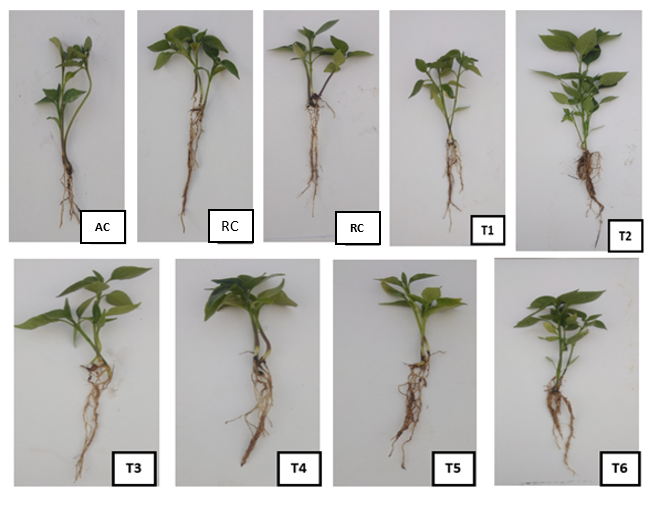
Figure 3 Effect of Xanthobacter autotrophicus on seedling phenology of Capsicum annuum at different doses of NH4NO3 and PO4-3 fertilizer.
AC= C. annuum uninoculated irrigated only with water or absolute control; RC1= C. annuum uninoculated fed with of NH4NO3 (NIF) and PO4-3 (POF) fertilizer at 100% or relative control; RC2= C. annuum fed with NIF and POF at 25% or relative control 2; T1= C. annuum + X. autotrophicus with NIF and POF at 50%; T2= C. annuum + X. autotrophicus with NIF and POF at 50%; T3= C. annuum + X. autotrophicus + NIF at 100% and POF at 50%; T4= C. annuum + X. autotrophicus with NIF at 100% and POF at 50%; T5= C. annuum + X. autotrophicus with NIF at 100% and POF at 50%; T3 = C. annuum with X. autotrophicus with NIF and POF at 50%; T4 = C. annuum + X. autotrophicus with NIF at 0% and POF at 25%; T5 = C. annuum + X. autotrophicus with NIF and POF at 25%; T6 = C. annuum with X. autotrophicus with NIF and POF at 0%.
Table 4 shows the activity of acid and alkaline phosphatases of C. annuum inoculated with X. autotrophicus and the dose of NH4NO3 at 100% or NIF and PO4-3 at 50% or POF at the stem level and roots at the seedling level.10,11,15 Where it was evident that the optimization of PO4-3 or POF was associated with the ability of X. autotrophicus to colonize both the stem and the root to increase, the activity of alkaline phosphatase with 138 µg/mL and 81.90 µg/mL, compared to the low activity of both acid and alkaline phosphatase of C. annuum uninoculated with X. autotrophicus, at the 100% dose of NIF and POF, in the stem and even lower in the root, it was clear that acid and alkaline phosphatase participate little in the uptake of PO4-3, naturally that makes it even more necessary to use X. autotrophicus as an inducer of alkaline phosphatase activity, to optimize both the uptake of PO4-3 from the soil or POF, as a biological strategy;2–5 to avoid the euphorification of fresh water by excess PO4-3, that is not uptake by the plant, the Kps of PO4-3 and the soil pH.10,16,24,29 The sum of these factors contributes to the loss of soil fertility and contamination of surface water, which is why X. autotrophicus is an endophyte, that is convenient to use for the optimization not only of NH4NO3, but also a sustainable agriculture and mitigation of global warming.33,35–37
|
Treatments/stem and root of Capsicum annuum* |
Type of phosphatase |
Concentration of released p-nitrophenol (µg/mL) |
|
(AC) Absolute control (saline solution) |
Acid |
- |
|
Alkaline |
- |
|
|
(RC1) Stem of C. annuum uninoculated with 100% nitrogen (NIF) and phosphate (POF) fertilizer. |
Acid |
1.36c** |
|
Alkaline |
1.29 c |
|
|
(RC-1a) Root of C. annuum uninoculated with NIF and POF at 100%. |
Acid |
0.64c |
|
Alkaline |
0.33c |
|
|
T-3 Stem of C. annuum with Xanthobacter autotrophicus with NIF at 100% and POF at 50%. |
Acid |
38.70a |
|
Alkaline |
81.90b |
|
|
T-3 Root of C. annuum with Xanthobacter autotrophicus with NIF at 100% and POF at 50%. |
Acid |
0.73b |
|
|
Alkaline |
138.33ª |
Table 4 Acid and alkaline phosphatase activity of Xanthobacter autotrophicus from Capsicum annuum with NH4NO3 (NIF) and PO4-3 (POF) fertilizer
*Number of replicates (n) = 3. **Different letters indicate statistical difference by ANOVA/Tukey (P ≤ 0.05).
It was evident that inoculating C. annuum seeds with X. autotrophicus prior to applying NH4NO3 or NIF at doses between 50 and 100% of the recommended dose allows for maximum NIF uptake to prevent loss of soil fertility while also avoiding the generation of N2O, a greenhouse gas, thereby mitigating global warming. At the same time, X. autotrophicus, with its ability to invade the plant from the root through the conduction system, improves PO4-3 or POF uptake through the synthesis of phosphatases, especially alkaline and less so acidic, for healthy C. annuum growth without the risk of POF not being uptake due to the restricted availability of POF in the soil, combined with the pH, causing eutrophication in surface water near the agricultural area where C. annuum is cropping. The plant growth promotion activity of X. autotrophicus on C. annuum constitutes an ecological tool for cropping of this vegetable.
To Project 2.7 (2025) supported by the Scientific Research Coordination-Universidad Michoacana de San Nicolas de Hidalgo, Morelia, Michoacán, México “Aislamiento y selección de microorganismos endófitos promotores del crecimiento vegetal para la agricultura y la biorremediación del suelos. To Innovation Fund Grant provided by the David Rockefeller Center for Latin American Studies at Harvard University.To Phytonutrimentos de México and BIONUTRA S.A de CV, Maravatío, Michoacán, México for helping us to publish the present research.
The authors declare that there is no type of conflict of interest in its planning, execution and writing with the institutions involved, as well as those that financially supported this research.

©2025 Sánchez-Yáñez, et al. This is an open access article distributed under the terms of the, which permits unrestricted use, distribution, and build upon your work non-commercially.