Journal of
eISSN: 2572-8466


Review Article Volume 12 Issue 1
1Department of Biology, California State University Channel Islands, USA
2Department of Bioengineering, University of California, USA
Correspondence: Bill Tawil, Department of Bioengineering, UCLA School of Engineering, 420 Westwood Plaza, Room 5121, Engineering V. P.O. Box: 951600, Los Angeles, CA 90095-1600, USA, Fax (310) 794-5956
Received: March 31, 2025 | Published: April 14, 2025
Citation: Raquel M, Bill T. Brazzein as a sustainable alternative to sugar: production, perception, and public health impact. J Appl Biotechnol Bioeng. 2025;12(1):45-48. DOI: 10.15406/jabb.2025.12.00383
Many diseases have arisen due to an increase in the population's weight. This weight gain can be attributed to the higher and unnecessary intake of sugar, starting the demand for artificial sweeteners. There are numerous artificial sweeteners currently available on the market, but with this industry expanding, better and low-cost alternatives are presently being explored. With a sweetness potency 500-2000 times that of sucrose and heat stability, Brazzein offers a non-nutritive option that could contribute to reducing the health risks associated with excessive sugar intake. This paper examines the production of Brazzein using Agrobacterium tumefaciens in plant-based systems, evaluating the suitability of these methods and identifying potential production challenges. Additionally, this paper highlights the importance of taking into account the negative responses consumers may have toward using recombinant DNA technology in the production of consumables. The recombinant production of brazzein presents some challenges, yet it holds significant promise as a safe, effective, and sustainable alternative to traditional sweeteners with the potential to contribute to global efforts of combating obesity and related health issues.
Keywords: brazzein, artificial sweetener, agrobacterium, recombinant DNA, consumer preferences, sweet protein
Within recent years, the global age-standardized mean BMI has increased from 22.1 kg/m2 in 1975 to 24.2 kg/m2 in 2014, which is an important risk factor for cardiovascular and kidney diseases, some cancers, musculoskeletal disorders, and diabetes.1 With the exact causes of obesity unclear, there is a strong relationship between the intake of sugar and the development of obesity.2 The change can likely be attributed to changes in the environment, as when giving mice drinking water mixed with sucrose, their adiposity increased, their insulin sensitivity was impaired, and the size of their liver increased.3 The risk of cardiometabolic disease, diabetes, cardiovascular disease, and metabolic syndrome show a consistent positive association with sugar-sweetened soft drink intake and weight gain.4 When comparing meal replacements with just sugar to those with a mixture of sugar, fat, and protein, satiety was less in the replacement with just sugar as the stomach emptied faster, causing consumers to increase their overall caloric intake.5 Reducing sugar intake is important in maintaining human health.
Brazzein is a small, sweet-tasting protein that was initially identified from the fruit of the West African plant Pentadiplandra brazzeana.6 On a weight basis, Brazzein is 50 amino acids in length, 500-2000 times sweeter than sucrose, and is heat stable for 4 hours at high temperatures due to the presence of four disulfide bonds, deeming it the smallest naturally occurring sweet protein to date.6 This makes Brazzein an ideal candidate as a substitute for high-calorie sweeteners, as the protein does not provide nutritive value to the consumable when added.7 However, the commercial production of this sweet protein is constrained by the challenges of cultivating the tropical plant, as Pentadiplandra brazzeana requires specific conditions to grow.8 To produce Brazzein at a large scale, the protein must be transferred to a heterologous system through recombinant DNA technology, with suitability demonstrated in Escherichia coli.9
This paper will examine Brazzein, a high-intensity sweet protein, as a potential sustainable alternative to sugar and artificial sweeteners. We will evaluate the challenges in its recombinant production through plant-based systems, alongside its consumer acceptability and possible impact on public health by reducing sugar consumption.
Recombinant DNA technology
Brazzein is one of six alternative, high-intensity sweet proteins that exist in nature, and while their existence has been known for many years by indigenous people, these proteins all face the challenge of meeting industrial demands.10 There are three forms of brazzein, type 2 brazzein contains glutamine at its N-terminus, undergoing a natural conversion to pyroglutamate to yield the type 1 version, and the loss of either the N terminal glutamine or pyroglutamate results in the type 3 form (Figure 1). However, only type 1 and type 3 forms of brazzeins are detected in the ripe fruit of P. brazzeana, making these two forms desirable when creating a recombinant product.11 For rapid genetic manipulation as isotopic labeling for structural investigation, a bacterial system would be ideal.12 However, when using conventional pET vectors, while expression of the protein is successful, a protein with under 100 amino acids and low cysteine content frequently has low yields.9 With this information, other recombinant products should be explored instead.
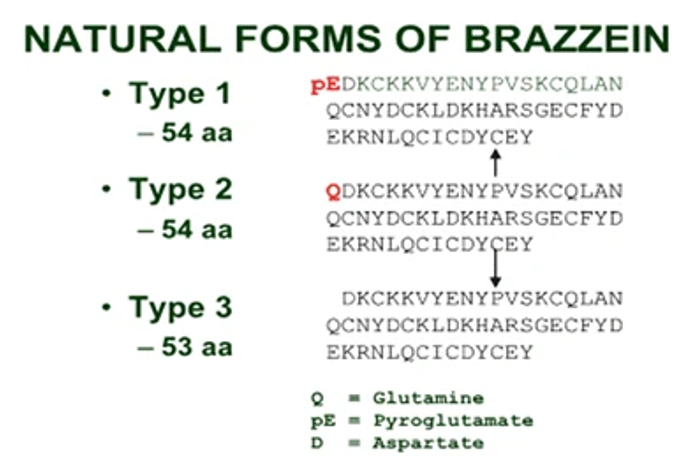
Figure 1 Forms of Brazzein.14
Agrobacterium tumefaciens
An available option for the large-scale production of proteins is the usage of plant systems to serve as a host plant for the protein of interest. Plant systems offer a variety of advantages, such as the low cost of production, easy scale-up, and established processing practices, and they often do not require the protein to go through purification as plant material can be used directly as a food source.13 To deliver brazzein into a host plant, Agrobacterium tumefaciens has proven to be a useful tool. A. tumenfaciens holds a tumor-inducing (Ti) plasmid that introduces galls on roots and crowns of a large amount of dicot angiosperm species as well as some gymnosperms.14 The Ti plasmid is key for altering the genome of the host plant, as it contains two essential regions required for DNA transfer.15 The first region is the transferred DNA (T-DNA) itself, which contains two repeat sequences of about 25 base pairs on either side, termed the left and right borders (LB and RB), which are needed to define the functional T-DNA elements.15 The T-DNA-encoded proteins VirD2 and VirD1 form a nuclease that nicks the LB and RB, generating a mobile single-stranded T-DNA, known as the T-stand, and guiding it to the type 4 secretion apparatus.16 The other essential region is the virulence (vir) genes, which are made up of seven major loci and are directly involved in T-DNA processing and transfer (Figure 2).17 These genes only occur in the presence of a wounded plant cell, which is the point of entry for the T-strand into the cell.17
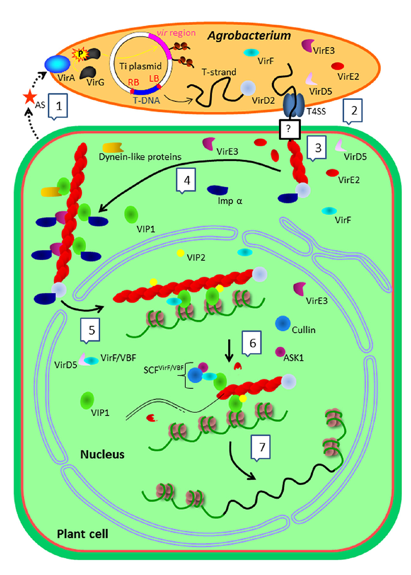
Figure 2 Visual of agrobacterium T-DNA transfection in the host cell, includes major steps (1-7).28
With the usage of Agrobacterium, different plant hosts have been utilized with the continued desire to commercialize the product. Recombinant brazzein has been produced in a variety of plant systems, including tobacco, rice, and maize.18 The tobacco plant, Nicotiana tabacum, showed promising results as it can express brazzein and yield can be increased through optimization of the isolation and purification methods.19 However, extraction of recombinant proteins from Nicotiana leaves has presented some challenges, as contamination with elements of the photosynthetic complex in the leaves may arise in purification.20 This would make it difficult to increase the yield of brazzein through the optimization of tobacco purification. Similarly, rice can produce recombinant protein, but similarly, difficulties with improving its yield have limited its usage as it competes with higher-yielding commercial protein expression systems.21 Brazzein production does show some promising results when expressed in maize. From the seed of a recombinant plant with brazzein, their yield was up to 0.5g brazzein per kilogram of seed with an expectation of being well above 1g/kg after optimizing the lines, which is the current commercial target needed to bring brazzein to a comparable cost of sucrose.22 Brazzein protein expression is very stable in maize, allowing the grain to be stored for years without losing the activity of the protein.23
More recently, an extremely promising plant-based recombinant protein system has been from plant cell suspension with a bioreactor. While using transgenic plants has advantages over using a bacterial system, plants still present some challenges, as the usage of intact transgenic plants limits field cultivation.24 However, bioreactor cultures with plant cells present a significant number of advantages over using intact transgenic plants, such as short production cycles, more consistent production of target products in controlled environments, eliminating the labor necessary to cultivate plants, as well as inexpensive and simple downstream processing.25 In 2012, the first-ever plant-cell-expressed enzyme replacement therapy Elelyso was approved by the FDA to treat type 1 Gaucher’s disease by expressing the protein in carrot cells through the usage of a bioreactor.26 This same technology was used for integrating the brazzein encoding gene into the genome of in vitro cultured carrot cells (TC12), using Agrobacterium-mediated transformation.24 Up until this point, Agrobacterium-mediated transformation had only been used in intact plants. The cell culture system allowed for easy proliferation and the cells could be harvested year-round as the culture system does not have to undergo climate and geographical limitations.24 Despite lower production yields, the carrot cell culture system can produce brazzein year-round and scale could be increased through scale-up of culture vessels.27 The usage of a cell culture system to commercially produce brazzein has a very promising future.
Consumer reactions
With the emergence of many viable forms of artificial sweeteners, it is imperative to gain insights into consumer preferences. In recent research, it was found that with all sweeteners considered, consumers generally tend to go for the least expensive option, which is not always the healthiest choice.28 Older populations are more likely to avoid the usage of low-calorie sweeteners because of concerns about the effects a sweetener might have on their body.29 Despite the safety and health benefits of using low-calorie sweeteners, many consumers remain hesitant, suggesting that more education and exposure to low-calorie sweeteners should happen to reduce intake of sugar and energy, which is a public health priority.30 Food sweeteners are among the most controversial food additives, as they are not used for safety reasons like preservatives.31 Consumers might not be drawn to artificial sweeteners if they do not have the goal of reducing their caloric intake (Figure 3).31
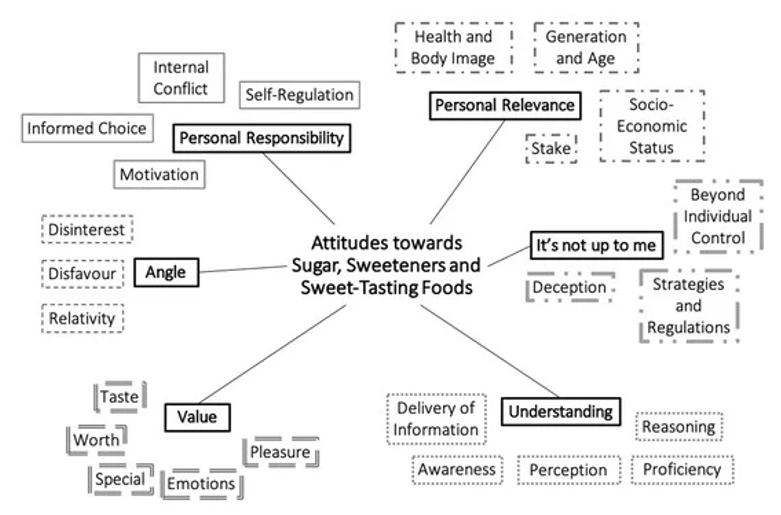
Figure 3 Consumer attitudes towards sugar, sweeteners, and sweet-tasting food.38
Another important factor to consider is how the taste of brazzein might be perceived by consumers. Ideally, low-calorie sweeteners would taste the same as their high-calorie counterparts, but participant preferences vary because of a difference in perceived sweetness.32 Taste is subjective to each person, which explains variability in perceived sweetness. Giving a sweetness rating can be a difficult task, as adjectives are not seen as a stable means of finding relationships among sweeteners.33 When compared to sucrose in a lab setting, different forms of brazzein can be perceived at different potencies with variation between each individual (Figure 4).34
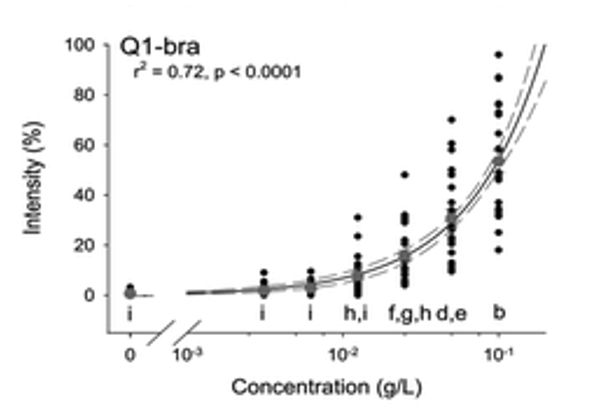
Figure 4 Sweetness psychophysical curves for a form of brazzein.35
With the usage of transgenic plant systems to produce brazzein, it is important to consider the social acceptability of their applications. Generally, Northern Americans are more accepting of gene technology than Europeans and New Zealanders.35 There are also factors affecting the perception of genetically modified organisms of individuals within countries.36 When it comes to the disapproval of genetically modified organisms, medical applications are met with less objection than food applications.37 The perception of consumer benefit likely has the greatest influence on decision-making if the product is considered to be low in risk.38 Some public concerns over the usage of genetically modified crops are difficult for some consumers to overlook, such as the moral issue of perceived unnaturalness.39 To gain support for genetic crops, the resulting products need to provide clear and transparent benefits to consumers.40
Brazzein offers a promising alternative to traditional sugar and artificial sweeteners with its potential to reduce calorie consumption and address growing health concerns related to obesity and metabolic diseases. While recombinant production of Brazzein through plant-based systems presents significant challenges, recent advancements demonstrate its feasibility at a commercial scale. However, the widespread adoption of Brazzein as a sweetener will depend on overcoming production hurdles, ensuring its safety and taste appeal, and addressing consumer concerns about genetically modified organisms. Ultimately, the successful integration of Brazzein into the global food market could play a pivotal role in reducing sugar intake, benefiting public health, and providing a more sustainable, low-calorie alternative to sugar. Continued research, consumer education, and transparency will be essential to fostering acceptance and maximizing the impact of this innovative sweet protein.
None.
Authors declare that there is no conflict of interest.

©2025 Raquel, et al. This is an open access article distributed under the terms of the, which permits unrestricted use, distribution, and build upon your work non-commercially.