Journal of
eISSN: 2572-8466


Mini Review Volume 12 Issue 3
Associate Researcher, Latin American Center for Agroecological Research (CELIA), Cuba
Correspondence: Luis L Vázquez, Associate Researcher, Latin American Center for Agroecological Research (CELIA), Cuba
Received: May 20, 2025 | Published: June 20, 2025
Citation: Vázquez LL. Agroecological seeds: Recovery of the bioecological and sociocultural functions of seeds. J Appl Biotechnol Bioeng . 2025;12(3):108-112. DOI: 10.15406/jabb.2025.12.00392
There is a transition in the seed procurement system, which is evident in the scientific and technical literature, as well as in agricultural territories. However, the bioecological and sociocultural importance of these processes is not sufficiently valued. A brief review of articles addressing the functions of seed-associated biota and the contribution of farmers to seed conservation, breeding, dissemination, and obtaining was carried out, as a basis for justifying the importance of agroecological systems for local seed self-management. As evidence, a conceptual synthesis was made on the agroecological transition and the role of family farming in seed management in Cuba.
Keywords: seed microbiota, peasant agriculture, local seed self-management.
With the development of conventional agriculture, seed became a globalized commercial resource. At the same time, traditional farmers have conserved it as a natural and cultural resource that, paradoxically, is considered fundamental for food resilience in the face of current crises that put pressure on the limits of human survival. In particular, the global expansion of genetically uniform monocultures from industrial agriculture has accelerated the erosion of seed diversity. 75% of plant genetic diversity has been lost, as farmers around the world are abandoning their locally adapted crop varieties for the genetically uniform, high-yielding varieties promoted by industry and the agriculture influenced by the Green Revolution.1
The seed production process in centralized, non-participatory plant breeding begins when the best varieties are multiplied and certified for dissemination. On the other hand, when farmers participate in the selection process from the beginning and have continuous access to genetic diversity, seed production is an integrated process, through which producers decide the varieties or crops that have to be multiplied and disseminated.2
While research and policy focus primarily on crop seeds, wild and semi-wild seed plants remain key to the coevolution between society and nature,3 ecological sustainability and food and livelihood security.4 In most agricultural regions of the world, agroecosystems remain in which farmers plant multiple varieties of each crop, which provide both intraspecific and interspecific diversity, which improves crop security.5
Access to seed has shifted from traditional methods, in which farmers themselves obtain and preserve the seeds they need, to specialized systems of seed production, storage and supply, in which seeds are a cash product.
However, in the face of the occurrence of various contemporary crises that depress conventional food production, farmers resort to traditional methods of obtaining seeds, enriched with the experiences of organic agriculture and the contributions of participatory research, configuring local agroecological systems of seed self-management.
The obtaining of seeds based on the socio-ecological principles of agroecology constitute informal systems, generally driven by external crises, sometimes facilitated by organizations and projects, which have the purpose of self-managing the seeds in the localities themselves, with the added value of rescuing their bioecological and sociocultural functions, an aspect that is the objective of this article. which is part of a series of short communications to value the role of biodiversity in the agroecological transition.
A cursory review of publications addressing the functions of seed-associated biota and farmers' sociocultural contribution to seed management, as well as studies on informal seed management, was conducted. Based on personal experiences in the facilitation of projects in agroecosystems in Cuba, the agroecological transition in obtaining seeds was described, where the role of family farming in this process is evident.
Bioecological multifunctions of seeds
The technological development of conventional agriculture focused on the species of microorganisms that affect the germination of seeds or could cause diseases during the growth of seedlings and cultivation, without paying attention to the various functions performed by the microorganisms associated internally and externally with this organ.
From a botanical point of view, the seed constitutes the reservoir of life, transmitting the characteristics that will give continuity to the species.6 In fact, they are not only carriers of DNA for future generations, but also act as a vector to transmit additional functionality in the form of microorganisms to the next generation of plants.7,8
Regardless of the mode of dispersal, seeds eventually reach the soil, where they are exposed to a wide diversity of soil-dwelling microorganisms, including pathogens, decomposers, and mutualists; all of which can subsequently contribute to the epiphytic seed microbiome.9 In fact, the seed microbiome, hitherto often neglected, is also an important determinant and driver of seed health and germination.7,8 Seeds acquire microbial endophytes mainly from soil and floral deposits through vascular connections and floral pathways, respectively.10
Mutualistic associations of plants with microorganisms are important to improve their fitness through their influence on various physiological and biochemical processes11,12. Thus, it improves the host's overall fitness and provides it with a competitive advantage over other plants, thereby influencing the outcome of competitive interactions in a community and consequently shaping community assembly patterns.13,14
Seed-associated microbes have been shown to promote seedling establishment, growth, and host plant development in nutrient-poor soils and under stressful conditions15,16 through: (a) optimization of nutrient uptake and assimilation through phosphate solubilization, the production of siderophores, the production of the microbial enzyme ACC deaminase and nitrogen fixation; (b) antagonism (e.g., biocontrol of plant pathogens) and competition (competitive exclusion of other plant species); (c) improvement of the plant-water-soil ratio; (d) stimulation of plant metabolism (modulation of reactive oxygen species (ROS), levels of auxin, cytokinin, and gibberellin; and (e) tolerance to abiotic stresses, such as drought, salinity, and stress due to heavy metals.17
A reading of the available literature reveals that the focus is mainly on exploiting seed-associated microorganisms in the improvement of crop plant growth, but not on the multiple ecological roles that these could be playing, which needs attention to unravel their role in the survival, colonization and fitness of plant species under various environmental conditions.13,14
This flow of microorganisms also occurs when the seed is used for the planting of crops in agricultural production; however, it is limited under adverse conditions, if the soil and crop are exploited through conventional agricultural practices. One of the scientific justifications of agroecological seed management systems is the genetic-cultural value that their obtaining in family farming systems provides, where farmers cultivate a diversity of species and varieties, including traditional ones, whose multifunctional designs and management facilitate biodiversity interactions, while using selection criteria according to personal and family perception. This genetic, cultural and contextual system is the one that most imitates what happens in nature, so it is appropriate to move towards sustainable food, because the varieties will be better adapted to the contexts.
Farmers' access to seeds
It has been generalized that farmers access seeds through specialized markets, who market seeds obtained through conventional or organic methods, according to quality regulations (vigor, germination, health, others); systems that are usually concentrated in a few species and varieties called commercial, which are promoted as productive or resistant.
Historically, for farmers, seeds are both a product and a means of production; however, they became an external input to their farm, which they must acquire annually or, in the event of using it again for planting, they must request authorization and pay royalties;18 because, since always, whoever controls the seeds, controls the production chain and, therefore, the availability of food. That is why they are an important source of power and disputes.19
In organic agriculture, most companies call organic seed seeds seeds obtained from conventional varieties that have been grown without the use of synthetic chemicals. The correct term for these seeds that do not come from organic varieties would actually be "seeds authorised for organic cultivation", since the term "organic seed" should be reserved for seeds of varieties developed through organic breeding.20
There are the so-called commercial seeds, which are part of the so-called formal certified seed system21 and local seeds, those whose selection, improvement and conservation process takes place in the territories and is guided by farmers' criteria.18
Family, peasant and indigenous agriculture organizations have long resisted the onslaught of a conventional model and its associated technological packages that dispossess them.19 Traditionally, seeds were considered as common goods,22,23 as they were improved and shared by farmers around the world, who maintained control of them, which led to great diversity as a result of human labor.24
In peasant logic, the conceptualization of the seed goes beyond the botanical definition of the fertilized ovule of the plant, within a fruit. The definition of peasant seed is broader, including multiplicative plant structures, such as stems, portions of these, or roots, meristems, fruits and/or seedlings.25
Seeds inevitably combine material and immaterial aspects, such as:knowledge and culture26. Despite its critical importance to food and nutrition security and climate resilience, these so-called "informal" seed systems are still deficient.27 A sustainable experience in access to seeds is the participatory dissemination of seeds (DPS), which emerged in Cuba to integrate seed diversity fairs with peasant experimentation, has as a defining characteristic the integration within the family or community of the conservation of genetic resources, plant improvement, seed production, crop production and food consumption.2
Therefore, most producers working with DPS test for genetic diversity and then multiply their best option, to meet different family, neighborhood, and market demands in communities. Through the DPS, producers reinforce the production of seeds in order to exchange them, for experimentation in the next season or simply to be tested from a culinary point of view; they use them for promotion or in trade in exchange for other products.2
A community seed bank is established as a collective and strategic asset of sustainable agriculture, in order to preserve, conserve and rescue seeds, in order to support biodiversity and resist the consequences of climate change, such as constant rains or droughts with the onslaught and consequent losses of crops. Basically, it consists of the storage of seeds carried out by the communities for the provision of the next planting period. This initiative has been one of the tools used by farmers to face seasons of seed scarcity and ensure, through exchanges, continuity in activity.28
One modality is that the farmer has the right to borrow a certain volume of seeds, and undertakes to return a greater amount than the one obtained, which will allow the increase in the number of people benefiting from the initiative, the amount lent per group or family and the constitution of a reserve for times of environmental adversity due to climatic issues (copious rains, hail, pests, etc.), or others.29
There is also the modality of exchange bank or transitory storage site, that is, a circulation space, since the seed entered will be distributed each season among interested people. The idea in our case is that the person manages to obtain seeds and replace them, so that the collection does not fall apart and their circulation can continue.30
Understanding the form of seed production used by farmers, mainly with their traditional varieties, is essential to establish a complementary in situ conservation strategy for cultivated species, with farmers as the main actors.31 Local seed systems are those in which farmers, as the main actors in the management of plant genetic resources, conserve, produce, select and exchange seeds, both of improved and local varieties, of different agricultural crops.32
In this framework, participatory plant breeding emerges, which aims to establish an unconventional and decentralized breeding strategy, through the development of actions aimed at activating and/or stimulating the capacities of selection, conservation, multiplication and exchange of seeds among farmers with different socioeconomic conditions and degrees of varietal diversity among their farms.33
Evidence: as part of the diagnostic stage of the International Project on Participatory Biotechnology, carried out on the peasants of two communities, Canalete and Puesto Escondido, located in San Andrés, northern portion of the municipality of La Palma, Pinar del Río, it was shown that the community's access to cassava seeds (Manihot esculenta) from the formal system is scarce. therefore, the production, selection and conservation of seeds is carried out by the peasants on their own farms and the exchange occurs among the farmers themselves, who plant local varieties and/or clones, which have a certain resistance to the pests and diseases present in the last decade.34
Transition to agroecological seed self-management
What is known as "agroecological seed" constitutes a set of socio-ecological processes, which are facilitated locally during the transition to sustainable food, with the aim of achieving sovereignty and resilience in local seed self-management.
The agroecological transition with a sustainability perspective facilitates the recovery of the bioecological and sociocultural functions of seeds, mainly when the following processes are achieved: (a) recovery of traditional methods for obtaining seeds; (b) rescue of adapted traditional species and varieties; (c) seed flow in family farming communities; (d) cultural influences from seeds obtained in family farming systems; (e) facilitation of associated biodiversity interactions in seeds obtained in integrated and diversified systems; (f) local farms that carry out mass seed production through the use of microbiological bioproducts; (g) projects and organizations that facilitate agrobiodiversity fairs, seed dissemination, participatory plant breeding, community seed banks, and networks of seed farmers; (h) regionalization of varieties according to soil and climatic conditions.
The formal seed system is defined by its interactions with "formal" institutions public universities, national germplasm banks, private companies and or verification agencies for seed dissemination.35 Whereas, the informal seed system includes peasants, indigenous seed guardians, gardeners, and seed-saving farmers who exchange their seeds through unofficial networks, including seed libraries, community seed banks, markets, or direct exchange.36,37
Rooted in local indigenous and peasant knowledge and science ecology and complexity, agroecological practices depend on a high Seed diversity: multispecies polycultures, intercropping, agroforestry, genetics,
mixtures, mixed agriculture and agrosilvopastoral systems.38,39 Agroecology also works to diversify ecosystems and
landscapes in which agricultural systems are inserted.40
In fact, associated with biological diversification is cultural diversity, in which oral history is the main mechanism through which knowledge of such cultures is developed, maintained, and transmitted.41 Agrobiodiversity is a result of the co-production between society and nature, being one of the main tangible manifestations of biocultural diversity.42
There are several advantages of having these initiatives in our fields, among which the construction of community, the generation of new learning opportunities beyond established academic knowledge and the dissemination of different types of knowledge stand out.43
Normally, it is a matter of the genetic base of the seeds providing them with adaptability and responsiveness to different productive, environmental, and social conditions.6 This includes native, criollo and creole seeds, which constitute the informal system,44 also called the local seed system or the farmers' seed system.45
In Cuba, for example, for more than 50 years, seed production has been subordinated to the needs of conventional agriculture, through foreign procurement and domestic production managed by a specialized national company. Family farming has access to these systems for the production of vegetables and grains; while, for the cultivation of roots and tubers, among others, they obtain and preserve their own seeds by traditional methods.
However, during the last 30 years there has been an agroecological reconversion in the seed system (Figure 1), as the role of peasant family farming in seed production, participatory plant breeding and the regionalization of varieties, mainly grains, roots and tubers, fruit trees, fodder, and grasses has increased.
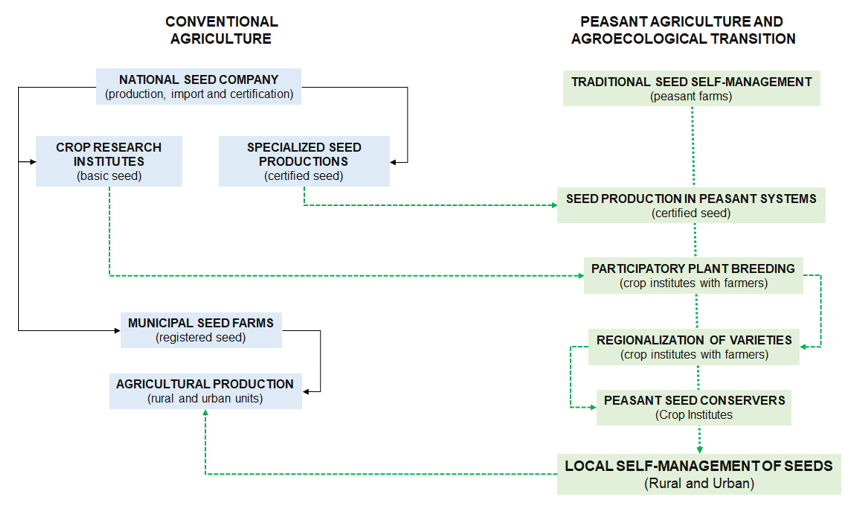
Figure 1 Route of agroecology in the local self-management of seeds in Cuba.
During the last thirty years, family farming in Cuba has grown in land area, quantity and diversity of types of small and medium-sized production systems and diversity of people who manage these systems. In rural and suburban areas, family farms predominate as diversified systems that integrate agriculture, livestock and forestry; In urban and peri-urban areas, family farming is represented by small systems with mixed design, known as courtyards around the houses and plots near them.
The predominance of this diversity of family farming systems, integrated into rural, suburban, peri-urban and urban areas, most of which are advanced in the agroecological transition, constitute dispersed mosaics of small and medium-sized agroecosystems that promote semi-natural and socio-cultural processes that facilitate the flow and conservation of biodiversity.
Peasant farms in rural areas conserve traditional varieties, play a leading role in participatory plant breeding and regionalization of varieties; while the patios and family plots in urban areas promote self-management and exchange of seeds, due to people from rural areas who preserve peasant traditions. This system shows capacities for local seed self-management in the agroecological transition towards sustainable food.
The lessons that emerge from the maintenance of native seeds and their planting in the form of mixtures of varieties that peasants leave us are key for the future, since these mixtures allow: a) to respond more easily to changing market demands and climatic variations that increasingly affect crop production; (b) reducing pesticide application by conferring resistance on plants; (c) receive better prices for high-quality traditional varieties; d) respond to social and cultural obligations, and e) improve dietary diversity and ensure the nutritional well-being of families5.
The management of varieties and seeds is moving from globalized formal systems, led by specialized entities to meet the demands of conventional agriculture, to informal local systems, led by family farming.
This transition, which usually occurs in response to crises, highlights the socio-ecological characteristics of traditional varieties and seeds and their advantages for the food of the future, in contrast to the simplified systems that characterize conventional varieties and seeds.
A number of scientific centres that breed and produce basic seed, which have played a leading role in participatory plant breeding and regionalization of varieties, are examples in the transition from conventional seed systems. The scientific articles on the co-innovations that are carried out in family farming systems constitute evidence of disruptive changes in their experimental designs.
Family farming systems, under the influence of traditional peasant agriculture, are leading open innovation processes in their communities, whether rural or urban, where the selection of plants that behave best and the obtaining of seeds, under their soil and climatic and sociocultural conditions, among other agroecological practices, position them as hybrid laboratories of great importance for the future of food.
None.
Authors declare that there are no conflicts of interest.

©2025 Vázquez. This is an open access article distributed under the terms of the, which permits unrestricted use, distribution, and build upon your work non-commercially.