eISSN: 2574-9838


Case Report Volume 10 Issue 3
University of Santo Amaro, Sao Paulo, Brazil
Correspondence: Rafael Furlan Silva Fabri, MD, University of Santo Amaro, Sao Paulo, Brazil
Received: September 13, 2025 | Published: September 25, 2025
Citation: Fabri RFS. Multiple molecular targets of cannabidiol (CBD) in neurons. Int Phys Med Rehab J. 2025;10(3):79-81. DOI: 10.15406/ipmrj.2025.10.00405
Cannabidiol (CBD) has gained visibility with increasing studies on its anxiolytic and antipsychotic effects. It is one of a hundred compounds derived from the cannabis plant and does not have an intoxicating effect, in addition to having fewer side effects than commonly prescribed drugs.1 The mechanism of action of CBD and delta-9-tetrahydrocannabinol (THC) in the brain suggests that CBD may act as an antagonist of CB1 and CB2 receptors in the presence of a CB1 agonist due to its negative allosteric modulation. While THC directly activates CB1R, triggering psychoactive effects that may include anxiety and psychosis, CBD exhibits a distinct action profile, reducing THC’s pro-psychotic effects and exerting potential anxiolytic and antipsychotic properties. Studies indicate that these effects may be related to increased plasma levels of anandamide, an endogenous cannabinoid. Furthermore, neuroimaging techniques have been widely used to investigate the neural mechanisms underlying the effects of CBD, providing a deeper understanding of its modulation of brain circuits involved in memory, emotional processing, and executive control, which is especially relevant to its application in neuropsychiatric disorders.2 CBD together with THC has been used in Autism Spectrum Disorder (ASD), which is characterized by persistent deficits in communication and social interaction, restricted interests, and repetitive behaviors. Phenotypes among individuals with ASD vary widely, including language skills, cognition, epilepsy, gastrointestinal problems, irritability, sleep disorders, frequent awakenings, and early morning awakenings.2 In patients with ASD, the product has already demonstrated efficacy regarding anxiety, behavior, social communication, and irritability. The daily THC dose of 0.8 mg/kg (median of 7 mg within a 4–11 mg range; maximum daily dose of 40 mg) and CBD between 16 mg/kg (median dose of 90 mg within 45–143 mg range; maximum dose of 600 mg), starting with a daily dose of 5 mg/kg/day divided into two daily doses and increased to 10 mg/kg/day after one week, maintained for 11 to 26 weeks. Improvement was demonstrated in 67.6% of self-injury symptoms and rage attacks, in 71.4% sleep improved, 47.1% improved anxiety symptoms, and among patients 74.5% reported an overall improvement. Reported adverse events included drowsiness and decreased appetite.3–5 In the study by Schnapp¹ conducted with children and adolescents with ASD only the initial dosage was used and sleep improvement was not demonstrated, indicating the need for dose adjustment to achieve benefit.2
Moreover, other studies point to significant benefits of using CBD and THC for symptoms associated with ASD. In the study by Bar-Lev Schleider,6 90.3% of patients showed improvement in outbursts of anger and 85.2% in agitation. Anxiety, a common symptom in ASD, was also reduced in 88.8% of cases, while 78.3% of participants reported improvement in sleep disorders, with 19.5% experiencing complete disappearance of these symptoms. Regarding cognition and attention, 27.2% reported improvement, and 14% of patients showed adequate concentration for daily activities after using medicinal cannabis. Another relevant study, conducted by Fleury Teixeira et al.,7 revealed that 60% of patients had at least a 20% improvement in symptoms such as attention-deficit/hyperactivity disorder (ADHD), motor deficits, communication and social interaction difficulties, sleep disorders, and epileptic seizures. The greatest benefits were observed in ADHD symptoms, sleep disorders, and seizures, with 80% of participants reporting improvements greater than 30%. Furthermore, in studies evaluating the discontinuation of other medications, it was observed that up to 34.3% of patients reduced or discontinued the use of neuroleptic and anxiolytic drugs after the introduction of CBD and THC, reinforcing its potential as a therapeutic alternative for ASD.8 There was a reduction and even discontinuation of the use of antiepileptic, antipsychotic, antidepressant, sedative, and hypnotic medications. Side effects appeared in a moderate and relatively manageable form: restlessness (6.6%), drowsiness (3.2%), psychoactive effect (3.2%), increased appetite (3.2%), digestive problems (3.2%), dry mouth (2.2%) and lack of appetite (2.2%).7
Risperidone, one of the main medications prescribed for ASD in more than 50% of cases, requires dose adjustment in order to control symptoms and 50% of patients present side effects on appetite (16%), drowsiness (8%), hyperactivity (6%), nasal congestion (6%), nervousness (4%), urinary incontinence (4%), mouth pulling to the side (2%) and diarrhea (2%)-causing mild to intense and unpleasant side effects. Among participants, 34% use other medications associated with risperidone and 90% undergo complementary therapies.9 CBD has drug interactions with anticonvulsants and Selective Serotonin Reuptake Inhibitors (SSRIs), mainly by inhibiting the cytochrome P450 enzyme system, but it can also decrease P-glycoprotein (P-gp) expression, requiring caution in the co-administration of medications due to alterations in elimination, transport, and efflux.10 Epilepsy is a condition characterized by recurrent seizures, often treated with anticonvulsant medications. However, approximately 30% of patients do not respond adequately to conventional options, continuing to experience seizure episodes. In response to this need, regulatory agencies in countries such as the United States, Europe and Australia have approved the use of CBD as an adjunct treatment to traditional antiepileptic drugs.11 The evidence supporting this indication comes from randomized clinical trials (RCTs), which have demonstrated the efficacy of CBD in reducing epileptic seizures in patients with treatment-resistant syndromes such as Dravet, Lennox-Gastaut and tuberous sclerosis complex (TSC).11 Clinical studies involving patients with Dravet and Lennox-Gastaut syndromes evaluated the use of orally administered CBD at doses of 10 or 20 mg/kg/day in combination with antiepileptic drugs such as clobazam, valproate, lamotrigine, and levetiracetam. After 14 weeks of treatment, a significant reduction in seizure frequency was observed, ranging from 37% to 42% in the group receiving CBD. By comparison, the placebo group showed a reduction of less than 17.2%.11 Overall health improvement was observed in more than 50% of patients. In addition, two open-label studies indicated that oral administration of CBD at daily doses of 20 to 30 mg/kg over 156 weeks led to a 45% to 84% reduction in epileptic seizures. Overall, approximately 83% of patients reported improvements in health status.11
Patient FSO, male, 15 years old, diagnosed with Autism Spectrum Disorder (ASD) since age 3. The adolescent presents significant difficulties in social communication, with little verbal interaction, as well as repetitive behaviors and restricted interests. Since childhood, the patient has demonstrated difficulties in establishing bonds, as well as motor stereotypies and aggressive behaviors, especially in situations of frustration. The adolescent also presented sleep disturbances, with frequent nocturnal awakenings and difficulty returning to sleep.
History of previous treatments
The patient had already tried some pharmacological treatments to control his symptoms. He had used divalproate and risperidone for aggression control and sleep improvement, with limited results. Divalproate, although showing some control over aggressive impulses, did not bring significant improvements in other symptoms. In addition, aripiprazole was administered to help control irritability and episodes of aggression, with temporary effects. Melatonin was also tried to improve sleep, but the adolescent continued to have difficulty falling asleep and maintained frequent night awakenings. Faced with the limited results of these conventional treatments, the patient’s parents began to seek complementary alternatives.
First consultation - start of full-spectrum CBD
After a consultation, it was suggested to start full-spectrum CBD to improve sleep, reduce aggression, and minimize motor stereotypies. Full-spectrum CBD was chosen because of its profile including a range of cannabinoids and terpenes that may have a synergistic effect, providing broader benefits in treating ASD symptoms. The initial recommended dosage was 2.5 mg/day orally, with gradual adjustments every 5 days, until reaching a dose with significant gains. Close monitoring of the patient’s response was recommended, with the aim of adjusting the dose according to treatment effectiveness. Laboratory tests with emphasis on liver function were requested. Cardiology exams were also indicated to detect possible arrhythmias or blood pressure changes.
Second adjustment - 5 mg/day
After 5 days at 2.5 mg/day, the parents reported slight improvement in the patient’s sleep, with a reduction in the number of nocturnal awakenings. The adolescent fell asleep more easily, although occasional interruptions persisted during the night. Regarding aggression, the patient seemed calmer and less reactive to changes in his routine. The dose was adjusted to 5 mg/day, expecting to continue the observed gains and further improve sleep and aggression control.
Third adjustment - 10 mg/day
After 5 days at 5 mg/day, the family observed continued improvement in the adolescent’s sleep, which became more continuous and restful. Aggression also continued to decrease significantly, and the adolescent appeared more controlled and less impulsive. Regarding stereotypies, rocking and hand-flapping behaviors decreased considerably, with the patient engaging more in structured activities. The dose was adjusted to 10 mg/day to further enhance the positive effects observed and improve the patient’s overall condition.
Fourth adjustment - 15 mg/day
After another 5 days at 10 mg/day, the adolescent showed an even more marked improvement in behavior. Sleep stabilized, with peaceful nights and more refreshed awakenings. Aggression, previously a major concern, practically disappeared, and the adolescent became more flexible, responding more calmly to frustrating situations. Motor stereotypies almost disappeared, and the patient demonstrated greater interest in social interactions and daily activities. Based on this positive response, the dose was adjusted to 15 mg/day. At this time, the results of the tests requested before starting treatment were received and showed no abnormalities.
Fifth consultation - adjustment to 20 mg/day
After 5 days at 15 mg/day, the parents reported continued improvement in the patient’s condition. Sleep was stable and restorative, with fewer nocturnal awakenings. Aggressive reactions were practically absent, and the adolescent was more adaptable to routine changes, which had previously generated great anxiety. Motor stereotypies were considerably reduced, allowing the adolescent to be more involved in structured activities and social interactions. With the extremely positive response to treatment, the dose was adjusted to 20 mg/day; as no further gains were observed at reevaluation, it was decided to return to 15 mg/day. New liver function tests and ECG were requested for follow-up.
After about one month of full-spectrum CBD use, with progressively adjusted doses up to 15 mg/day, the patient showed significant improvements in key ASD symptoms such as sleep difficulties, aggression, and motor stereotypies. The gradual approach allowed safe adaptation to treatment without adverse effects, and the low THC content was essential to avoid any psychoactive effect, ensuring a positive response without the risks associated with THC exposure in ASD patients. CBD use proved effective in improving the adolescent’s overall behavior, demonstrating the potential of full-spectrum CBD as a complementary therapy in the management of ASD, especially when other treatments such as divalproate, risperidone, aripiprazole and melatonin had not produced the expected results. This case illustrates the benefit of a personalized and integrative approach in treating challenging ASD symptoms (Figure 1).
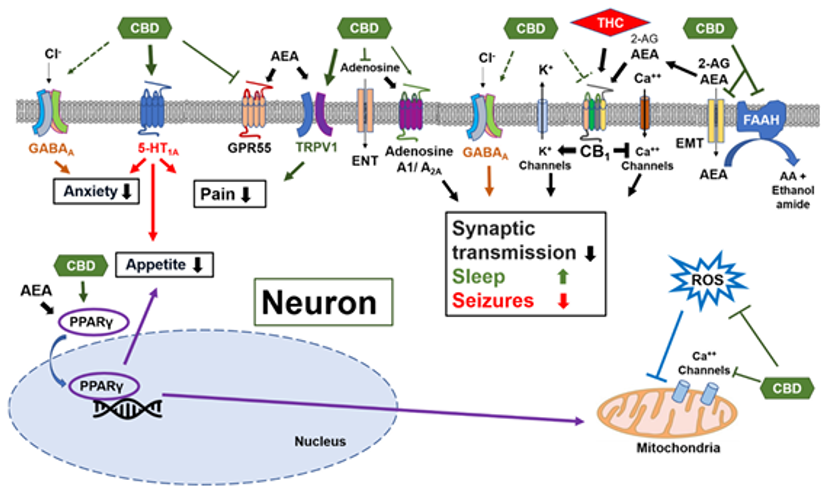
Figure 1 CBD and THC modulate neuronal function.
None.
The author declare that there are no conflicts of interest.

©2025 Fabri. This is an open access article distributed under the terms of the, which permits unrestricted use, distribution, and build upon your work non-commercially.